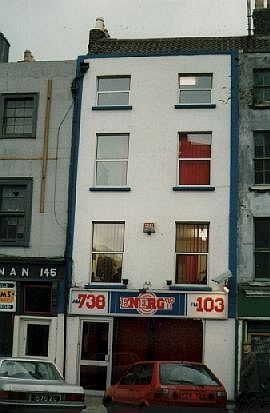
The home of Energy 103 was 144 Upper Leeson Street, located in the heart of the southside of Dublin city.
The street, or perhaps more accurately the type of lady you’d be likely to encounter on it, was made famous to a worldwide audience thanks to a song by local band Bagatelle.
The premises, owned by Chris Cary’s Uniminster Limited, had earlier been used for the FM optout for Dublin Today when the first NUJ strike had been settled at Radio Nova. Shortly afterwards it became the home of Magic 103, the ill-fated easy-listening service.
Just as Radio Nova was closing across in Nova Park on March 19th, the equipment in 144, originally bought to set up a broadcasting school, was used to launch Zoom 103, which lasted just five days before being put off the air by the Nova receiver.
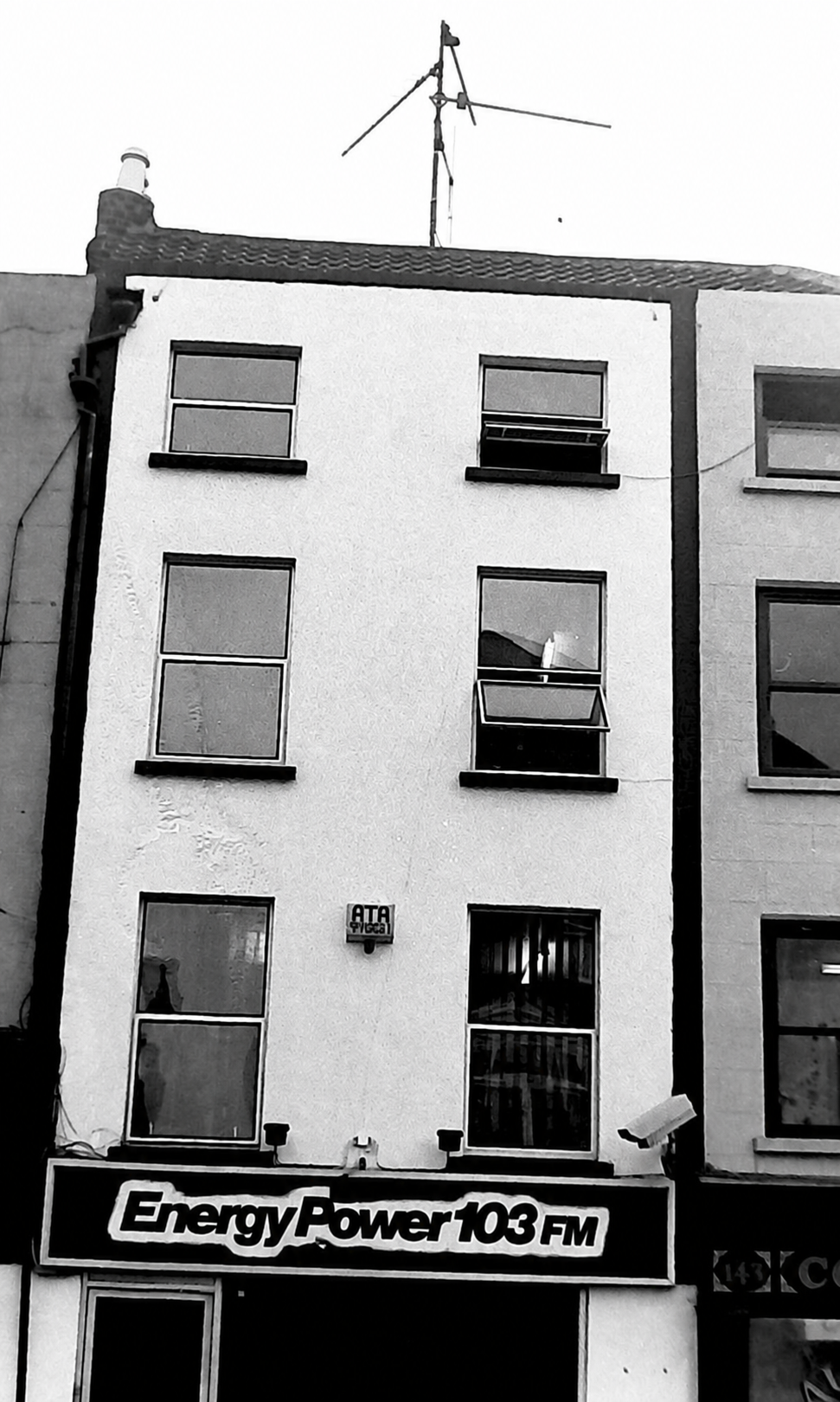
A month later Energy 103 was launched and, a few weeks later - thanks to a colourful logo emblazoned across the front of the building - nobody was in any doubt about what was going on inside.
Thanks to Mike Mahon (text and photos) we can take a detailed guided tour through the building.
The Energy 103 building was four stories high. On the ground floor was the reception area and a full production studio, which people walking by outside could see into.
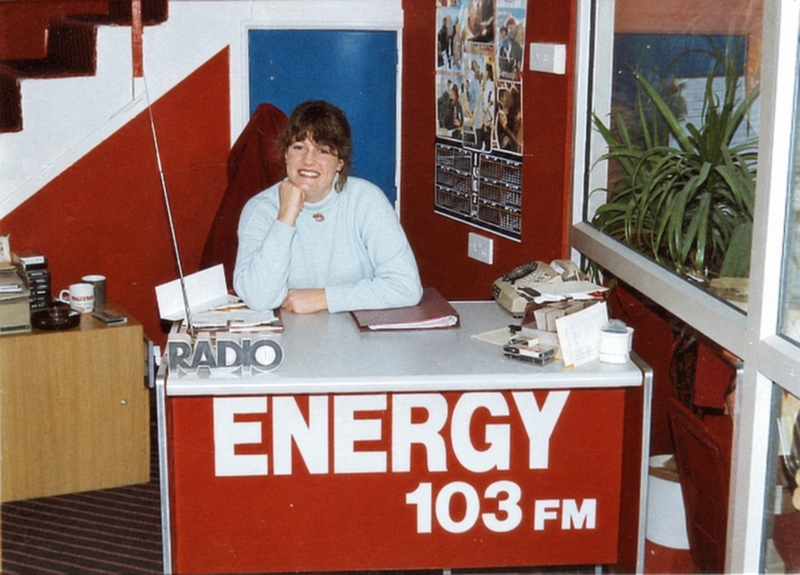
Pat Courtenay was in charge of production and Lisa Moreau was the receptionist and she also looked after all the commercial scheduling.
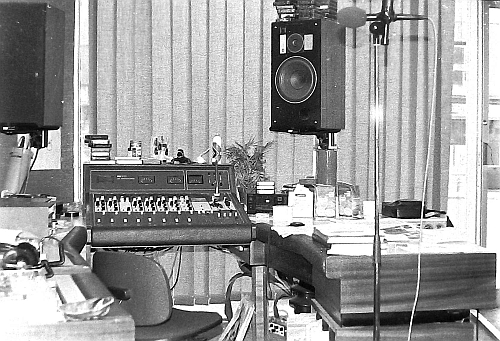
On the next floor there were two big offices – one belonging to Sybil Fennell who was the overall manager of the station.
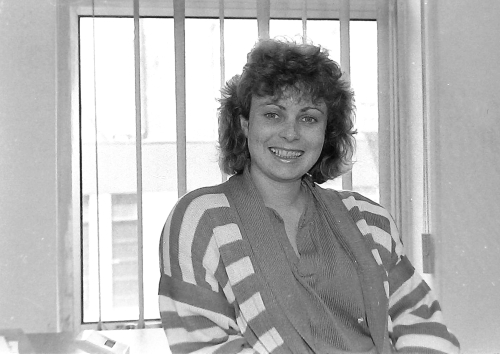
The other office was for the Sales team, Alan Murphy and Alan Graham. Joan Mythen also used that office as she did the accounts and wages every week
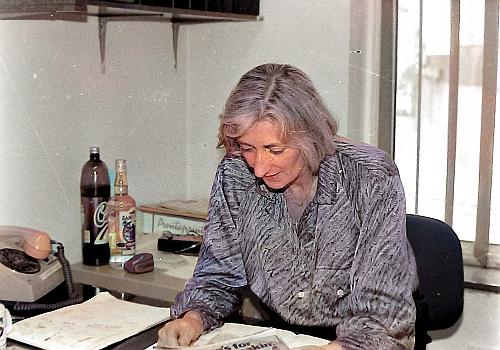
This was also where the mini phone exchange box was kept, bringing all the different phone lines into the building.
On that floor there were also the toilets and a little kitchen.
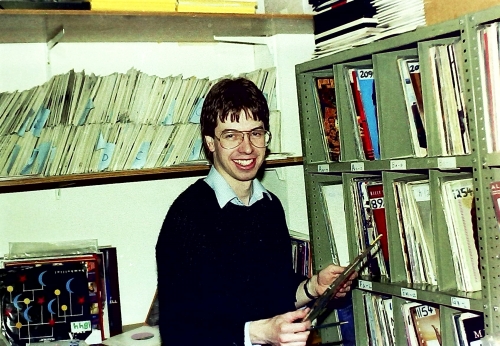
On the third floor was a small record library which I was working on reorganising.
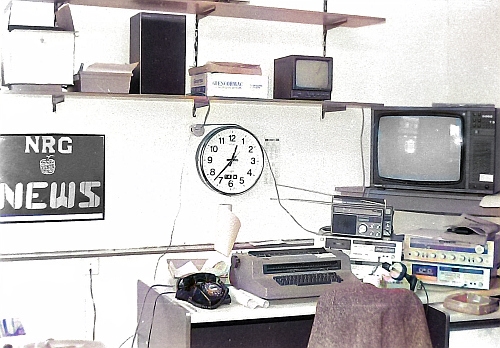
That floor also had the large Newsroom which was at the front of the building looking out on to Leeson Street. There was a wire service printer linked up to the Press Association and the rest of the news was gathered from the Teletext and Ceefax service on TV. There were also radios hooked up to cassette recorders so that they could record the news from other stations like RTÉ in case they had any stories that we didn’t have.
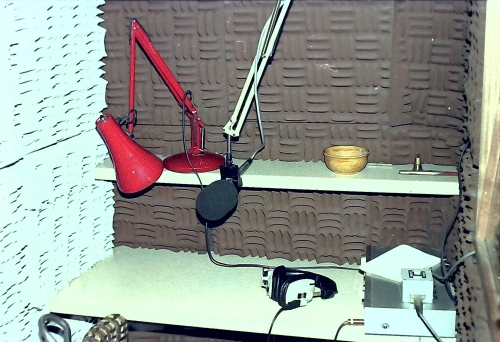
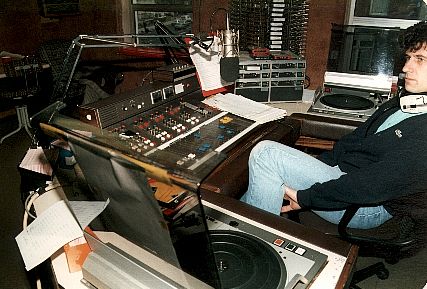
The fourth/top floor of the building had a small soundproofed newsreading booth (below), and the main on-air studio.
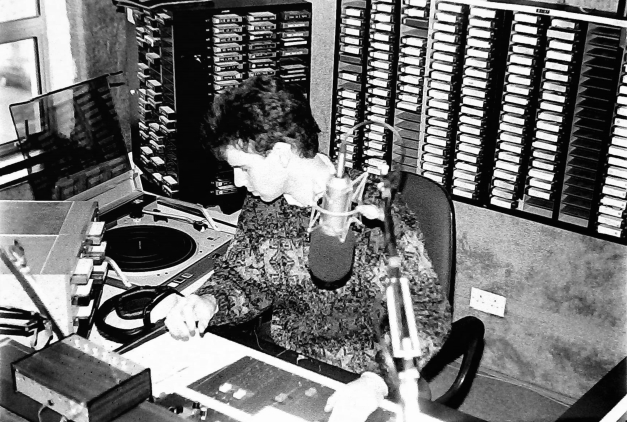
The studio had carpets on the walls for soundproofing and a large transmission mixer desk with record turntables and eight Sonifex audio cart machines.
The back wall of the studio was covered by a shelf system where all the music carts were stored.
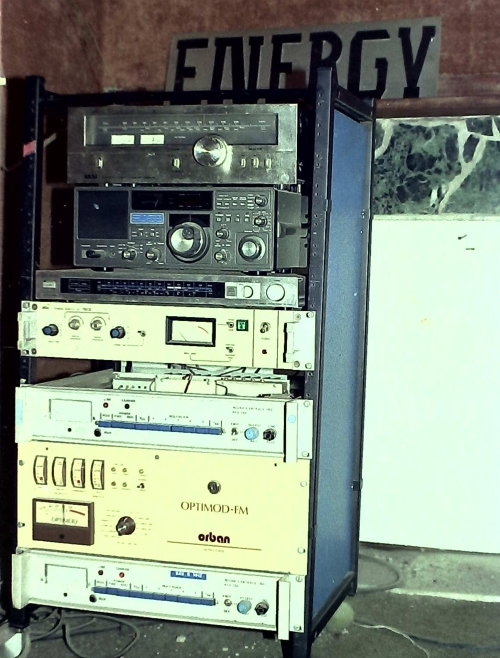
Right at the back there was a small room filled with the transmission equipment, in particular the microwave transmitters which sent the signal up to the main transmitter mast which was up in the Dublin mountains.
And, naturally enough, the roof is where the aerials were, shown here with the latest logo now emblazoned over the door/window frame.
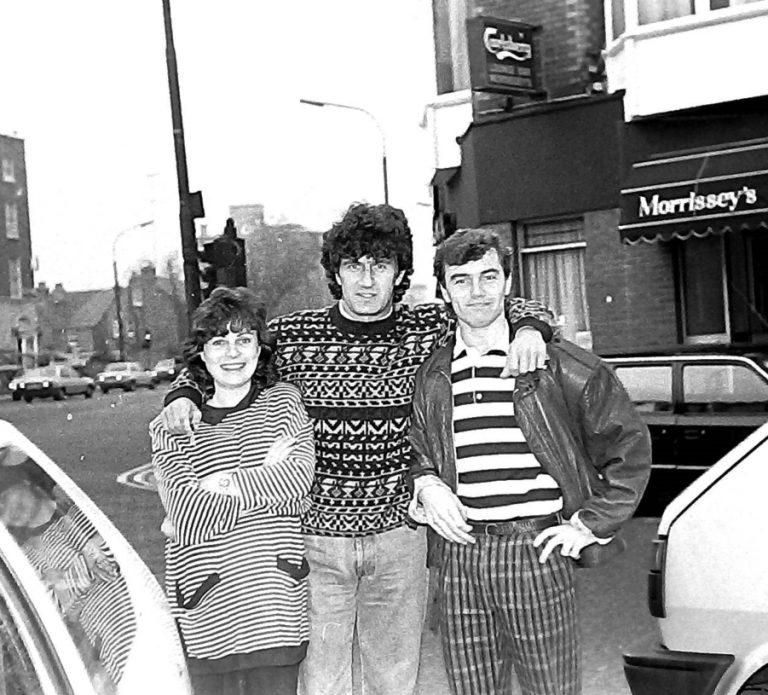
Outside 144 are Sybil Fennell, Tony McKenzie and Alan Graham, who was the advertising sales manager.