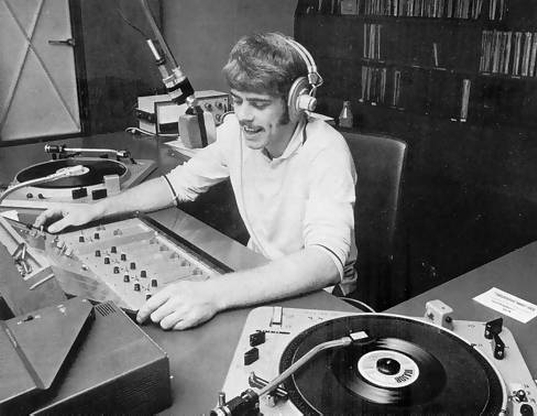
Harry Christopher Cary was born on October 5th 1946. For his first foray into radio, we need to go back to the day that offshore radio was outlawed in Britain – August 14th 1967. One station stayed on air beyond the deadline – Radio Caroline. Cary’s sole experience at spinning discs had been as a nightclub DJ in Blackpool. On the ship Cary’s very first job was playing records non-stop overnight as the Marine Offences Act became law.
Over time, using the name Chris Anthony, he got the confidence to make announcements and eventually ended up doing holiday cover for Johnnie Walker – by now using the name Spangles Muldoon. With the first demise of Caroline, Cary found himself back doing disco work until he heard test transmissions for Radio Northsea International.
Chris: “I tracked down Larry Tremaine, who was the Programme Director at the time, and convinced him that I was the next best thing to happen to him. I don’t think I overly impressed him, but in any event I went out to the Mebo II with Peter Murtagh a month or so later. The Mebo II was the Rolls Royce of radio ships. Hosting the most transmitters and sporting both FM and Shortwave. Carpets on the floors. Generally a very smart interior – almost luxurious."
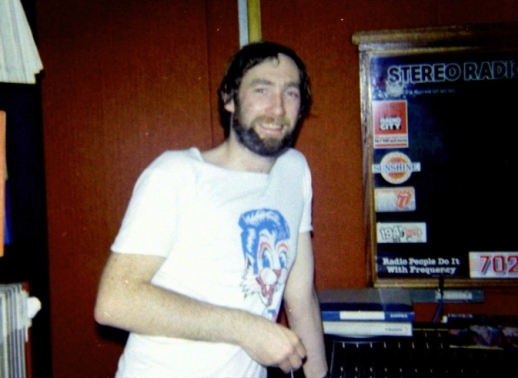
Cary on Radio Northsea International in 1970
Luxurious surroundings count for nothing when your signal is being jammed and bombs are being thrown at you. It was perhaps this period more than any other that prepared Cary for the troubled times which befell Radio Nova.
Radio Northsea closed in September 1970 but following its return, Chris rejoined in September 1972 for just a few days before resigning on air so that he could make a return to Radio Caroline - which was about to relaunch - as station manager and programme director. He left Caroline in August 1973.
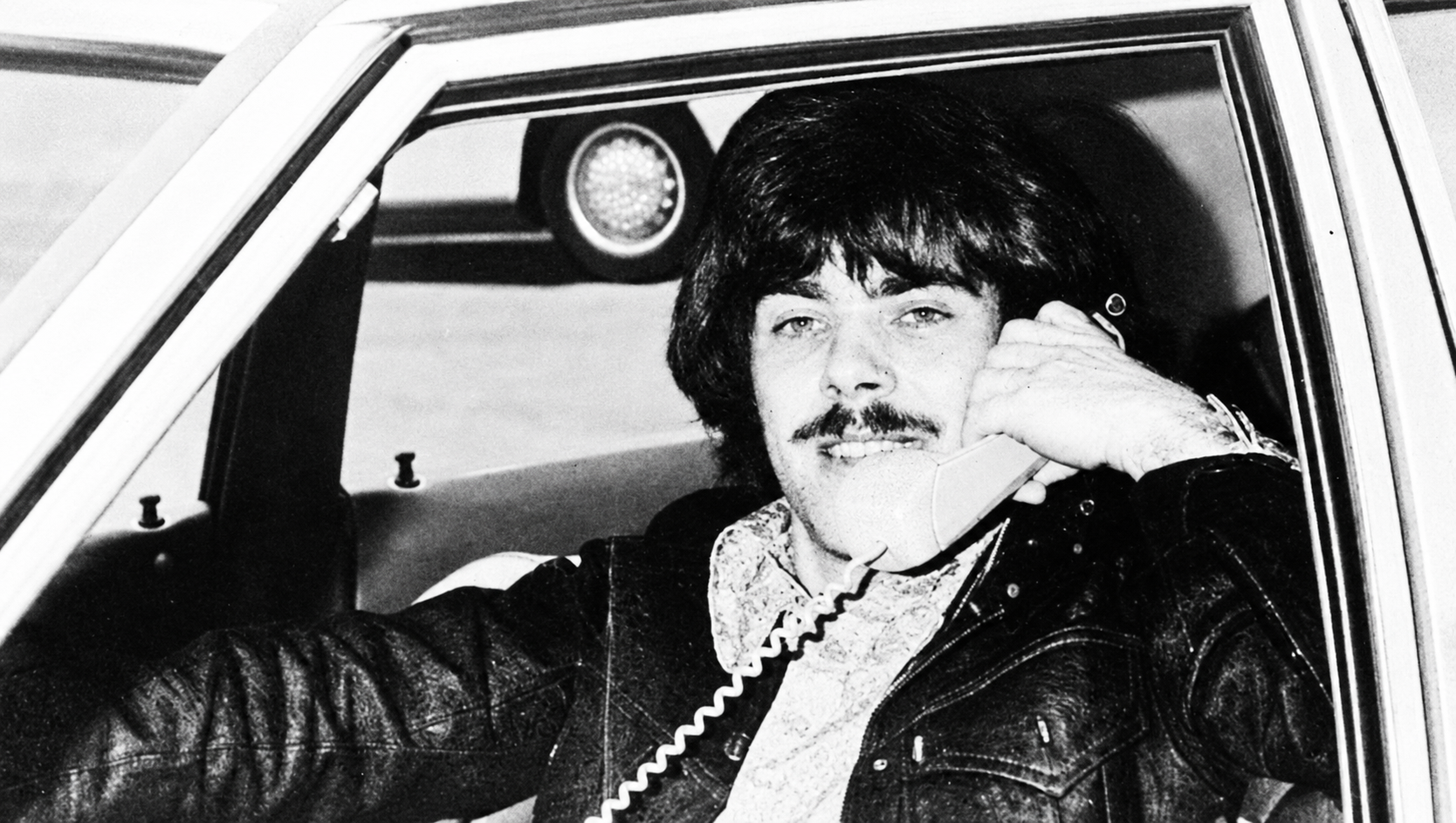
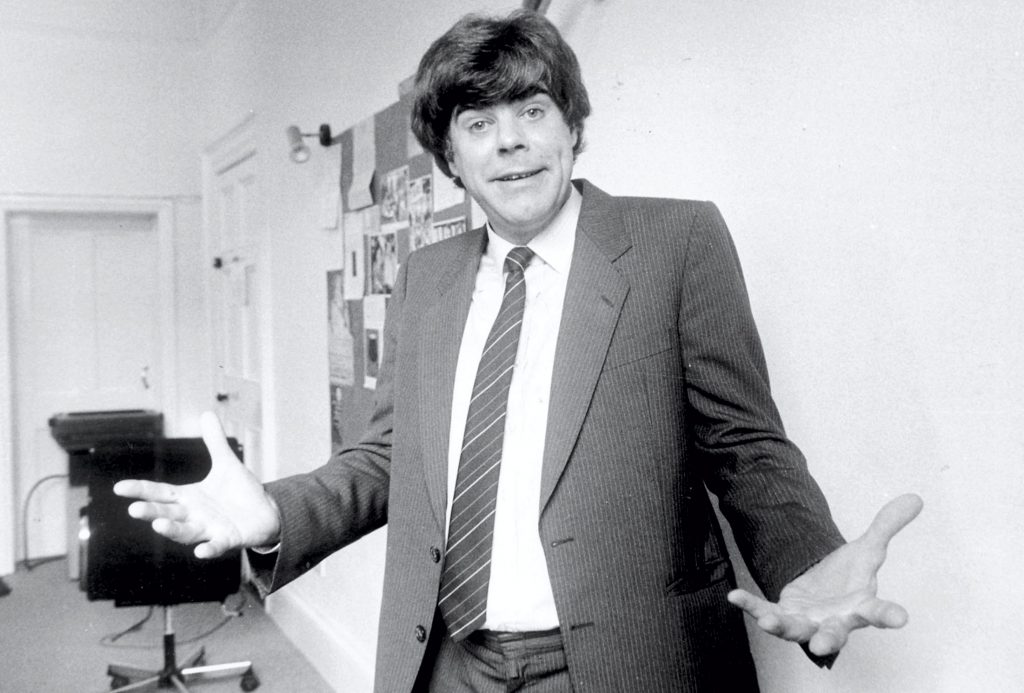
Chris in 1975
In Ireland, Cary gave many young, budding presenters a chance to make their dreams come true but in 1975 he himself was given his dream job – a chance to work with Radio Luxembourg. The reality was not as glamorous as the dream so he departed the Grand Duchy in 1977, but not before he had convinced management to change to ‘self-op’.
After returning to England Chris became involved with TV Games and then eventually he realised that computers were the future and Compshop was born. With the blossoming computer scene came success and Brian Webb (McKenzie) became the distributor for Compshop in Ireland. As we mentioned at the start, it was he who had alerted Cary to the situation in Ireland. And the rest, as they say, is the history you’re now reading.
Chris Cary believed that founding Radio Nova, making it number one and keeping it at number one until it closed was his greatest achievement in life. There aren’t many who would argue with his assessment.
His success owed a great deal to instinct. Radio was not simply his profession; it was an obsession. He understood what listeners wanted and, more importantly, knew how to give it to them. His handling of Nova’s launch demonstrated his commercial shrewdness. During its first few months, the station carried relatively little advertising and promoted itself as a clutter-free alternative to its rivals. Listeners flocked to it, and by year's end Nova had established an overwhelmingly dominant position in Dublin. Once that audience was firmly in place, the commercial load increased—and advertising agencies were soon competing for airtime.
He also had a remarkable ability to push those around him into turning his ideas into reality. Working for Cary could be demanding. He inspired great performances from his staff, but he could also be ruthless, intimidating and prone to fearsome changes of mood. His instructions were rarely open to discussion; when he wanted something done, he expected it done immediately.
Away from the forceful personality he displayed at work, Cary was something of a contradiction. He was painfully shy and formed very few close friendships during his time in Dublin.
Tony Gareth O'Callaghan
Gareth O’Callaghan recalls the first time he met Chris…
My life changed on the 31st August 1981 when I met this man. It was late that Monday night when I dropped my demo tape into Radio Nova headquarters on Herbert Street. Larry ‘Sound Hire’ Lynch had given me a set of his best decks, microphone and tape recorder to make a demo for Chris. He told me “it’s on me, no charge, cos I want to be able to listen to you every day knowing you got the gig using my gear.” True story. Then he said to me, “You’ll get the gig cos you’re good enough.” And I got the gig.
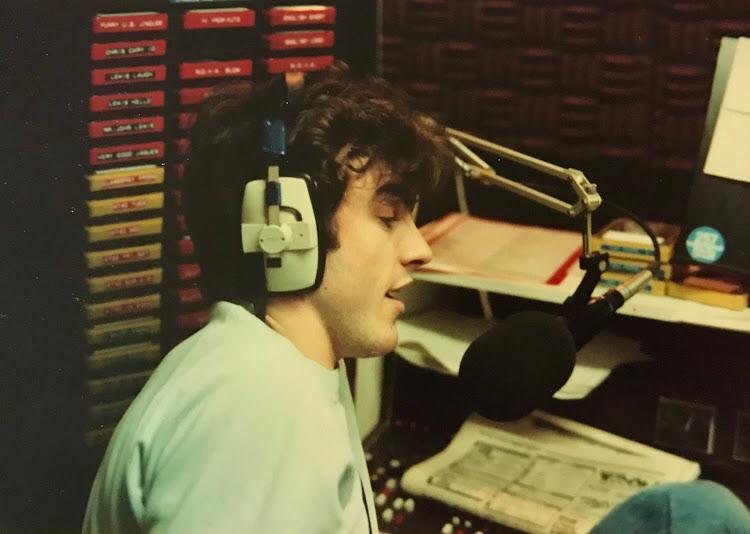
Tony Gareth on air
I walked up the steps to the front door where Chris was smoking, staring off into the night sky. I was terrified. He said: “Allo!” I handed him the package and said, “Here’s a demo tape.” He shook it and replied, “You any good then?” How do you answer that? Then he asked again, “You any good, or am I wasting 30 seconds of my life listening to this?” I replied, “Yeah I’m pretty good. Why don’t you listen to the whole tape?” He roared laughing and looked at the jiffy bag again. “I like that. Cocky! Is there a phone number on it?” “Yeah,” I replied, as I walked back to my tiny rust bucket of a Renault 4, parked beside his huge shiny Jag. “Thanks,” I shouted, trying to be cool. I turned the key. My car wouldn’t start. Chris pushed it down Herbert Street single-handed until it chugged into life and I drove off into the night. I swore for the entire twenty minute journey home. When I turned the key in the front door of my parents' house later that night, my mother had left a note on the hall table for me. It said, “A Spangles Maldoon called for you. You start the job tomorrow. He’ll see you at 10. What’s the job? Mam xx” That night in 1981 gave me a break that would steer the radio rudder of my life in the greatest way I could ever have imagined for almost 40 years since then.
Chris Cary in Herbert Street
Success Is In The Detail
Chris Cary believed that being a successful DJ was a serious, skilled profession, not a refuge for people unable to obtain what outsiders might conider a 'proper job'. He once said that a presenter needs intelligence, technical competence, musical judgment, preparation, wit, concentration and the ability to communicate naturally without offending the audience.
Cary's attention to detail was astonishing. We read earlier about the tweaking of the signal and his meticulousness in ensuring it was at an optimum. He expected the same attention to detail from those sailing the good ship Nova.
John Clarke:
I know the stories about Carts not being re-cued are many - but in 1981 before the 600 carts were carted up,
we used all vinyl from the vast library and if Chris saw you putting a record on the player and not stopped to clean
it to pristine conditions, you were in BIG trouble. Chris loved clean stereo, no clicks, no scratches!
Declan Meehan recalls arriving at Radio Nova:
When I joined I asked Chris when do I start. He said, "not until you wash away much of your past...this is new".
He sent me on holidays to Los Angeles to absorb KIIS.
I couldn't believe it at the time.
Chris: Do you have a girlfriend?
Declan: Yes.
Chris: Well, there's two plane tickets, keys to a car, $100 ...
you'll be picked up at LAX by a friend of mine who'll bring you to my condo.
I had to rush to get an International Drivers Licence and off we went!
First time in a jacuzzi! KIIS was a brilliant station and I got what Chris was talking about. We were all sent there in time - MacArthur Avenue - to learn the Nova way.
I really enjoyed being part of his 'radio experiment'.
I remember him saying: "Enjoy this. It will end and you'll never experience this again."
Seán McCarthy (on air as presenter/newsreader Gary Hamill):
His "You're only as good as your last link" style of direction kept everyone on their toes every time the mic went up.
It may very well have needed to be that way for it to sound so hot. Yes Chris could be intimidating at times, but his beating heart for radio was enormous
and exhilarating, and we were all there for that very thrill and love of radio.
The problem with radio today is threefold: There's little passion 'for' radio, there's little passion 'from' radio, and none of it is under impending threat of closure.
Hence, the result we hear: tepid voices and non-personalities excruciatingly unsuited for on-air roles. The bus ride of broadcasting.
Whatever his personal character foibles, and we all have some, with Chris we got to fly the Apollo.
And he gave many the break the country's own national broadcaster wouldn't.
Vox Box: An outsider's evaluation of Chris Cary
Few figures in radio history have divided opinion as sharply as Chris Cary. He did so during his lifetime and, continues to do so, years after his death.
To some, he was little more than a bully; to others, an out-and-out genius. Curiously, both verdicts can sometimes come from the same person.
There does appear to be a noticeable divide between those who actually worked with or for Cary and those who judged him from the outside — although there are one or two very notable exceptions.
“Right place, right time.”
“Anyone could have done what he did. He simply had the money to make it happen.”
These are familiar ways of playing down Cary’s achievements. Of course money helped. So did timing. Nobody builds an operation like Radio Nova on fresh air and enthusiasm alone.
But money only buys the equipment; it does not create the vision. Good timing presents an opportunity; it does not seize it. Neither explains the sound of Nova, the standards it set, the people it inspired or the extraordinary hold it established over its audience.
If anybody could have done it, why didn’t they?
Every successful leader possesses a drive and determination that separates them from those around them. Cary had both in abundance, along with the rare ability to transfer that determination to the people who worked for him.
The loyalty of so many former Radio Nova staff members remains one of the strongest answers to his critics. Every year, on the anniversary of his death, sincere and heartfelt tributes are paid by people who knew him, worked alongside him and helped turn his ideas into reality. These are not empty courtesies offered out of politeness. Decades later, the affection remains genuine.
That does not invalidate the less favourable accounts of Cary. He could be ruthless, volatile and frightening to work for, and some of the grievances against him were undoubtedly real. Recognising his achievements does not require pretending otherwise.
Genius does not excuse bad behaviour — but bad behaviour does not erase genius either.
At the risk of dragging another great passion of mine into the story — with apologies — at the end of the 2012–13 season, Manchester United United were champions of England once again. It was their thirteenth league title under Alex Ferguson during an unprecedented period of success.
Ferguson shared several traits with Cary: a stubborn streak that sometimes worked against him, a dogged determination, a steely resolve and an extraordinary ability to transfer his own will to those around him. Many of his former players remain fiercely loyal to him, despite frequent accusations that he could be a bully — and despite one or two having entirely legitimate reasons for believing that he bullied them.
Ferguson retired at the end of that championship-winning season. The following year, largely the same team finished seventh under David Moyes, a capable manager whose background was remarkably similar to Ferguson’s.
The most important difference was the man in charge.
Steering a good team towards greatness was not quite so easy after all.
Moyes was not Ferguson.
Nobody else was Chris Cary.
It was not simply Cary’s money that made Radio Nova what it became, nor was its success merely a matter of being in the right place at the right time. Both undoubtedly helped, but suggesting that anybody placed in the same circumstances could have achieved the same result seriously underestimates the influence of a powerful leader.
Radio Nova was the product of Cary’s vision, ambition, drive, technical brilliance and sheer force of personality — along with all the flaws that accompanied them.
Chris Cary could be difficult, unreasonable and, at times, perhaps impossible. He was also a great radio man, and any honest assessment of Radio Nova’s legacy must give him his due.