It is fair to say that Cary fell in love with the sound of FM radio whilst in America and became desperate to get a station onto the FM band in Dublin. The following is his own account of the few months leading to the start of Radio Nova.
Whilst in California I [became] transfixed by the FM radio sound, which had progressed from long-haired hippy stations to full-time Top 40 entertainment stations like Kiss FM, K-UTE and K-Earth. Also the Mighty 690 on AM. I went to see the different programme directors of these stations and learnt how to dissect formats, which is really quite easy to do. If you draw a one-hour clock and break it into segments and document what type of song is played during each of these segments and in which order. Very quickly you’ve cracked it and know which type of song will be coming up next, and how it will be presented. I’ve done this many times with many US markets. It also helps to ascertain which is the Number 1 station in the marketplace – and why.
I was told that the key to all this FM excitement was due to something called an ‘Optimod’ processor which, in a nutshell, looks at the whole spectrum of frequencies within the audio that’s being played and corrects each segment. For example, if you use a normal compressor it will just trigger on the bass and make the whole sound ‘pump’, in essence you’re trying to bring up the low audio parts and limit the high ones which, if not driven too hard, will produce a very loud sound without being too tiring. It would take a whole book to write about ‘loudness’ and ‘loudness wars’ which of course to the listener is perceived as power – which is all part of the game. So, my bloody heart led my head (as usual) and I decided that I had to have one of these optimods – which everyone told me would be well nigh impossible as they were back-ordered over a thousand units. But, lo and behold, I found a ‘soft order’ for an Optimod, a Phelps Dodge circular antenna array which was tuned to 88 MHz (this I hope explains why I chose this frequency for Radio Nova), and a 1 kW transmitter.
Constant communication with my friend Brian McKenzie in Dublin as I enthused to him about this fantastic FM sound encouraged him to suggest that I brought this kit to Dublin where it had never been heard. I asked him if there was any activity on 88FM. He told me that the FM band was empty, apart from RTÉ in mono and spasmodic tests from Big D and Radio Dublin. Brian was commissioned to find suitable office/studio premises in the Ballsbridge area of south Dublin – and duly came up with 19 Herbert Street – which deserves a plaque outside commemorating the fact that Radio Nova began there as radio enthusiasts still make a pilgrimage to the building.
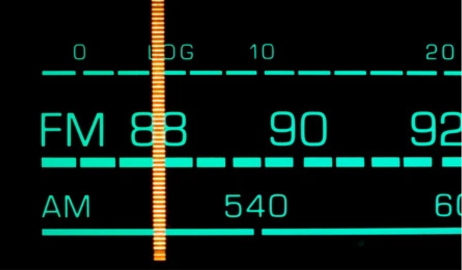
This is what committed me to using 88FM for Radio Nova in Dublin – not the fact that on old rubber band radios if you changed from AM to FM you would automatically go from Sunshine (on 531 AM) to Nova (on 88 FM). It never occurred to me until Robbie Dale pointed it out. I could bask in the glory of how clever I was – but have to admit that it was actually an accident of logistics.
It was now May of 1981 and all the equipment had duly arrived in Dublin. Tests commenced and people started to discover the exciting new sound on VHF.
Over the course of the following years there were many indicators that Cary and Robinson had had a major falling out. As hinted at in Cary’s piece, the first obvious sign of this was when Robinson accused Cary of deliberately picking 88FM for Nova because on many radio receivers at the time the switch from MW to FM would retune the set directly from Sunshine to Nova.
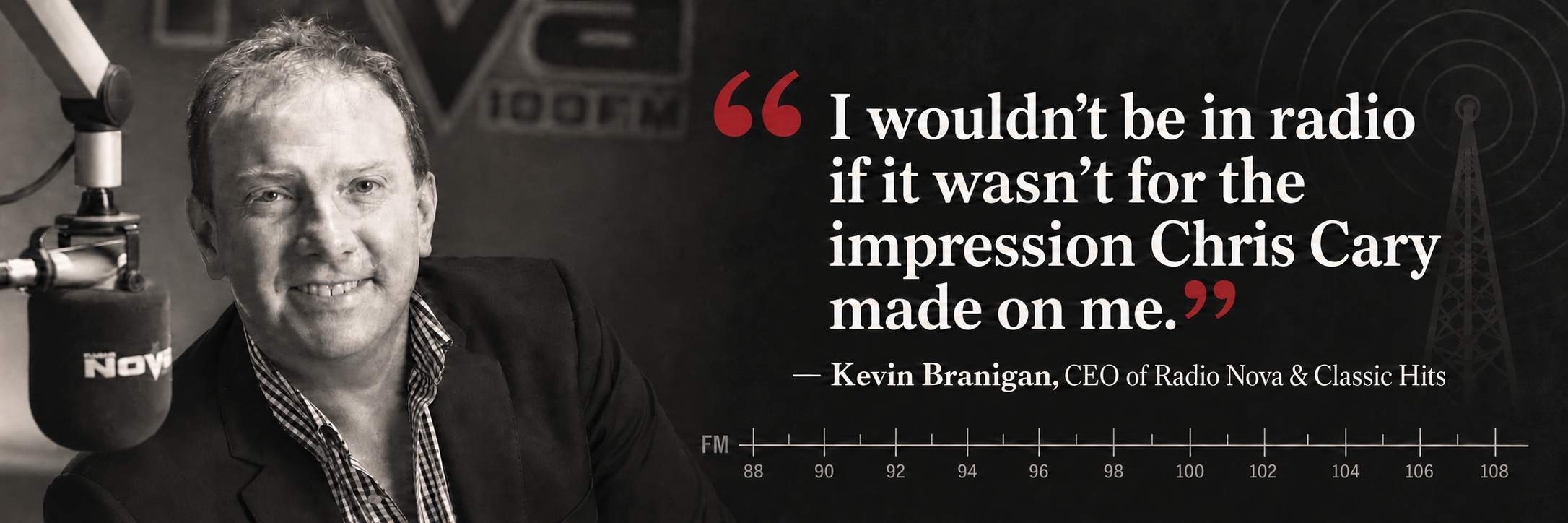
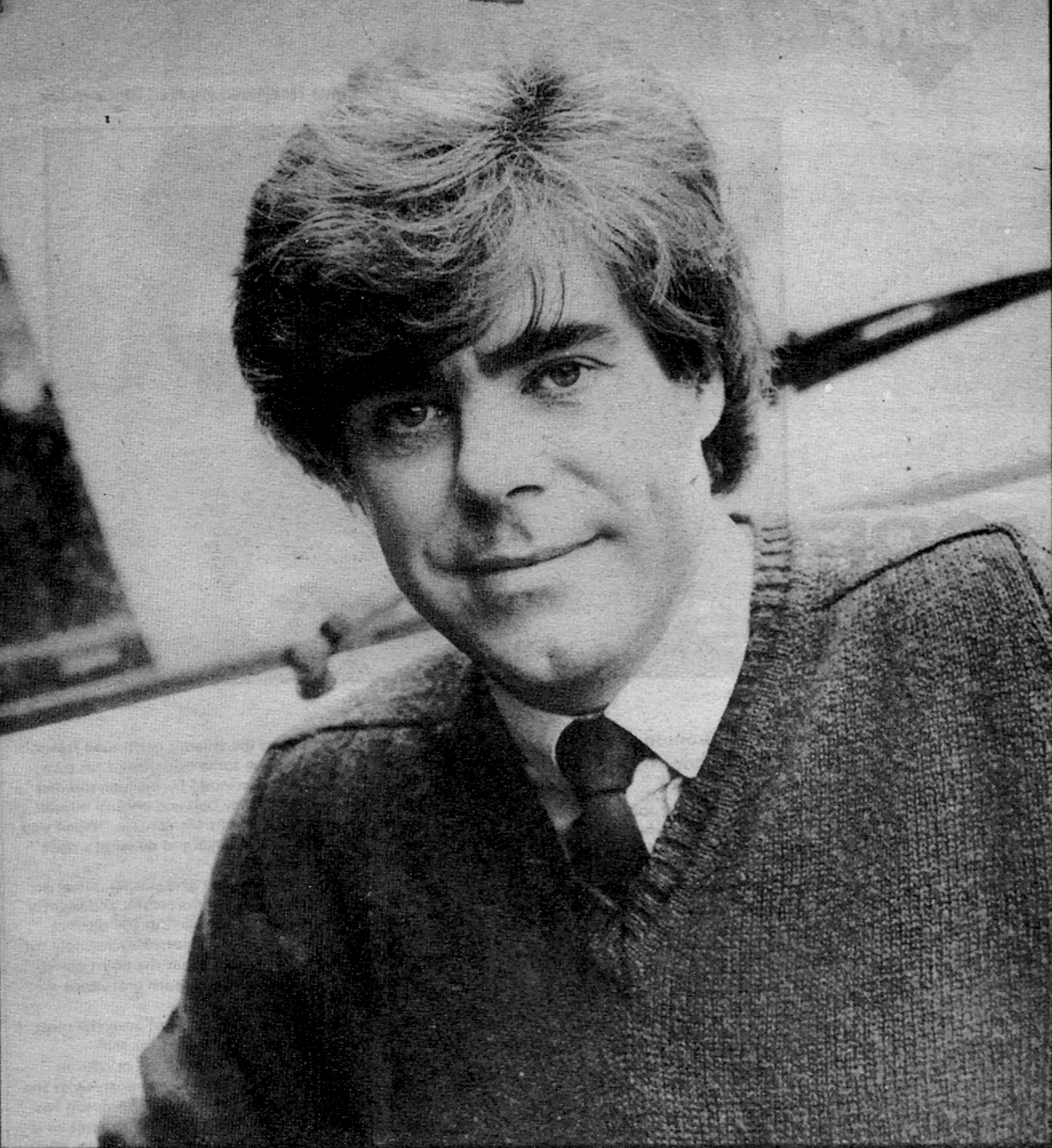
As Chris (pictured) says it never even occurred to him; but the pure and simple fact of the matter is that such trickery would have been utterly pointless anyway. Apart from RTÉ, there was very little else on the FM band at the time. So listeners would have had no reason to change their radio to FM unless they were actively seeking out either RTÉ or Nova. It is fair to say that the VHF band, as it was more commonly known at the time, was – for listeners – a curious addition to radio sets bought in Ireland. In fact, it could be strongly argued that it was Sunshine who benefitted; if somebody tuned to Nova wanted to listen to another station the only place to find one was on medium wave, and the first station they'd hit was, of course, Sunshine Radio!
Of course, Cary wasn’t to know Radio Nova would turn out to be so successful which – as a direct consequence – would lead to the FM band filling up with old and new stations alike. He has been credited with possessing many incredible qualities but surely such a fine-tuned sense of prescience was not amongst them. Having said that, this is the same man who brazenly told a judge in January 1986 that he wasn’t aware that he’d been breaking the law when putting Radio Nova on the air!
There was also word that Sunshine had planned to use 88FM themselves – something Cary would’ve been aware of, obviously. Whatever the truth of the matter, from the end of May and into June, tests on 88FM in Dublin were very much up and running.