By the start of 1983, Radio Nova was the undisputed number one station in Dublin, and probably most of Ireland. If there was anybody who’d never heard it, they’d certainly heard of it. Cary had no intentions of resting on his laurels. It was just not in his nature.
With Dublin already conquered, expansion plans for a new high-powered station aimed specifically at Britain but based in Ireland were going ahead with the mast being erected at Nova Park. A 50kW transmitter had been procured specifically for this purpose and Cary was delightfully revealing his plans to anybody who cared to listen. Along with the long-mooted ambitious plans for Nova TV, many felt it was this, and more, that led to the seismic and unprecedented events of May 18th & 19th 1983.
May 18th was a routine enough Wednesday morning – “…a day like any other day,” as described by Declan Meehan. Declan and Bob Gallico were on air as usual at Nova’s studios in 19 Herbert Street. In the same building, Mike Moran was entertaining listeners to sister station Kiss FM.
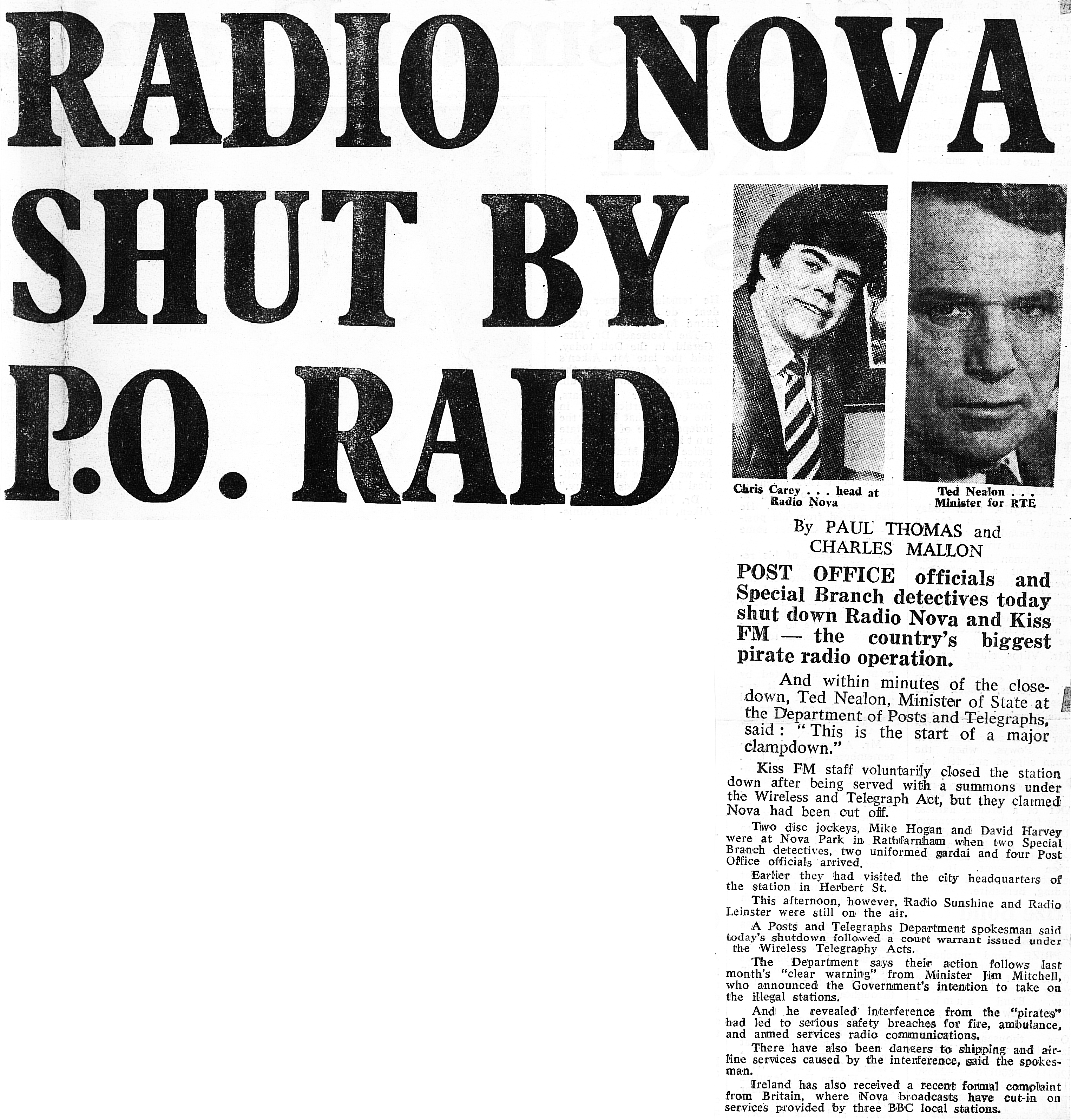
As the time approached 9.30am, officials of the Department of Posts & Telegraphs, accompanied by uniformed members of An Garda Síochána – the official title of the Irish police force which translates to ‘Guardians of the Peace’ – arrived outside Radio Nova’s studios. Their intentions were far from peaceful on this particular morning. After a few minutes delay, they were allowed entry and immediately requested for both stations to cease transmission. This request was refused – the warrants were for the transmitter site, which was in Rathfarnham. The apologetic officials (they were radio listeners too, after all) asked for the keys to the transmitter site.
Live over the air Declan Meehan was heard calling for Chris Cary to come to Herbert Street. This was the first indication to the average listener that there was something going on.
The call for Cary followed an airing of Les Reed’s ‘Man of Action’, which is usually a good indicator to radio enthusiasts that something serious is going on behind the scenes.
For one serious radio listener, however, the signs were spotted even earlier. Gerard Roe, then presenter of Radio Dublin's Pirates Promotion Programme, recalls listening in that morning:
Being a proud, sad anorak, I noticed something was up before Man of Action played out. I was in work, with Nova playing out across the office, as it always did.
Chris Cary once described Nova as ‘Hamburger Radio’… think McDonald’s – you always know exactly what you are going to get, no surprises, everything within your expected taste and comfort zone. So much so, that even without realising it, you fell into the Nova groove while listening and every link and jingle had a time and place.
I first suspected something was up when Declan missed a link and a few jingles were played out of the expected context. In the days before mobile phones, he was desperately trying to attract the attention of those who would know that the Nova groove was not right.
After another few links missed, and more random jingles, I mentioned to some colleagues that something was up. They hadn’t noticed, but once Declan put out his call for Chris to contact the station and Man of Action was played, I knew it was serious.
The following hour or so was compulsive listening and word spread like wildfire around Dublin (and far beyond) that Nova was being raided. Little did any of us know at that time, that far more was to come.
Rip It Up
The professional instincts of Declan Meehan and Bob Gallico came to the fore as they composed themselves and entertained the listeners, whilst also alerting them to the fact that the station would go off the air at any moment. Their programme had been due to finish at 10am; meanwhile, Tom Hardy, who had been preparing for his show's 10am start when the knock on the door came, was at this point escorting the P&T officials to the transmitter site.
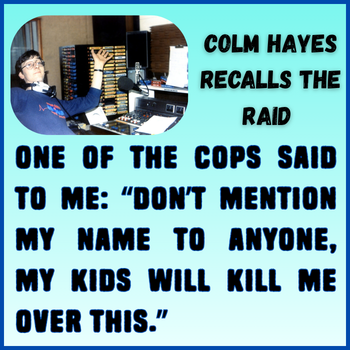
Eventually, both Radio Nova and Kiss FM fell silent and the otherwise very ordinary ‘Rip It Up’ by Orange Juice has become an anorak classic as it was interrupted mid-song (probably the only merciful moment of the event) as Radio Nova was switched off, promising to return as soon as possible.
In Rathfarnham, the officials earned a full day’s pay – it took that long to dismantle and remove everything. ‘Everything’ included the shiny new 50kW transmitter.
That afternoon, Chris Cary and other station personnel were at the High Court seeking an injunction restraining The Department of Posts & Telegraphs from interfering with Radio Nova and Kiss FM. A date was set for the following week, Thursday May 26th.
Sunshine On Alert
Meanwhile, over at the second biggest station, Robbie Robinson, fearing that dark clouds might arrive to block out Sunshine Radio, fretted about whether to close his station to safeguard the equipment.
He was one of those who was convinced that Cary’s activities were responsible for the actions and that the raid on Nova was a one-off but the nagging doubt at the back of his mind that this might just be the start of a clampdown, the beginning of the end, led him to call as many of his in-the-know contacts as he could.
He was obviously reassured by what he heard because he was back on air the following morning as usual, or as close to as usual as was possible given the uncertainty which permeated his mind.
We’ve all had cause to say it at least once in our lives, the lucky ones just once: “I should’ve trusted my gut instincts.” Robinson must’ve said it many times in the aftermath of the visit which his station received, forcing it off the air that morning, the morning of May 19th. It was beginning to look like it was the beginning of the end after all, and the second raid, in particular, sent shockwaves across Ireland’s radio waves.
Hitting Radio Nova was huge in itself. Hitting Sunshine Radio as well was an indicator that the unthinkable was happening – Ireland’s blossoming radio stations were being forced off the air, the long-feared clampdown had arrived and nobody was safe.
Many of the country’s stations closed down voluntarily in the aftermath of Sunshine’s closure. Whilst the possible fines were paltry and represented no deterrent, the threat of the loss of very valuable equipment was enough for many of the stations to shut up shop.
Sunshine’s raid demonstrated that perhaps Cary wasn’t to blame after all.
Nova Returns
Speaking of Cary, Radio Nova had returned in the early hours of that morning, albeit on much-reduced power and using a borrowed transmitter. Indeed, it was back on air in time to report the raid on Sunshine Radio, which led to their closure at around 9.45am!
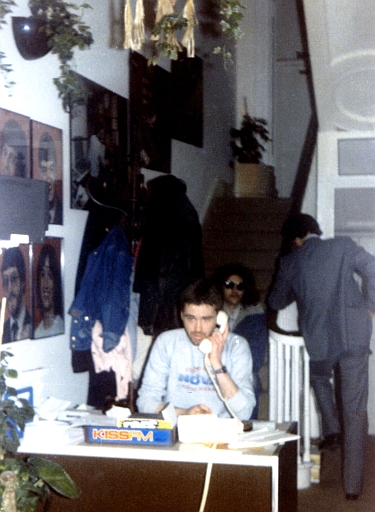
It was another normal morning, programming-wise. Declan & Bob had great fun during their morning newspaper review slots where, for once, they themselves were the News.
Tom Hardy was on time for his show this particular morning and every few minutes listeners were urged to sign a petition to keep Nova on the air.
At a lunchtime meeting of the senior staff the previous day, Nova had decided to return to say a proper goodbye to their listeners. Although not unforeseen, it still came as something of a shock when at 1.25pm those intentions were announced on air, an announcement which, in its wake, led to one of the most iconic and amazing days in Irish broadcast history, or “a day of complete rabble-rousing,” as Tom Hardy later described it.
Radio Nova were to officially cease broadcasts at 6pm that evening. The station, which had already been closed down and stripped of all of its assets the day before, had come back on air and were now going to close down under their own terms. Chris Cary’s terms. It seemed that the tail was wagging the dog somewhat.
Don't Let Us Down
Nobody listening to Radio Nova on May 19th 1983 will ever forget it. It was the greatest call to arms, or perhaps call to horns, ever broadcast on Irish radio. Listeners were bombarded with pleas to contact their elected representatives; were informed that they could show support by attending a march at a later date; were all invited to Herbert Street for the 6pm closedown; and urged to blow their car horns to serve as an orchestral cacophonous backdrop to the final moments.
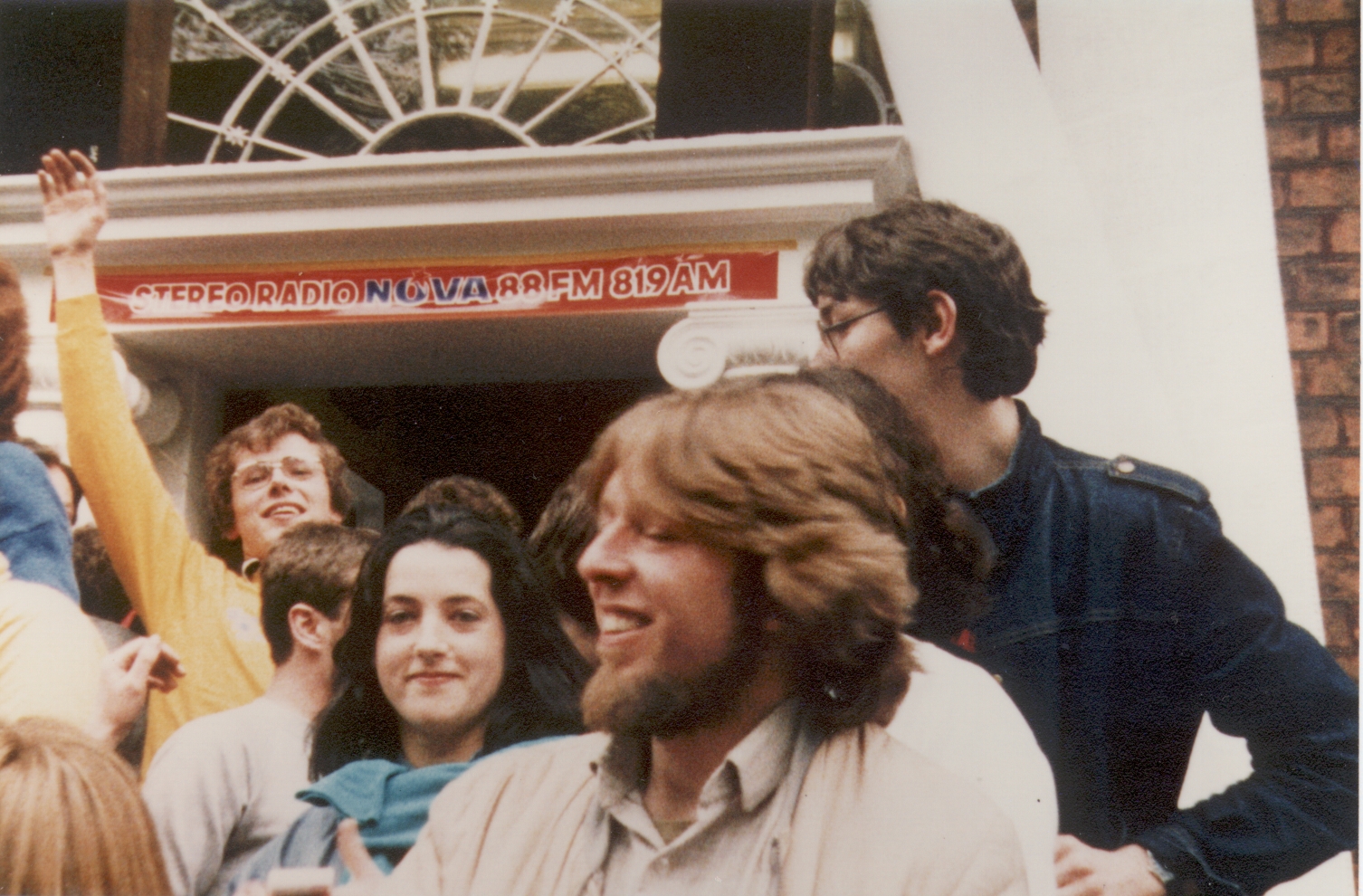
Perhaps they had planned to invite the Herbert Street invitees inside but they could not have had any idea of what was to follow as thousands of people, on a workday remember, followed their hearts and their ears and ended up as close to the iconic building as they possibly could; and with Dublin’s city centre brought to a standstill thanks to the crowds that had descended on Herbert Street, as close as possible was still a distance away for many.
Throughout the afternoon, the two station’s (Nova and Kiss) impressive rollcall of presenters doubled up to present half-hour long programmes to say their farewells. And to play their part in whipping Dublin into a frenzy.
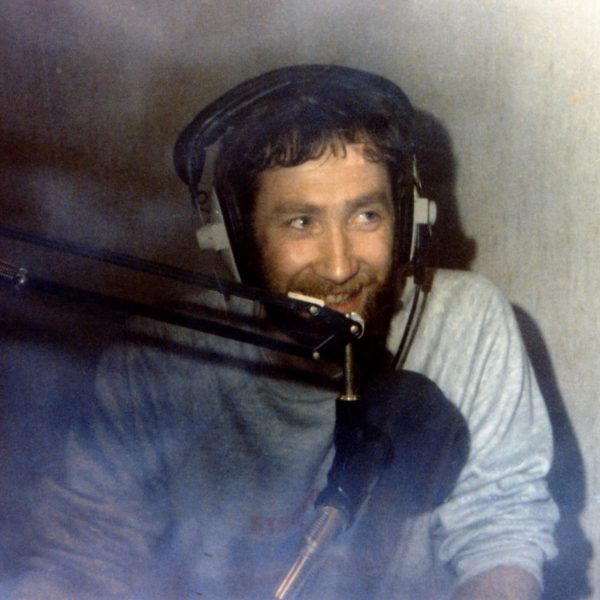
It is the most memorable few hours of radio ever to radiate from a transmitter based on Irish soil and by the time 6pm came – all too quickly – the people in power who had sanctioned the attacks on the nation’s stations must have seriously wondered how they’d judged the mood of the people so badly wrong as they were forced to place their fingers in their ears to block out the racket from car horns all over Dublin city and county…and beyond.
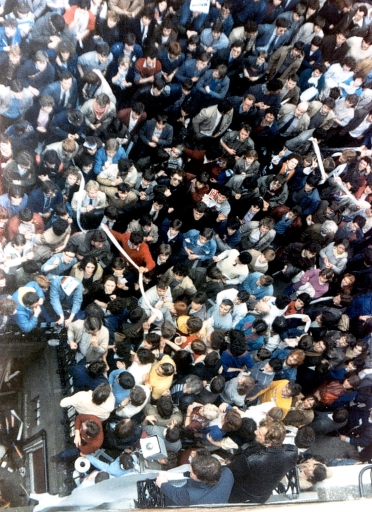
Whilst us Irish love a revolution, you’re still more likely to find us placated by a few creamy pints of Guinness, an anaesthesia for a nation. It takes something special to get the locals to rise up, en masse. That something special had been created by Chris Cary, aided and abetted by anyone who’d ever taken to the airwaves to entertain listeners on the good ship Radio Nova.
If, with the raids, politicians had misjudged those whom they serve, one wonders if the situation was misjudged – or at least mismanaged – by Cary. Whilst all of those present in body, and in spirit via their radios, at Herbert Street on Thursday would’ve been delighted at being able to tune in again to their favourite station when it returned the following Saturday evening – just two days later – in retrospect, the decision to return to air might have been an opportunity lost to apply some serious pressure on the government to once and for all sort out the radio situation. That might seem quite hindsightful, but anyone who bore witness to the events in Dublin city at 6pm on May 19th 1983 would’ve realised that the issue of radio was a very important one – and most of the attendees were of voting age after all.*
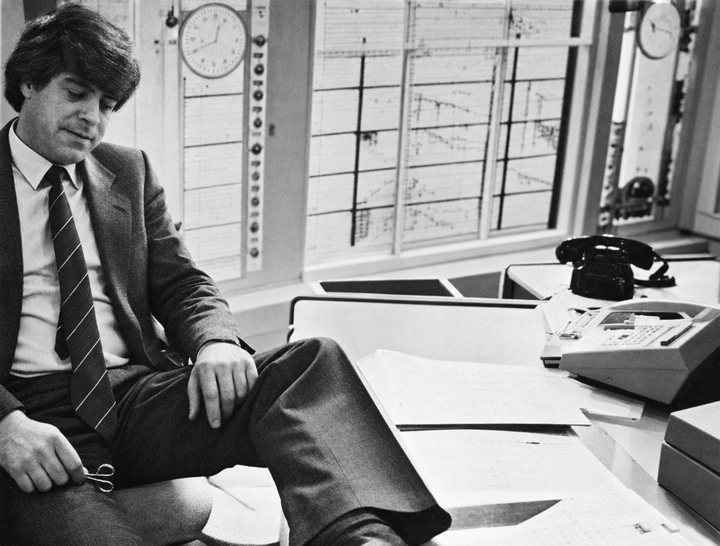
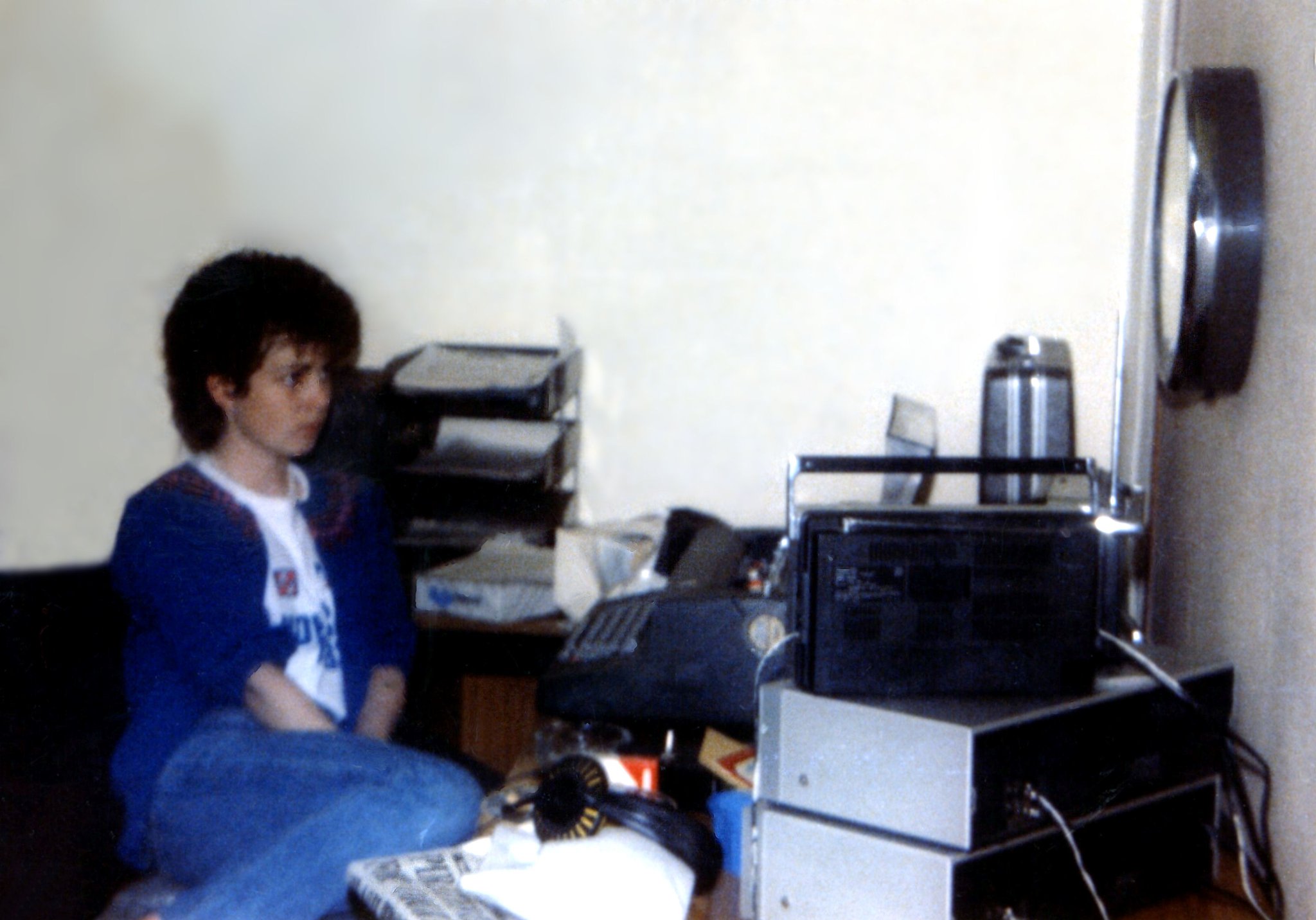
Chris Cary and Sybil Fennell in reflective moods after the horns have died down
The Right To Listen
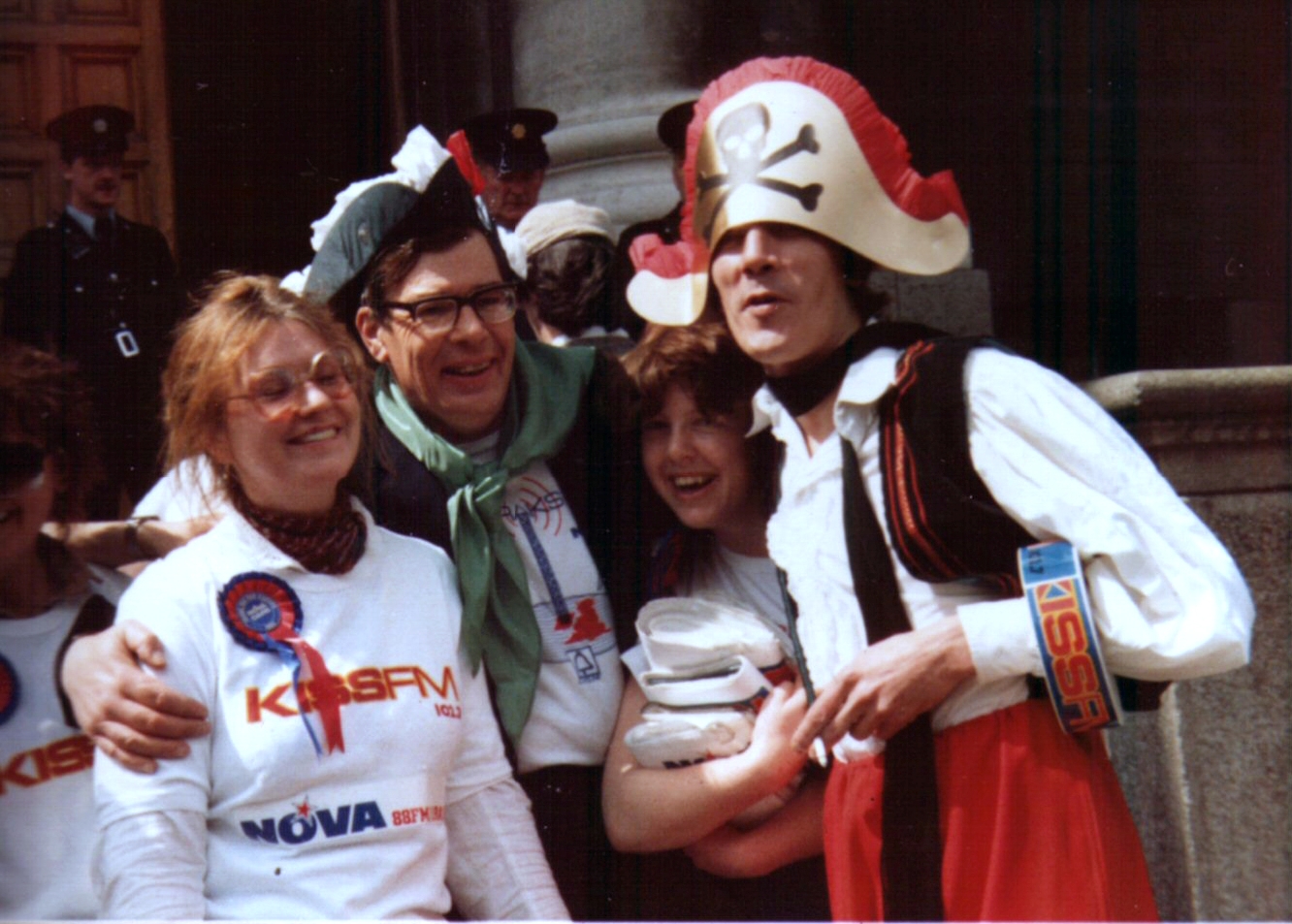
The mooted march in support of local radio took place the following Friday, following close to a week of uninterrupted programming from Radio Nova. 15,000 people demanded the right to have a choice of radio stations.
15,000 people.
On a Friday afternoon.
Meanwhile, Radio Nova’s new low-powered transmissions meant that they were now announcing that they were “broadcasting TO Dublin” and no longer “FROM Dublin” at the top of each hour. Subtle, but again testament to Cary’s eye for detail.
The frenzied closedown of May 19th did have some effect – there were unofficial noises emanating from government sources suggesting that pirates would be left alone – interference notwithstanding – until such time as legislation was in place. Amazingly, even in a country as laid-back as Ireland – think Netherlands without the dope, apart from the one in power of course – it was another four years before legislation was finally announced, and five before it was introduced.
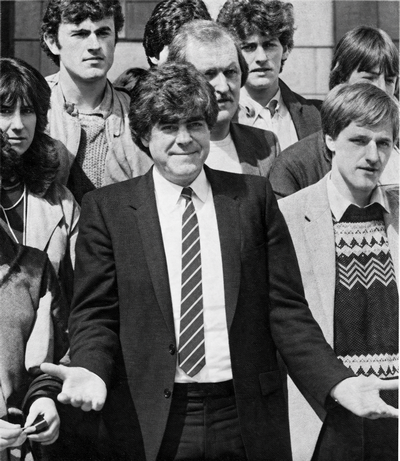
Meanwhile, Cary had already had a couple of court cases challenging the raid adjourned and he eventually got his equipment back. As did Sunshine Radio, who had remained off the air until they felt it was safe to return.
When Radio Nova returned Kiss FM was sacrificed. John Clarke reveals that Cary wanted to keep the Nova brand at the forefront.
So instead, Radio Nova operated a split schedule on FM and AM between 7pm and 3am each night from June 8th. Super Nova aired on 88FM and ‘normal’ Nova on 828kHz.
On Super Nova, specialist programmes like Dennis Murray’s Rock Show blasted out nightly in stereo.
Kiss FM did return much later in the year.
Vox Box: A personal insight in to the May raids
Ronan Segrave
The raids by the P&T on the superpirates Radio Nova and Sunshine Radio in 1983 came, as far as the Irish public were concerned, as a total bolt from the blue. Raids on Irish pirate radio stations had decreased significantly since the Radio Dublin/ARD/Big D era in 1977-79 and by 1983 were largely confined to very small operations using poor equipment where there was obvious inference with emergency services.
Irish pirate radio changed dramatically in 1980 with the arrival from England of former Radio Caroline DJs and businessmen, Robbie Robinson and Chris Cary. Seeing a benign tolerance that now seemed to be in place from the Irish government with totally outdated legislation and the fact that the best of the then pirates, such as Big D, had largely stagnated in terms of professionalism, money was definitely there to be made. Both men, seeing an opportunity to make serious money, set up Sunshine Radio based out of a portacabin at the Sands Hotel in Portmarnock. What happened next is well-known – Robbie wanted a UK IBA-style station like Radio Piccadilly in Manchester; Chris wanted a slick US-style station based on stations like KIISFM and K-Earth 101 in Los Angeles. Robbie launched Sunshine on AM/MW; Chris was obsessed with FM Stereo. The men parted ways with Chris bought out of Sunshine – but as we know, once Chris Cary left, he was repeatedly contacted by Brian McKenzie of Bay Studios in Herbert Street advising him that he had missed out on a huge money-making opportunity.
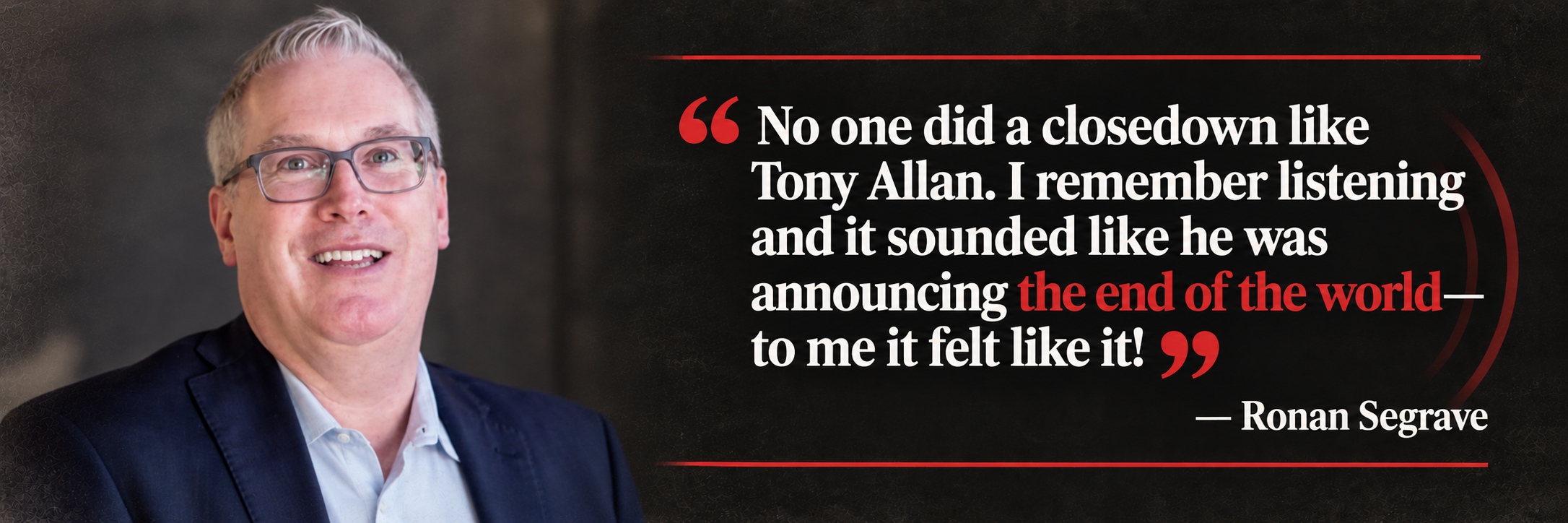
Tempted back to Dublin in 1981, Chris put his ideas into full fruition and launched Radio Nova, based out of Herbert Street with a microwave link to transmitters based at Green Acres, Rathfarnham. US West Coast-style radio suddenly arrived in Dublin on crystal clear FM Stereo with the deliberate selection of 88FM as the frequency – the one intended for Sunshine! Aided by hiring experienced jocks such as John Clarke, experienced UK hands such as Andy Archer, Mike Edgar and Tony Allan, with a deliberate policy not to take ads in the first few weeks, Nova was an immediate hit. The station’s music policy was a mix of selected current and possible radio-friendly hits combined with ‘favourites’ –mainly US records from the likes of Steely Dan perfectly recorded to sound sharp on an FM stereo station.
Soon Nova was taking Ads – lots of them – as listenership exploded to such an extent that, in 1982, a sister station Kiss FM was established.
Chris Cary was also an outstanding picker of on-air talent – John Clarke, Declan Meehan, Colm Hayes, Scott Williams, Gareth O’Callaghan, Greg Gaughran, Sybil Fennell, Tom Hardy, Hugh O’Brien, Jason Maine and so on – an incredible roster of talent. The hiring of Bob Gallico, a former American actor, as a newsreader was another great hire – Bob was paired with Declan Meehan for the first two-hander radio breakfast show in Ireland which is still fondly remembered today.
Nova, by early 1983, was making serious money for that time – a turnover of IR£1-2 million with profits in excess of 200,000.
Nova was now also on AM with a 10kw rig, with a powerful 5kw rig on FM. It was using broadcast equipment such as optimods (audio processors) that was way superior to RTÉ.
Billboard campaigns, big cash giveaways, politicians and RTÉ personalities doing voiceovers, the public largely forgot Nova was illegal. Yet, by early 1983, the die had been cast for a raid…
Based on private conversations with former Fine Gael cabinet ministers and officials, who are now long passed, it is my personal view that the 1983 raids had nothing to do with largely baseless claims of Nova/Kiss interfering with emergency services frequencies, or were in any way intended as some sort of national clampdown on pirates (which never happened), but were directly targeted at Chris Cary in the hope he would be frightened enough to shut down Nova and Kiss and return to England. If that is true, why then was Sunshine Radio also raided? Possible reasons were deflection – to make it look politically that some kind of national clampdown was coming which was never the intent – and also political revenge by Fine Gael who never forgave Sunshine’s newspaper ads in the February 1982 election urging its listeners to vote for Fianna Fail.
So these are my personal views on the May 1983 raids:-
1: Chris Cary’s expanding ambitions.
By early 1983 Chris Cary was the king of Irish radio. Radio Nova was making serious profits with a massive listenership in Dublin and neighbouring counties, Kiss FM was also in profit. But the ever-restless Chris was still not content. As other members of the Nova management team such as Mike Hogan have attested (also reported in Magill and Phoenix magazines), Chris held meetings with both Tony O’Reilly of Independent Newspapers and the Eamon Andrews Organization (which went bust in ’84) on what was described as furthering Nova’s business and media interests. The meeting with Tony O’Reilly, in particular, spooked the government. O’Reilly was no fan of RTÉ, which he considered to be dominated by hard-left anti-business types, and possibly saw an opportunity to team up with Cary to create an integrated independent media offering including both radio and TV. Independent Newspapers were heavy advertisers on Nova – the hourly ads for the Evening Herald small ads at the top of every hour for starters. For Chris Cary, O’Reilly offered legitimacy and a passport to a licence and expansion. O’Reilly ultimately backed off, presumably assuming that a tie-up with a pirate station would be more negative than positive for his business interests. The government were, however, shocked and alarmed that O’Reilly had even contemplated an alliance with Cary. Undeterred, Chris continued with expansion plans focusing on launching yet another station aimed at the UK on Long Wave and imported a 50kw transmitter combined with advertisements which appeared in the UK press for “Radio Exidy”. Chris also explored various options for a transmitter site including at Mosney. My sources told me that this had come to the attention of the UK authorities who made representations directly urging the Irish government to deal with “their pirate problem”. For the Irish government, it was embarrassing and led to a view by the relevant Ministers, Ted Nealon and Jim Mitchell, that Cary’s ambitions needed to be reigned in and it might be for the best if Cary departed Ireland entirely.
2: Constant complaints from RTÉ.
Through 1982, and into 1983 there were constant statements and representations to the government from the board and senior management of RTÉ urging the closure of pirates, and Nova in particular. RTÉ was posting losses while Nova was making considerable profits. The government faced pressure for a more significant increase in licence fees to offset the loss in advertising revenue. There is no doubt that Nova was taking a large chunk of advertising revenue from RTÉ where things had got so paranoid that Radio Nova car stickers were banned from RTÉ’s Montrose car parks. While sympathy for RTÉ was limited in Fine Gael, there was also no desire to have a funding crisis at RTÉ added to the vast range of economic problems the government was grappling with in 1983. The closure of Radio Nova and Chris Cary’s departure from Ireland would make this go away.
3. As difficult as this is to contemplate in 2021, back in 1983 things were different and the fact that a brash English, Thatcherite businessman like Chris Cary was now dominating the Dublin and neighbouring counties radio market was both a source of embarrassment and real anger in certain government circles. RTÉ was being exposed for what it was - outdated and out of touch with a younger demographic. RTÉ Radio 2 (now RTÉ 2FM) was still playing lots of country music and seemed much more geared to a rural market – Nova tapped into a more sophisticated Dublin market costing RTE millions… “should Irish radio stations not be run by Irish people?” was muttered in certain political circles. Similar noises were made by trade unions, particularly to Fine Gael’s then coalition partners, Labour. While Cary had allowed newsreaders to join the NUJ (which came back to haunt him) and he himself was a member of Equity, Cary’s employees were not on contracts and there were stories about his temperament, instant firings and moods…for the Labour Party Chris Cary was the anthesis of what they stood for and they wanted a more ‘public service’ local radio broadcasting model – not necessarily RTÉ-run given the Workers Party union influence there – the ‘stickies’ – but one heavily regulated and unionised….therefore Labour had no issue with the raid and wanted Cary gone from Ireland.
4. ‘Interference with emergency services’. This old favourite was trotted out as the official reason for the raids without any actual evidence being provided and I believe this had nothing to do with the raids. Nova/Kiss was using frequencies allocated to Ireland, its equipment was superior to RTÉ’s and if this really was the case and such a serious issue, why then was Nova allowed to continue to broadcast for nearly two years prior to the raid? It doesn’t make any sense and was another smokescreen.
Normal Life Returns
It wasn’t long before everything was back to relative normality.
It also wasn’t surprising, perhaps, that the nation’s biggest pirate was itself pirated, with a relay of Radio Nova appearing elsewhere on the MW band which was identifying as ‘Nova Southside’, with their own local commercials running during the ad breaks! An ingenuity that Cary privately would have admired.
And, it wasn’t believable that Radio Nova found itself being jammed again. The 828kHz outlet was targeted early in August 1983 by persons unknown, and no, this wasn’t the name of a clandestine group within RTÉ. Nova jumped between 828kHz and 819kHz over the course of a day and once the jamming had stopped, Nova settled on 819kHz.
In June, Radio Nova had introduced a new three-in-a-row competition, going one grand better than the Kiss FM one in March. This time £6,000 was up for stakes to the fiftieth caller.
As if that wasn’t enough splashing the cash, the budget of a small country was spent on a glossy two-page full colour advertisement reminding the public how much Radio Nova had done for the country in terms of giving employment and paying taxes.
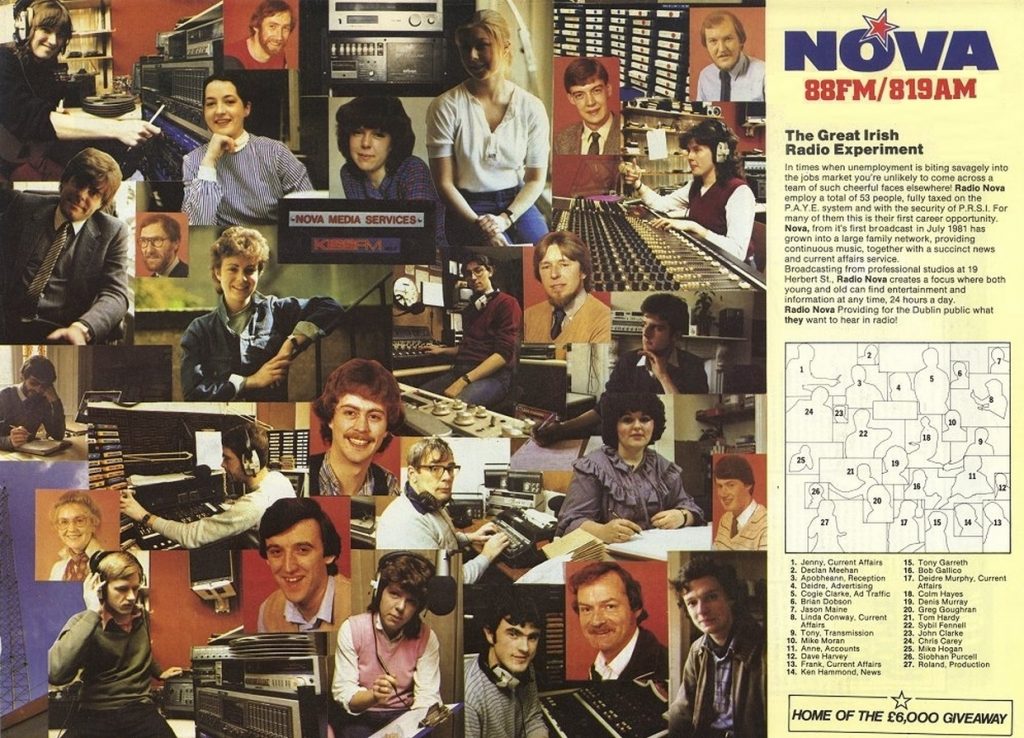
More Than Just Kiss
Kiss FM returned at the end of September, again on 102.7MHz just in time to mop up some of that lucrative Christmas advertisement money.
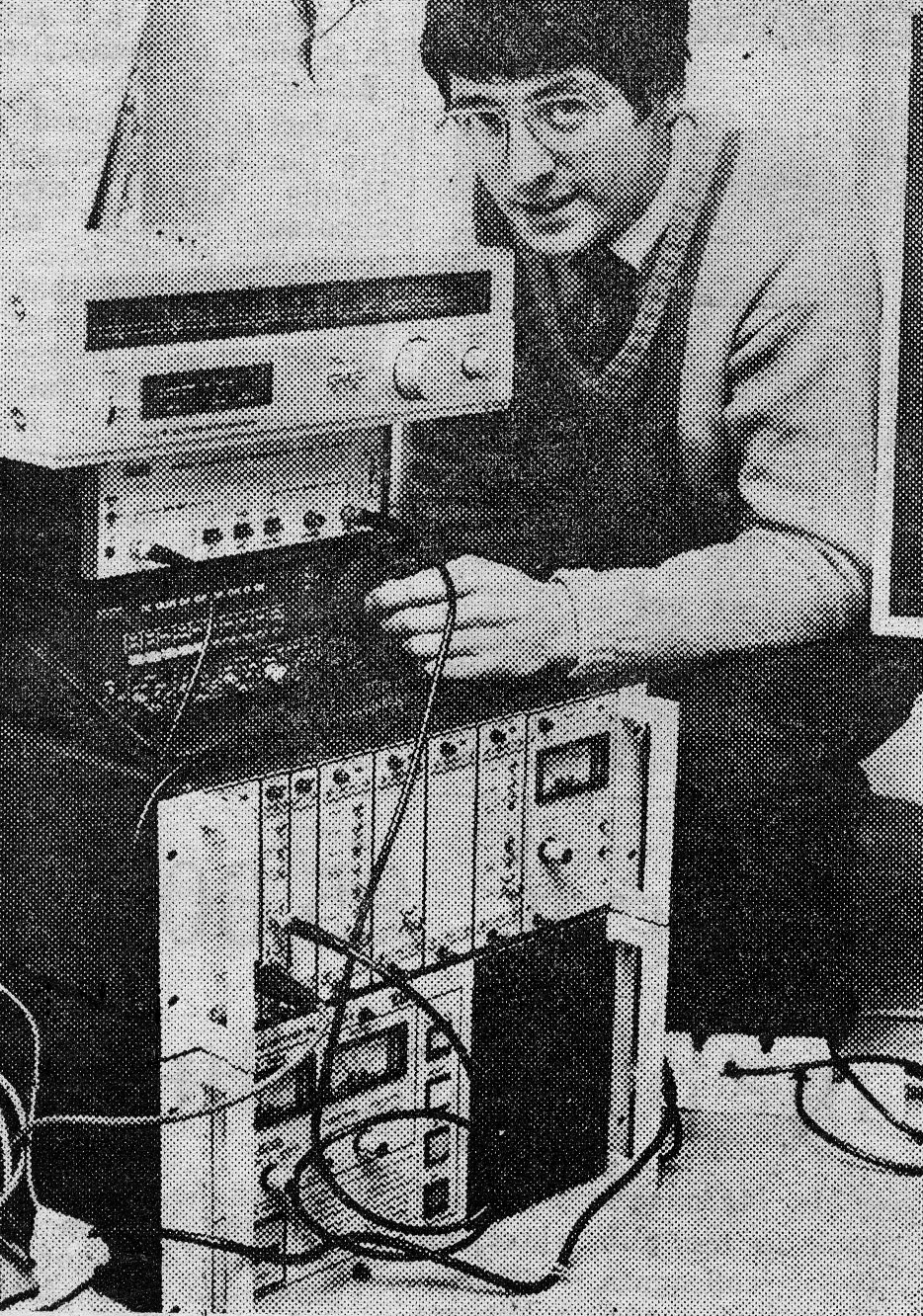
Cary didn't stop there though. In December, a test card sprung to life on UHF in the Dublin area. The following day Sybil Fennell introduced all who could see the signal to Nova TV, which promised nightly programmes. The transmitter was located at 19 Herbert St.
The backlash was instant. RTÉ's Chairman Fred O'Donovan strongly condemned the move into television, declaring war on Nova. Meanwhile, the Department of Posts & Telegraphs left those at Nova in absolutely no doubt that they would be swiftly raided should they persist. Cary quickly realised that he'd taken a step too far and took the station off the air after just a couple of broadcasts. Making absolutely sure that the message was received loud and clear, the P&T went ahead and raided them anyway to the tune of £100,000 worth of equipment.
Vox Box: Was everyone right to blame Cary?
John Fleming
Was Chris Cary to blame for the raid on Sunshine Radio on 19th May 1983?At the time, in the immediate aftermath and even to this day, it has been widely accepted that his actions were solely responsible. But were they?
Cary provoked the authorities and Sunshine paid the price. It is a neat explanation. It is also a very convenient one.
But does it actually stand up?
The case against Cary is not without foundation. He had publicly discussed putting Nova’s 50kW transmitter on the air and broadcasting into Britain at high power. He had also spoken about launching a television station. Cary was hardly attempting to keep his ambitions below the radar.
Those plans may go some way towards explaining why the authorities targeted Nova and Kiss.
But Sunshine?
Robbie Robinson was particularly vocal after the raids, condemning Cary and laying the blame squarely at his feet. Yet his argument also had the convenient effect of shifting responsibility away from Sunshine. Robinson’s station, after all, was also broadcasting without a licence.
Many others within the radio industry readily joined the chorus. Some had themselves been raided in the past; others would suffer the same fate in the future. Again, stones and glass houses.
The explanation usually offered for the raid on Sunshine is that the authorities could not be seen to take “the guilty one” off the air without also hitting “the other”.
But seen by whom? And why was Sunshine automatically “the other”?
Dublin’s airwaves were crowded with unlicensed stations. Why should Sunshine have been singled out simply because Nova was raided? Was it because the two were regarded as Dublin’s “superpirates” — the pair so dominant that one could not be touched without the other?
That may sound reasonable at first, but it quickly falls apart. If size and commercial success were the criteria, why stop at the two Dublin stations? Why not also target the other large commercial pirates operating around the country?
If, on the other hand, Nova was being raided specifically because of Cary’s 50kW transmitter and television plans, then taking Sunshine off the air merely confused the message. Sunshine had neither of those ambitions.
And if the raids were intended to teach Cary a lesson, they failed spectacularly. Nova TV launched only a few months later. Within a year, Cary was targeting the north-west of England, Scotland and Wales, even going so far as to establish an office in Liverpool.
Some lesson.
There is also reason to believe that Sunshine was not the only station beyond the Nova group to face possible action. Strong evidence suggests that Radio Leinster was due to be raided on the afternoon Sunshine was taken off the air. Westside Radio had received a firm warning that it would be hit if it remained on air the following Monday.
We cannot know what might have happened later on May 19th, or on Friday the 20th, had the remaining stations continued broadcasting. Many chose not to take the chance.
In court, the official reason given for the raids was alleged interference. Complaints had reportedly come from numerous sources across Ireland and Britain — and both Radio Nova and Sunshine were named as the sources of that interference.
That point matters.
The official case did not rest on Radio Nova alone. Sunshine was named in its own right. Whatever other motives may have existed behind the scenes, the justification presented for the raids applied separately to both stations. Sunshine was not merely taken off the air because it happened to occupy second place in Dublin’s popularity stakes.
It is also worth noting that Kiss FM had been testing alternative frequencies as recently as April because those at the station feared that it might be causing interference. The possibility was therefore not something invented from nothing on the morning of the raids.
There may have been similar complaints against other stations. As no others were raided, we may never know. But that uncertainty does not turn Sunshine into an entirely blameless victim of Chris Cary’s ambitions.
On the Sunday following the raids, Éamon Cooke claimed in his 'Station News' broadcast that Sunshine had long been responsible for interference affecting an emergency runway at Dublin Airport. Further, in the Dáil on May 25th, the Minister for Posts & Telegraphs stated that whenever interference to radio frequencies at Dublin Airport had been identified, Sunshine Radio was found to be the cause. Concerns about Sunshine existed independently of anything Cary was planning.
Chris Cary’s actions may well have provided the catalyst for the raid on Nova and Kiss. His ambitions, his public statements and his refusal to do anything quietly almost certainly helped to bring matters to a head.
But a catalyst is not necessarily the sole cause — and it certainly does not explain away the separate case made against Sunshine Radio.
Viewed through these eyes, placing the entire blame on Cary looks like a very convenient exercise in self-exoneration. It allowed Sunshine and others within the industry to portray themselves as the victims of one reckless man, rather than acknowledge that they were all operating outside the law and were all vulnerable to precisely the same action.
Very few station owners appeared to have the courage of their convictions on May 19th. If they genuinely believed Cary alone had caused the raids, why did so many of them fear that they would be next?
Why did they switch off?
Their own actions spoke louder than their later condemnations. Whatever they may have said afterwards, on the day itself they clearly feared that the raids were about far more than Chris Cary.