Thanks to Chris Cary’s stubbornness, along with a loyal and dedicated core group, Radio Nova had survived a huge government raid and would see through an extremely fierce RTÉ jamming campaign. However, it was a rancourous internal dispute that ultimately backed the station so far into a corner that it became a major influencer on Nova’s eventual demise. Worse, it all could so easily have been avoided.
Chris Cary was used to acting on impulse. He was also used to getting his way. When, at the height of RTÉ’s jamming campaign against the station in February 1984, he let go fifteen members of staff without giving them adequate notice or statutory holiday/redundancy payments, he insisted that the station could not afford to pay them.
If Radio Nova had been a full-on pirate station he might have gotten away with that claim, but the fact is that Nova was operating within a set of quasi-legal boundaries which meant that it was subject to all of the laws of the land – excepting the one that required a licence to operate a transmitter for the purpose of broadcasting which the government had decided to overlook, virtually giving unlicensed stations free rein to broadcast without fear of another raid, at least until such time as a licensing framework was operational.
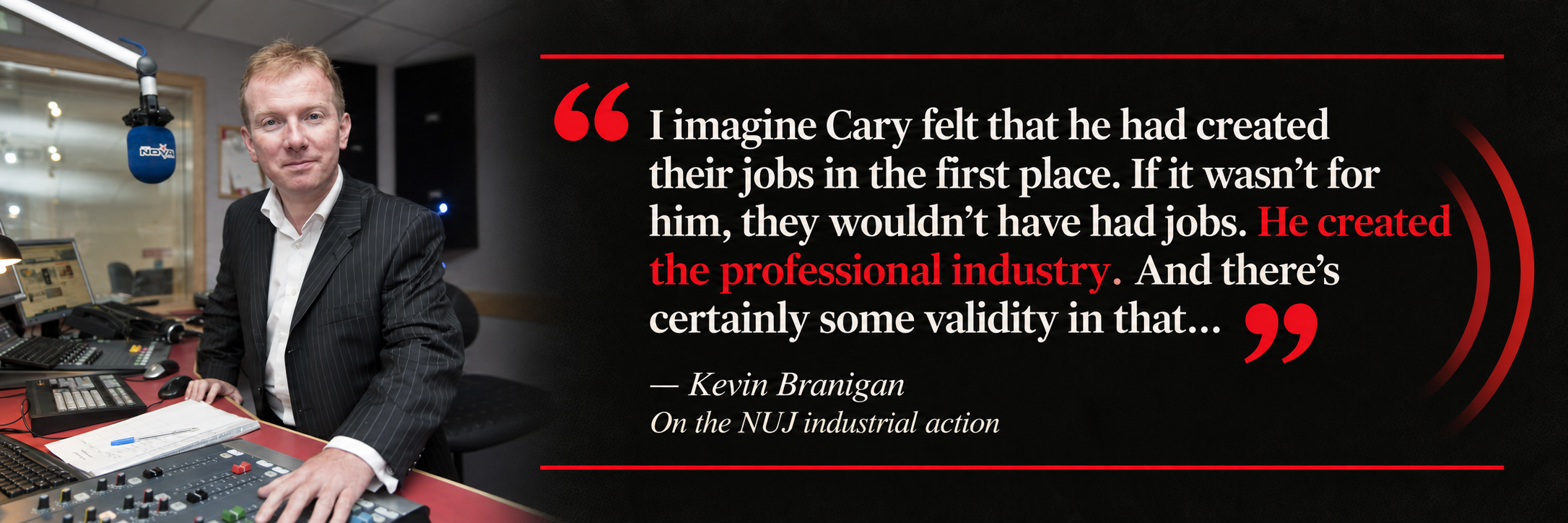
Ironically, Cary had invited the NUJ into the station as part of the campaign for legitimacy and acceptance by the establishment. He would later deny this but Mike Hogan remembers it differently, confirming that he wanted his staff to join so that interviews would no longer be turned down on the basis that Nova’s journalists were not union members.
Radio Nova had spent a fortune in July 1983 on a glossy, impossible to miss, advertising campaign highlighting the fact that Radio Nova employees all paid tax and made PRSI contributions.
Upcoming court cases would later blur the lines between legal and illegal status for the station and its employees. In throwing stones the striking members would also in time exploit Radio Nova’s unlicensed, and therefore illegal, status, using every argument at their disposal to attack Cary but somehow overlooking the fact that they were striking for their legal entitlements based on their own employment in an illegal capacity.
NUJ Meeting
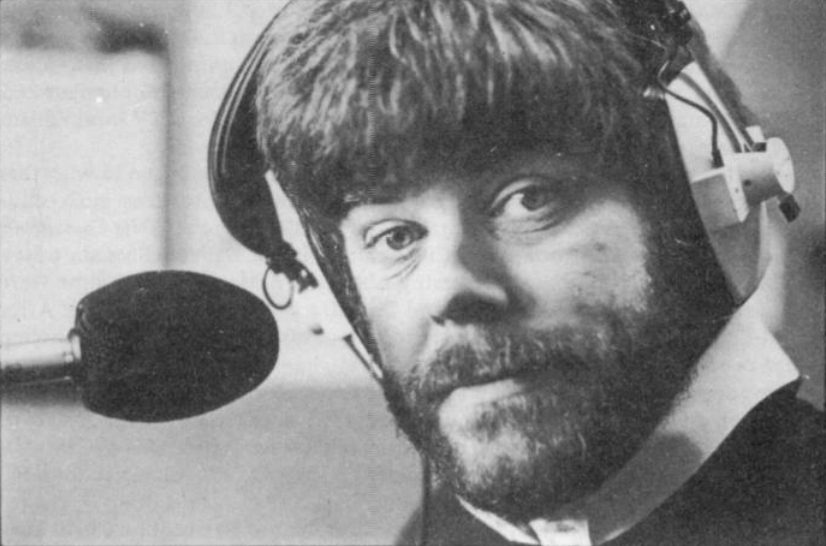
The sackings came in the immediate aftermath of a meeting in which the National Union of Journalists opened talks with Cary in order to seek clarification about the future of their members on the back of ongoing restructuring of the service. Any fly who might have taken up temporary residence on the wall at that meeting would not have appreciated what the rest of us would in the same circumstances.
We are all aware of Cary’s stubbornness but, given the nature of some of the NUJ communications to the public that were to follow over the following months, there’s little doubt that their stance was confrontational, making it difficult for either side to back down.
Chris Cary very obviously had little time for authority, despite demanding respect when he himself was in a position of authority. If backed into a corner he would have come out fighting, on the attack.
The fifteen members of staff, including six NUJ members, were sacked straight after the meeting. He told the Union he couldn’t afford to pay redundancy but would pay them for turning up to work for their last few days. He also claimed that he hadn’t made a penny out of Nova, a claim that was to be disputed and mocked over the following months.
Strike Action
Following the sackings, the NUJ declared official strike action on Radio Nova on behalf of the six Union members who were part of the group. Pickets immediately appeared at Nova Park and also at 19 Herbert Street, where some administrative staff were still based even though the station was now broadcasting full-time from Rathfarnham.
Andrew Hanlon, speaking years later on a TV3 documentary, said he believed that:
“As far as Cary was concerned he was king of the castle. It was his toy, it was his machine, it was his baby and he could do with it whatever he liked.”
To the average listener, from the outside looking in, Radio Nova had been left with little choice but to let some staff go, especially as the station was in danger of folding altogether which would mean the loss of more than fifty jobs rather than just the fifteen who had been sacrificed.
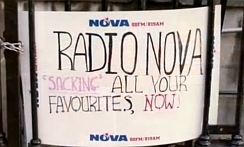
The fifteen seen it a little differently, understandably, and in an attempt to better inform the public of the facts (albeit their version of the facts) the NUJ members took to the letter columns of the newspapers.
In the Evening Press of February 27th 1984, a letter signed by Linda Conway, Jenny McIvor, Shane MacGabhann, Brian Johnston, Ken Hammond and David Malone using the address: NUJ Chapel, Radio Nova was printed.
Here is the letter in full:
The NUJ’s official strike at Radio Nova is now in its third week. Although the general public have, in the past, been most supportive of the station’s endeavours, we, on the strike committee, feel it is important to clarify the facts surrounding the present dispute.
They are as follows:
On February 3 last, Nova’s managing director and major shareholder, Chris Carey, wrongfully dismissed 15 station employees without notice or any of their statutory entitlements, including holiday pay.Prior to this action by Mr Carey, officials of the NUJ had met with him for discussion regarding rumoured changes in the company’s structure. The NUJ sought to establish whether those proposed changes would affect their members.
That meeting ended when Mr Carey stormed out of the room and returned the following day to England. He has remained at his London residence since then, and has refused to reopen negotiations with the NUJ in a bid to resolve the issue.
Mr Carey has also warned staff still employed at Nova not to speak to those on official picket duty at Herbert Street.
The Irish shareholder in Nova, Eugene Brady, has maintained his customary silence throughout this dispute, a point, we feel, which raises serious questions about the influence of a nominal Irish shareholder in this company.
The NUJ members wrongfully dismissed by Mr Carey will be continuing their official picket until this matter is resolved satisfactorily.
We would hope that this letter will clarify the situation about the strike and inform the public of the facts.
A case could be made that this letter was indicative of the frustrations felt by the strike committee, but in making it personal, along with the smouldering smoke-bomb regarding nationality that was chucked in, it may well have alienated as many people as it informed.
There was also no distinction over whether the use of the word ‘wrongful’ to describe their termination was an opinion stated as fact or whether it was indicative of employment law (ie no redundancy or notice). You would suspect the latter, but they were employed in a capacity that was itself 'wrongful' ie illegal so that was a bit of a grey area. No matter, this was the general public they were addressing and it could be argued that this was a deliberate attempt to influence public opinion into believing that they shouldn’t have been let go at all. This was a dangerous game to play, especially with the station still embroiled in a very public war with RTÉ, a war they had no desire to take part in and one which threatened the jobs of everybody at Radio Nova.
The striking members on the pickets no doubt believed vehemently that they were in the right, and there was much sympathy for that point of view. Oftentimes, people who believe they’ve been badly wronged can be driven by their sense of injustice. Unfortunately, though, the published letter in the newspapers made their argument personal.
They went one step further on March 3rd when they picketed the home of Radio Nova’s ‘Irish’ stakeholder; many might feel that this was a step too far and overstepping a professional boundary. No matter how wronged you feel you’ve been treated does not give you the right to inflict wrong on others, or to drag personal boundaries into professional matters.
At the end of April another letter appeared in the newspapers, signed this time by five of the six who’d signed the previous correspondence (David Malone had since taken a job up North).
This time the given address was National Union of Journalists, Dublin 1.
As the NUJ’s official strike at Radio Nova is now in its third month, we would appreciate the opportunity of bringing the public up to date on the facts relating to this strike and the reasons why it remains unresolved. We feel this is important because of the confusing fact that, although the strike continues, Radio Nova is still on the air.
Throughout this dispute, which began following the summary dismissal of 15 people, including six journalists, the station’s manager Mr Chris Carey, has refused to negotiate settlement terms with union officials, claiming that the station has insufficient funds to meet the strikers’ claims for statutory entitlements.
This claim seems less than valid in view of the fact that he has been financing the building of new studios and a nightclub at Nova Park, Stocking Lane, Rathfarnham, where we maintain our picket. His claim that he has no money is equally ludicrous, considering the fact that advertising revenue has been steadily increasing over the past two months.
We feel that it is also worth pointing out that of the fifteen staff originally dismissed, ALL but the six union members among them has since been re-employed. This fact, and Mr Carey’s about-turn in relation to those who he himself had actively encouraged to become NUJ members, suggests to us a myopic view by him of the role of unions within broadcasting, and further suggests that it would be extremely dangerous and ill-advised to allow such an irresponsible employer to have any involvement or part in the future development of radio in this country if he does not acknowledge his responsibilities to those of us he has put out on the side of the street for the past three months.
Another fact we wish to highlight is that Michael Hogan, Nova’s advertising manager, who resigned some weeks ago because of what he claimed was his ‘outrage’ at how staff were being treated by Mr Carey, has since returned to Mr Carey’s employment as manager of the nightclub, due to open shortly.
Also Radio Nova’s Irish Director, Mr Eugene Brady, has been equally silent throughout this dispute. We would have expected that the Irish shareholder would have done more for the Irish employees Mr Carey has treated so disgracefully.
Those on the strike have had the support of all the branches of the NUJ and the full backing of the ICTU. The Labour Court’s attempt to intervene has also proved unsuccessful because Mr Carey has steadfastly refused to attend in order to reach a fair settlement. We feel that this refusal in particular should give the general public some idea of Mr Carey’s disregard for Irish industrial relations.
Those of us on strike are committed to continuing our legitimate action of protest and we are confident that now the public are aware of the facts surrounding this three-month-old dispute, they will feel equally enraged at the way some foreign employers, having made vast profits, subsequently treat their staff.
In our view, Mr Carey should be treated in the same disdainful manner by Irish advertisers as he has treated his Irish employees. We thank those who have already done so.
If the previous letter contained a smouldering smoke bomb, this one threw the grenades with the pins pulled out. Although the dismissals were now being described as ‘summary’ rather than ‘wrongful’, in stoking up race relations and suggesting Cary’s actions came from a dark, anti-Irish part of his pysche they again were overstepping boundaries and came across as desperately attempting to influence public opinion. Using such tactics are unacceptable at any time but in 1984, with the IRA hunger strikes still very fresh in the minds of even those who would not usually sympathise with anti-British sentiment, coupled with IRA bombing campaigns that had migrated across to Britain, to suggest that an Englishman (who had employed these people – and dozens more locals – in the first place, lest we forget) was acting from anti-Irish sentiment was crass and unnecessary and appeared to be hoping to play on strong anti-English sentiment.
In addition, the use of emotive language, which is indicative of attempting to influence people rather than trusting them to make up their own minds, is also a dead giveaway. The personal attacks on people were also unnecessary. This letter, even more than the last, came across as aggressive and hinted that nothing but their version of a ‘fair’ settlement would suffice.
Considering the many Irish people who still praise Cary to this day, it is unfortunate that the striking members felt that this was a road they should take. Place Radio Nova anywhere in England, or Spain, or on a boat, and it’s difficult to see the sequence of events playing out any differently. These, after all, were the actions of Chris Cary’s persona; it was who he was and it’s hard to believe that either his, or anyone else’s, nationality was a factor in how he went about his business.
Stepping Up
By now the NUJ were taking things to a new level. All of their members were advised that they should play no part in the processing or production of advertisements that were to eventually be broadcast on Radio Nova.
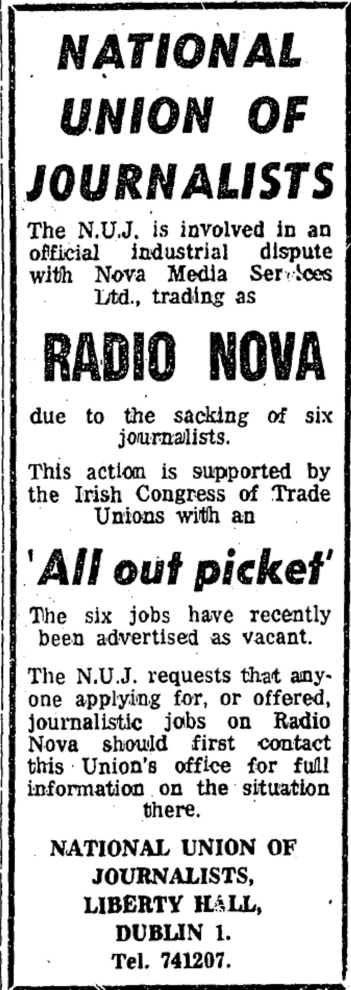
In addition, advertisements were placed in the Press after Radio Nova had run an advertisement for new employees.
Hard Life
What of the people working on the station? They must have felt torn. When you take away all the incendiary arguments made publicly by the strikers, they did have a strong case that deserved to be answered, and many within Nova will have agreed, despite at one point voting for the station to be non-unionised. Plus, for those working for Radio Nova, they were forced to cross a picketline manned by friends and former colleagues on entering and exiting the station.
This all became too much for Radio Nova’s Breakfast presenter, Declan Meehan, who jumped at the opportunity to move away from Nova when one was presented to him by Mark Storey at Capital Radio in London. At that time the licensed Capital Radio were under severe pressure from an offshore pirate, the infamous Laser 558. So the invitation was extended to Declan to ‘come to London and tell us what Nova does…’
The strike era was awful...our friends and colleagues were affected. I hated it. I felt all had changed by then and reluctantly left Brekki on July 14th 1984 to take an opportunity in London, ironically made possible by my Nova success.
Declan had been unhappy having to pass friends such as Shane McGowan, Tom Hardy and Linda Conway when leaving Nova Park each morning.
The original plan was to work with Capital for six weeks and return to Nova but he ended up staying. According to Declan, Chris was hurt when he left but they didn’t have a falling out.
Chris suggested the European Top 40 in Spring 1985. The show was recorded midweek in Camberley, Surrey. Mark Story and Keith Pringle worked on the show and we used our access to new music and artists to enhance the show. A mixture of the late night and travel down the M3, plus discovery by Capital Radio of our involvement put an end to it.
Internal Pressures
The NUJ were also putting pressure on those working within the station. Lawrence John, extremely reluctantly, left Radio Nova when he was told that passing the picket would seriously affect future employment prospects. Lawrence loved Nova but hated passing his friends on the picket line so he decided to leave. He went on to become a founding member and programmer for a new station, Q102, and deliberately opted for a format that would not directly compete with Radio Nova.
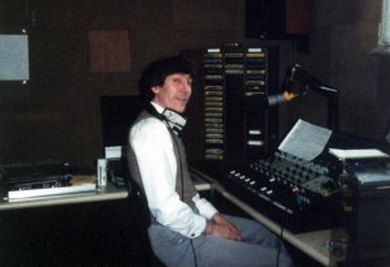
The newsreader Henry O’Donovan (on air known as George Long, pictured on Radio Nova) was another who succumbed to union pressure.
He remembers it as an act of naivete but says:-
“I did break the strike and go back, though! We were talked into going on that strike. I didn’t really want to but was pressured by some dude from the NUJ to strike. I wanted to read the news, not stand around with a placard in my hand!”
The NUJ used the occasion of the high profile opening night for Cary’s new Nightclub – Disco Nova – to pull out the stops. It was July 27th and the union had arranged for dozens of people to join the picketline, which led to a couple of incidents involving speeding cars but, thankfully, nobody was hurt.
At the start of August the case came before the Employment Appeals Tribunal. It was adjourned and referred to the High Court. The Tribunal chairman, Dermot McCarthy, felt he could not hear a case that involved a company involved in an illegal activity, and whether the contracts of employment were contracts for the purposes of an illegal activity.
Tempers Flare
Frayed tempers again came to the fore on September 13th when Chris Cary confronted the picketing Ken Hammond and threatened to ‘smash his face in’ if he returned to Nova Park. Cary also threatened to launch a personal vendetta against all the striking members. It had emerged that Cary (and others) had at times driven at speed when entering or exiting Nova Park, thereby putting the safety of the strike force at risk. He was also prone to shouting abuse at the pickets as he drove by. This all led to a High Court injunction granting Hammond the right to man the picket without interference from Cary.
Not to be outdone, the strikers were also known to shout abuse at the station’s Head of News, Sybil Fennell, who was herself an NUJ member. Sybil had been away working for LBC in London at the time the strike started but returned to Radio Nova in May. She was in an impossible situation really. She was Cary’s girlfriend but had also been part of the Newsteam from close to the very start. Widely recognised as second only to RTÉ for presentation, the success of Nova News was in no small part down to her. The NUJ had no time for such sentiment, they withdrew her card.
Later in the month, the NUJ objected to a liquor renewal licence application for Nova Park by Chris Cary on the basis that illegal broadcasting was being transmitted from the night club. Which is baffling on two fronts: primarily because it is illegal broadcasting that the striking NUJ members had been engaged in that was at the heart of the dispute against the radio station; and secondly, the night club was not in any way related to their dispute. Cary got the licence.
At the end of October negotiations aimed at ending the strike began. On the table was an offer for the four presenters to return as individuals, but not as members of the National Union of Journalists. Talks broke down.
A follow-up meeting was arranged for November 22nd, with the strike now in its tenth month. After just 45 minutes it was announced that a settlement had been reached that was satisfactory to both sides and that employees would return to work immediately, free to remain NUJ members.
Joining The Q
The emergence of a new massive rival to Nova in the shape of Q102 may have been an influencer. Jason Maine, sacked from Nova, George Long, Roland Burke and Chris Barry had already defected, with lucrative approaches also having been made to John Clarke, Greg Gaughran and Bob Gallico.
First of the voices heard back was Ken Hammond, who shortly afterwards departed to join RTÉ.
Dublin Today made a return in December but on FM only. Presented by Jenny McIvor, Shane McGowan and Linda Conway, the programme was broadcast from premises in Upper Leeson St. The usual music programme was broadcast at the same time on medium wave.
Export Radio
By the time the strike action was settled, Radio Nova's invasion of British soil was in full swing.
Earlier in the year, on May 23rd to be precise, at the point when Radio Nova had two medium wave transmitters on the air, 819kHz played out Nova as normal. Over on 738kHz however, different, uninterrupted music could be heard at the start of the day.
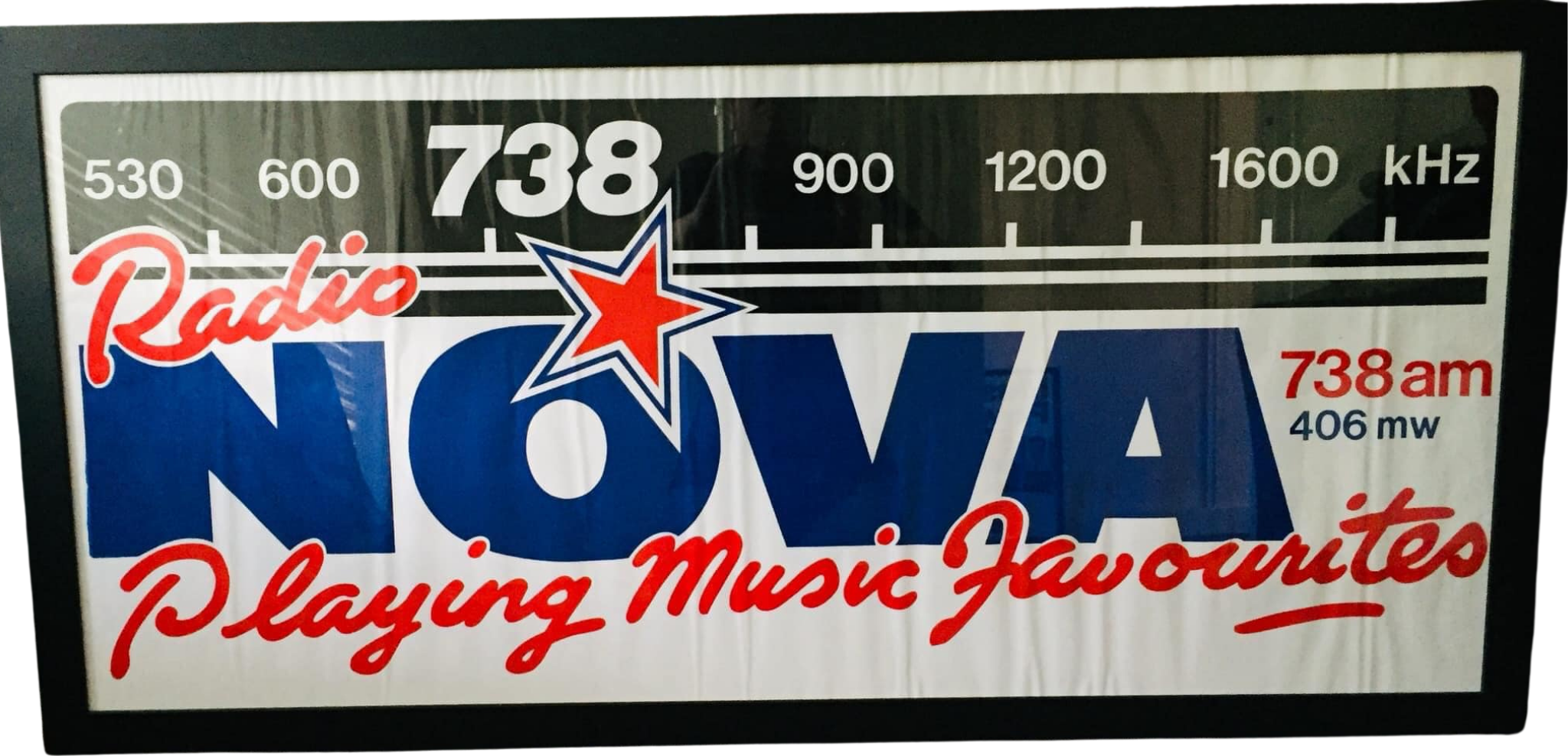
The mystery was both solved, and deepened, when at 10am the mic opened and Tony Allan announced Exidy 738. Exidy was the long-mooted controversial export service to Britain which had been abandoned at the time of the May 1983 raids. As it turned out for "abandoned" read "postponed".
The studio for Exidy was just across the corridor in Nova Park but the station lasted just three hours before being abandoned (not postponed this time). Exidy's signal was bleeding in to Nova's, and the reverse was also true.
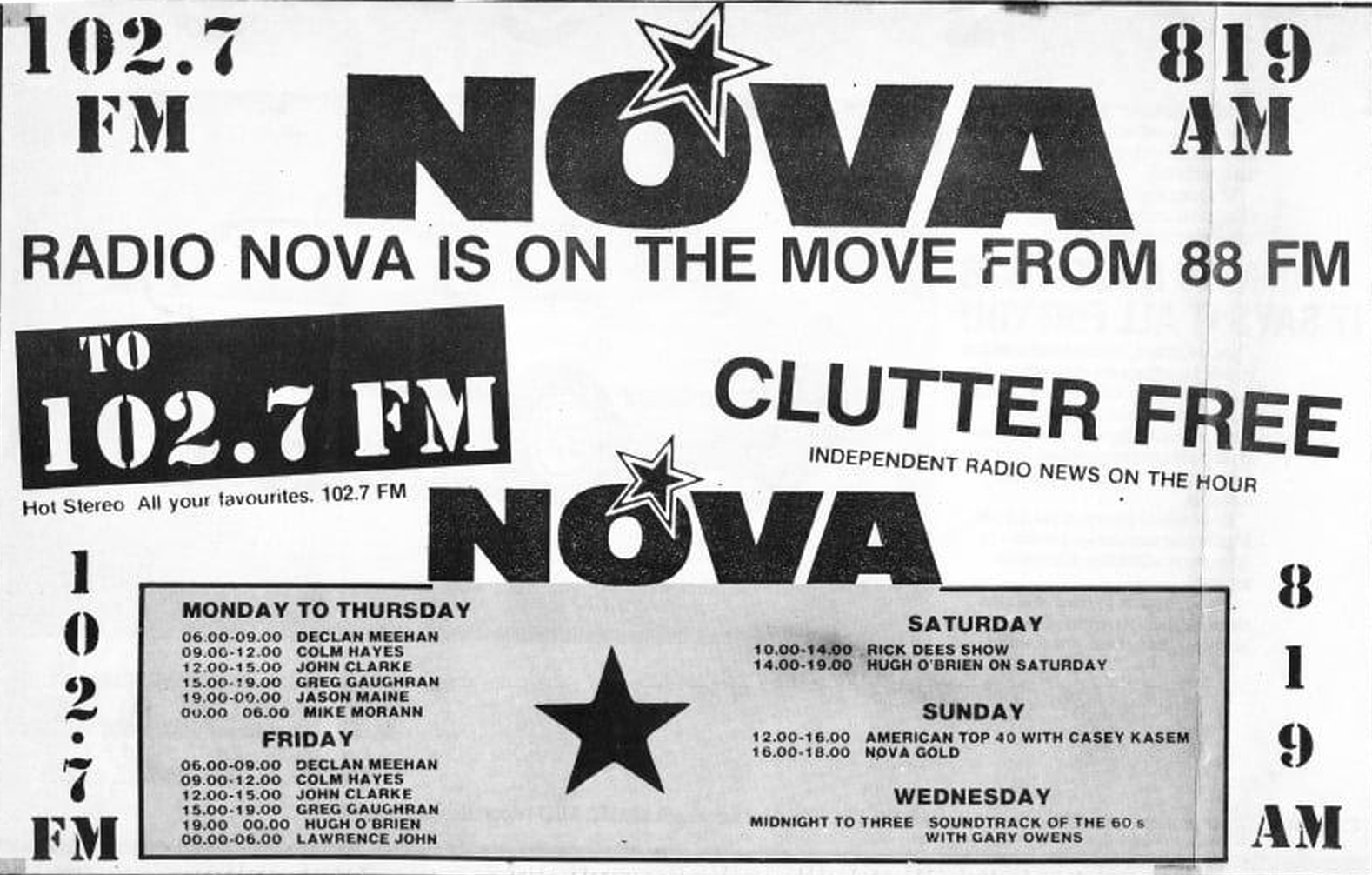
The test broadcast had the effect of Cary realising that the better home for Nova would be on 738kHz. The original plan, as seen in this newspaper advert which had already gone to copy and ran a couple of weeks later, was for Nova to remain on 819kHz. The iconic 88FM transmitters were also switched off at this point, leaving the station on 102.7MHz on FM.
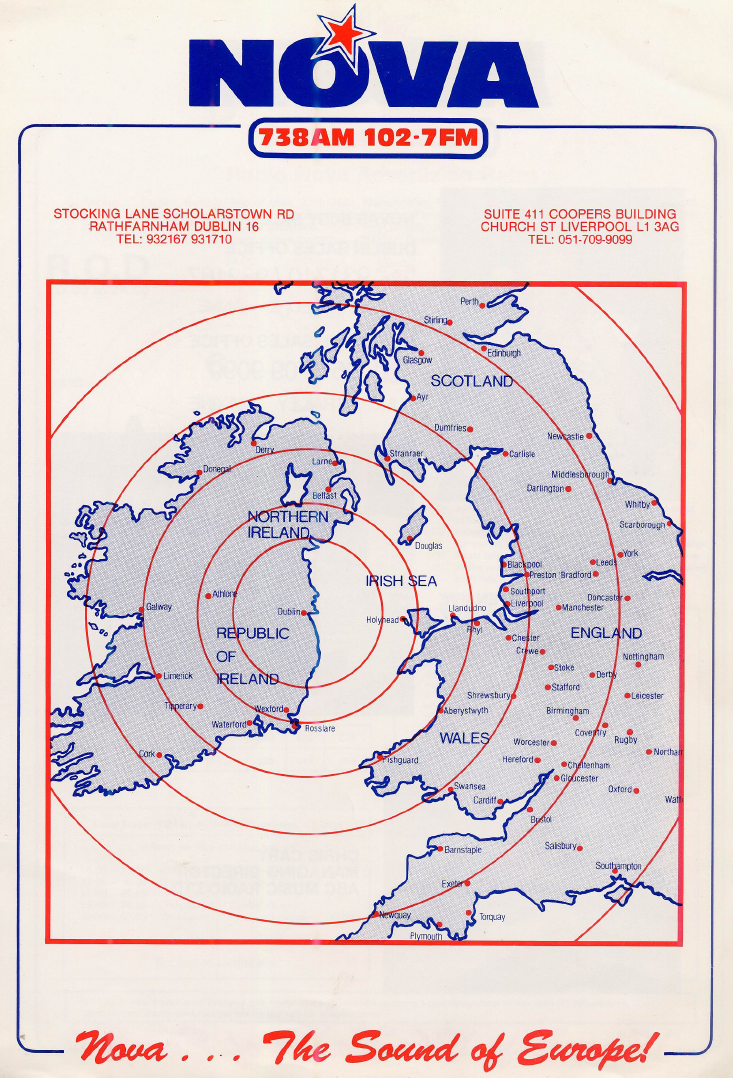
By the end of May, weather forecasts were including north-west England, Scotland, Wales and the Isle of Man and a London address and phone number were being aired for requests and to obtain Nova t-shirts.
The aural assault on British ears was taken to a new level with the reintroduction of the three-in-a-row giveaway. This time £5,000 would be won by a listener on Irish soil and, crucially, another £5,000 would be won by a listener in Britain.
On Wednesday August 29th, Dave Christian, formerly of Radio Luxembourg, was on his third morning filling in for John Clarke, who was away on holidays. Having made his debut just two days before, Dave's name became etched into Nova history when, at the end of his programme, he was tasked with playing the three records in a row for the double £5,000 competition.
Except, he didn’t mention it at all.
They went straight to an advert break and into the 2pm News.
Again, nothing mentioned.
Greg Gaughran was on next and he eventually announces that there had been a winner on the British side but there had been issues with the phone system in Dublin preventing calls from being made.
With the station celebrating three years on medium wave, Sue Wheldon was flown over from Merseyside to collect her cheque at Nova Park.
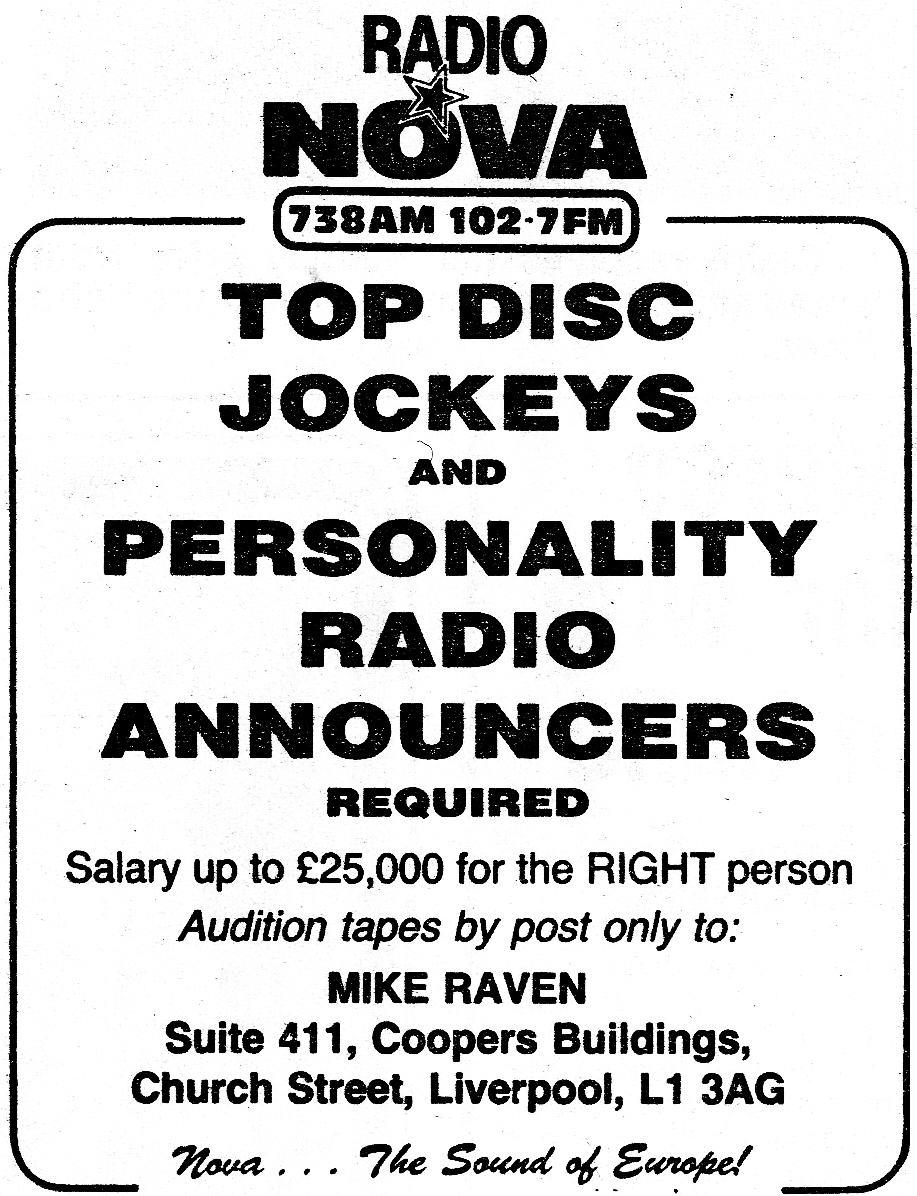
In September an office was opened in Liverpool to deal with sales enquiries. This led to panic amongst some local stations who feared that their listenership and advertising revenue would be affected. Liverpool station Radio City and Preston's Red Rose Radio were particularly vocal and their objections led to questions being asked in Parliament.
What About Us?
Meanwhile, Radio Nova's bread and butter, the Dublin / Irish listenership, were starting to feel a little disenfranchised. Arguably the station never sounded better but the local audience who had stood by Nova in some dark times, were left wondering why traffic reports from Liverpool and weather reports for Scotland and Wales were as prominent as local updates. Local newspapers regularly carried letters from unhappy listeners.
An alienated audience will only hang around if there's not much better to turn to, but Sunshine Radio was, as always, a most worthy competitor and, even more alarmingly for Radio Nova, a new kid was about to jump onto the block in the form of Q102. Backed with massive investment, and some innovative and very ambitious plans, Q102 was also stealing a march by poaching some of Nova's top presenters. Far from the 'quiet storm' their strapline proclaimed them to be, they were making lots of noise and by the time they launched in mid-January, the potential audience had been whipped into a frenzy.
At this stage Nova were running some programmes exclusively for the local listeners, all on 102.7MHz. The aforementioned magazine show Dublin Today, straplined 'local community radio for the Greater Dublin area', ran nightly at 7pm. This was followed on Fridays by 'Sinatra Hour' with Dave Harvey. 'Classical Collection' with Bob Gallico and Dave Harvey aired on Sundays at 6pm.The plan was to give over the whole of Sunday evenings from 6pm to midnight to local output but the announced return of 'Stick It In Yer Ear' with Tony Allan never materialised.
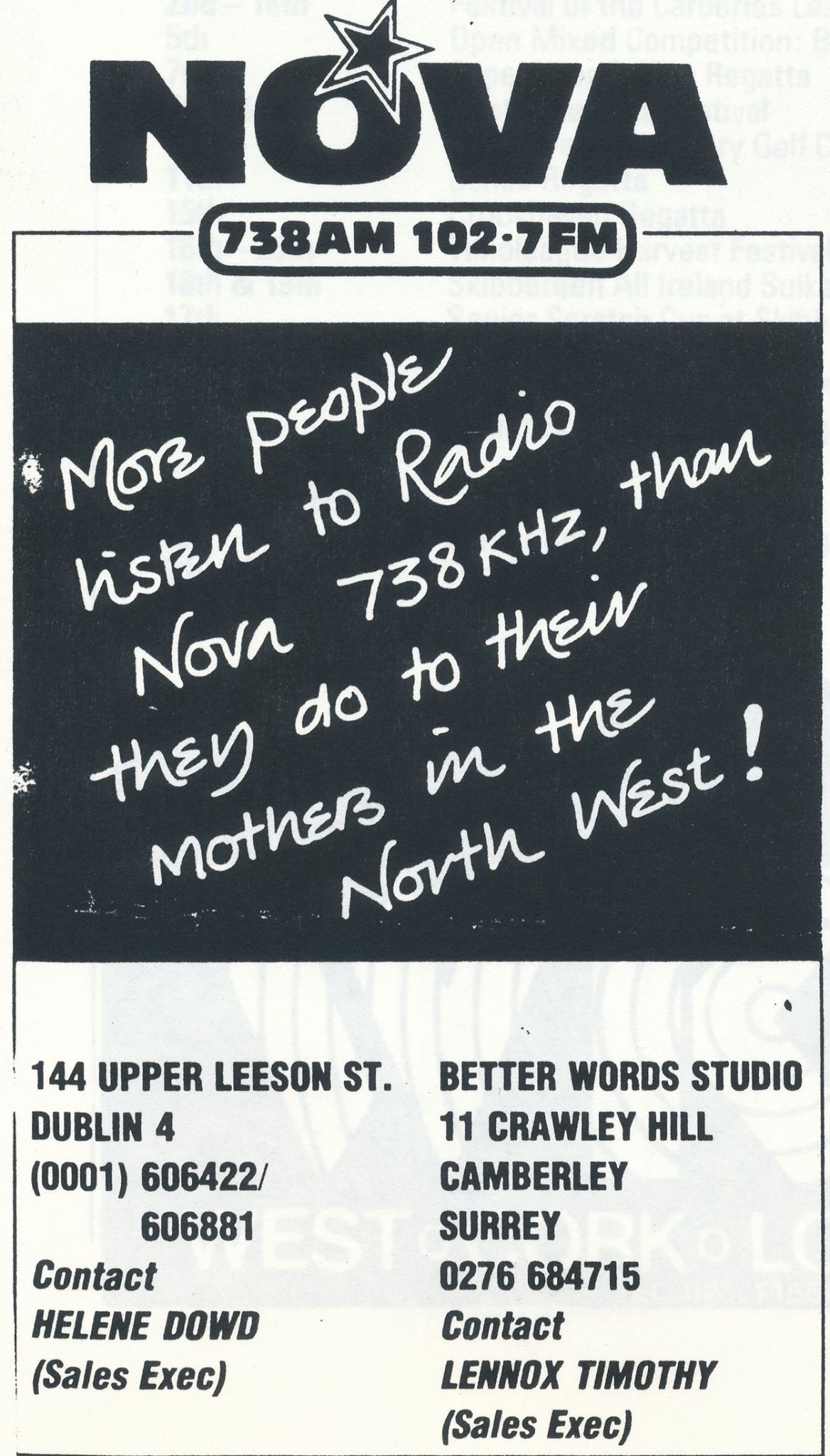
Ultimately, for British audiences and advertisers the novelty wore off. For audiences both side of the wet stuff they weren't getting a full service. The early hard sell locally in England and Wales had made some inroads but it died down. Without fanfare the references to areas other than Dublin were quietly dropped.
Partly to blame were constant interruptions to the signal thanks to power cuts and necessary maintenance. Nighttime reception was made more difficult thanks to two high-powered continental stations. Each night, Nova reduced power on the 50kW rather than go to battle with them.
Having spent a year wooing audiences in Britain and the Isle of Man, by the time Radio Nova remembered who their core audience was, many had deserted them. Old familiars and new kids on the block were to benefit from Nova taking their foot off the Irish pedal. The major new kid on the block, Q102, had become - to all intents and purposes - Radio Nova in disguise. The problem (for Nova) was that it was the Nova of the past rather than the Nova of the present. The people who monitored the opposition at Radio Nova may have missed it as they were probably listening to Red Rose Radio (NW England) or Radio Merseyside.
Despite the failure to penetrate Britain, the ambition was still there for Chris Cary. Fully aware that Ireland's long wave frequency of 254kHz remained criminally neglected he saw this as another route into Britain. Tests commenced on the channel at the start of December 1985. Nova simulcasts ran for a short time but Nova were ordered to switch off by the Department of Communications.
Which they did...until January 9th when test relays ran for a couple of days. Later in the month they returned and remain on air for longer periods and with increased strength. No mention is made of the relay over the air.
On January 28th the signal splits and Chris Barry announces Radio Nova on longwave and requests reception reports. Split broadcasts are observed for another couple of days until the transmitter is turned off altogether on January 30th.
There were bigger issues needing attention at the station at that time...which would mostly stem from the launch of another sister channel a few months earlier...