THE GER ROE SECTION: Intro - Radio Dublin Channel 2 - Radio Annabel - Shamrock Radio
The Ger Roe Era Begins
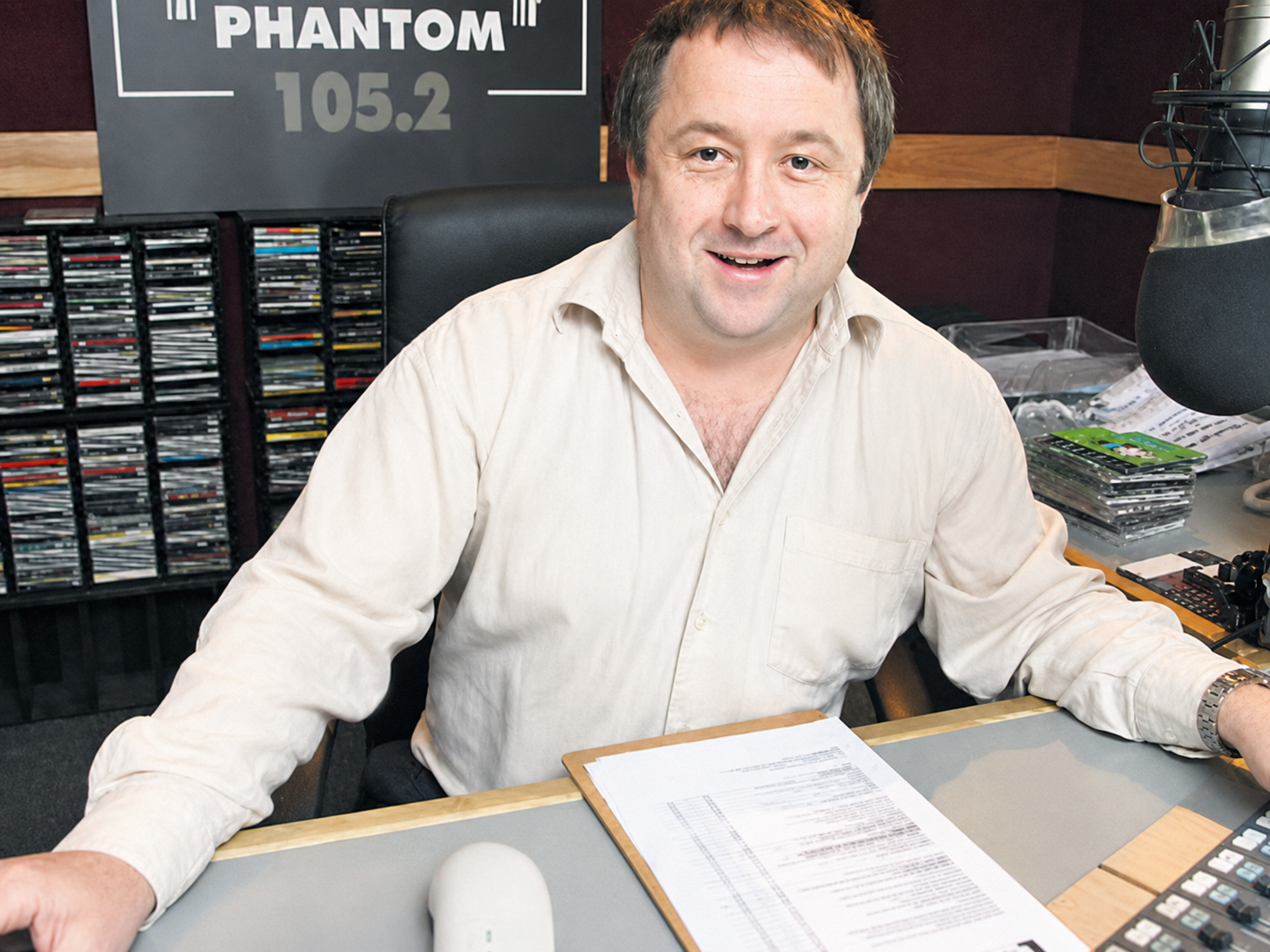
A name that is synonymous with this genre of programming on Irish radio is that of Gerard Roe. 15 years after the broadcast of his last ever ‘Anorak Hour’ on Phantom FM in April 2007, Ger recalls how he fell in love with radio and writes about his early ‘free radio’ promotional broadcasts...My introduction to Radio:
My earliest memory of being aware of radio as a medium dates to around 1974, when I was ten. My maternal grandmother lived on Mourne Road in Drimnagh and we used to embark on a family visit to her, every Sunday afternoon, from my home in Dundrum. I wasn’t aware of it at the time, but Mourne Road was already a critical embryonic location for the development of the Irish pirate radio revolution that was yet to come (Ken Sheehan).
One thing I was very aware of was my grandmother’s ‘Radiogram’ – a tall ‘music centre’ of its time, consisting of a record player on top, an in-built wire rack record storage cabinet, and below it, the main item of wonder and imagination … a valve powered radio with AM and SW bands. When powered up, it emitted a slight mains hum, a soft lit internal glow and a comforting smell of warmed electrical components operating. Complete with a green ‘magic eye’ tuning valve light, the radio was a unique source of entertainment for me as I twiddled the tuning knobs and hammered on the ‘piano key’ band selector switches to see what I could pick up on it.
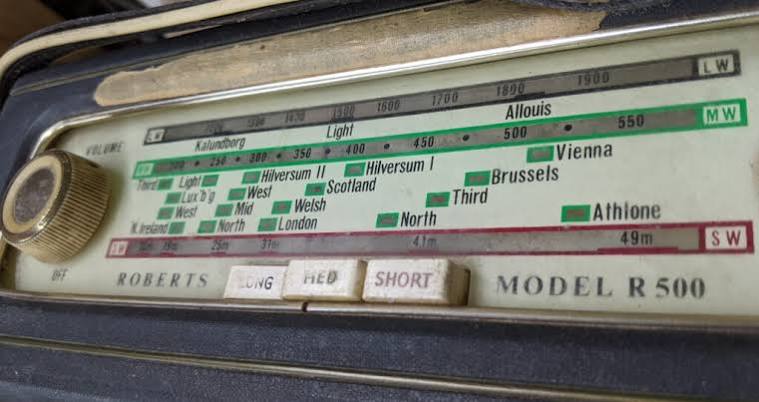
There wasn’t much on the ‘medium wave’ band, except for where the dial indicated ‘Athlone’ – this was where Radio Éireann could be heard –
although the adult orientated Irish culture and language programmes had little appeal for me. There were other exotic locations listed too … like
Hilversum, Helsinki and Zurich and, of course, Luxembourg. In trying to listen to these very foreign locations, the weird squeaks and whistles
that could be heard were fascinating enough, but one winter’s evening, when the darkness fell early, the ‘Luxembourg’ indication suddenly came to
life with the opening of the English language service for ‘the great 208’ … and I was hooked. Discovery of the Sunday night
resulted in the visits to gran being extended until it was too late to get homework done when I got home to Dundrum, so … a deal had to be done
that weekend homework would be completed before Sunday lunchtime, when we set off to play with the radiogram – sorry, to visit my grandmother.
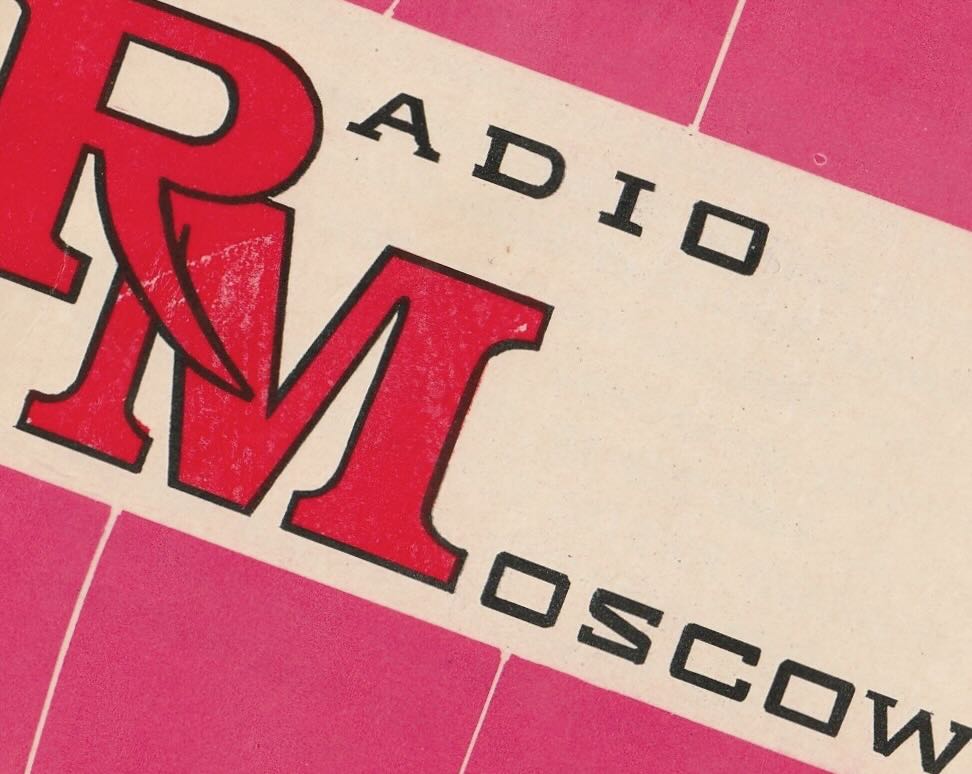
I started to experiment with lengths of wire attached to connectors at the back of the unit and so began to pull in more stations, some in foreign languages which only added to the fascination. When experimentation with longer wire lengths trailing up the stairs resulted in activity being heard on the SW bands, the amazement factor increased dramatically, particularly when hearing the English language services of Radio Moscow. Could these rolling and fading signals really be coming from behind the iron curtain? How come they were speaking perfect English? So many questions….
My fascination with the world opening up on the radio bands, amused my parents and grandparents and they encouraged my experimentation by
doing their best to explain whatever strange signals I received – we spent hours listening carefully to try to identify languages, guess origin
locations and work out what was being said. By now, I was also receiving BBC Radio 1 on medium wave where I could hear up to the minute pop
from the developing glam rock scene in the UK, but Radio Luxembourg was streets ahead in terms of generating pure entertaining excitement and it
was worth the wait required for the night time service to commence.
My interest reached new heights in 1976, when my grandmother presented me with a small transistor radio. It was pocket sized and battery powered, so it could be taken anywhere. There was still very little to listen to, but it received Radio Luxembourg, so it was worth its weight in gold to a glam rock starved youngster. One Sunday evening I was on a scout hike, heading home over Three Rock Mountain in the darkness, and I took the radio out of my rucksack, to listen in to the Chart Countdown Show on Luxembourg. When tuning up the band to 208m, I suddenly came across some pop music that should not have been there and I listened as a male Dublin accent asked for reception reports to be written in. I had stumbled across a test transmission from Radio Dublin on 253m and it was a revelation to discover that radio stations didn’t have to be high powered international services, they could apparently be local as well. My young technical mind was in a spin … how on Earth are they doing that?
On getting home, my father explained that some recent newspaper articles had reported that Radio Dublin was a ‘pirate station’ and that
description only piqued my interest further. The following Sunday afternoon, I found that Radio Dublin was still there, on my gran’s radiogram.

From then onwards, Radio Dublin developed into a seven day a week service and due to what became inevitable and regular staff splits, other stations emerged – like ARD 257 and Big D 273. There were other lower power and lower public profile stations too, like Capitol Radio 226 and in the next two years the pirate activity increased dramatically resulting in increased public publicity and as a young listener, I became increasingly interested in behind the scenes aspects, like the locations that were being used, the way DJs moved between stations and the technical improvements that resulted in stronger and clearer signals.
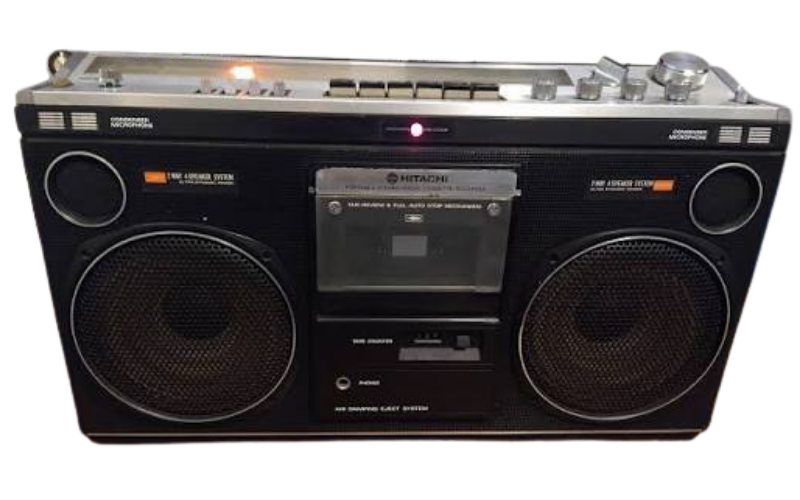
By 1979, it seemed like there were new stations coming on air almost every day. It became an obsession for me to scan the medium wave band daily and to note what was happening in my school diary – that diary became my first free radio logbook and started my interest in recording facts and figures about the stations. When my dad further encouraged my developing hobby by investing in a modern GEC Music Centre (record player, radio, cassette recorder) I had the ability to record the output from the stations and my limited financial resources were spent on buying very cheap cassette tapes in ‘Bargain King’ and ‘Apollo 1’ discount stores that I fed constantly into the music centre unit where the record and play button designations were being worn away through overuse. The unit had an FM band selection and from our house location in Dundrum I could pick up BBC stations in stereo and also witnessed the earliest FM experiments from Big D and Radio Dublin as they challenged each other for listener domination.
It was in the midst of my early cassette recording activities that I first came across an FRC programme. One Sunday morning in 1979, I stumbled
upon someone playing recordings of radio stations and talking about their history. This was Bernard Lyons on Big D, with the Free Radio Campaign.
He explained the history of the programme, saying that it had started on Radio Dublin in 1978 with Kieran Murray. Kieran had been with Radio
Dublin until the heavily publicised staff split in 1978 that resulted in the formation of Big D, which Kieran then joined. At this point Kieran
was operating with Radio Carousel in Drogheda and Bernard was keeping the programme going. Bernard also mentioned that there was another FRC programme going
out at
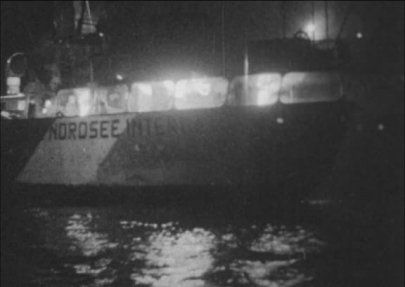
The Southside FRC programme became compulsive listening, not only for information satisfying my craved interest in background station developments, but also for an introduction to the UK offshore radio scene and the Sunday morning shortwave pirate scene. Mark played more recordings than Bernard, including the mind blowing RNI bombing mayday broadcast. This was definitive anorak programming and it further encouraged my attempt to record as much cassette footage as possible.
Next: Pirates Promotion Programme
Back: The Anorak Hour with Peter Madison
Home: The Anorak / FRC Section's introduction page