Anoraks go West
Along with the various shortwave shows, as 1986 became a reality radio enthusiasts could tune to ‘The Free Radio Show’ on Wonderland Radio
in Dublin and/or ‘The Free Radio Show’ on Radio Rainbow International on shortwave. The Radio Dublin ‘Station News with ‘Captain’ Eamon Cooke also
kept listeners informed of a Sunday afternoon but it was another self-styled ‘Captain’ (Seán Coyne) who played a part in establishing a show
emanating from Radio West in Mullingar which could be heard across much of the country and became essential listening right up to the 1988 end
of year pirate radio clearout....
Alongside ‘Captain West’ for the launch of the Radio West show was Philip Hilton, here he outlines how the programmew came about…
Origins of The Anoraks Show on Radio West
In March 1986 I left Cavan in a red Ford Escort early one morning with Don Allen at the wheel and my small suitcase complete with all belongings, off for a new adventure on Radio West in Mullingar. I was grateful for the lift and we both joked about me being smuggled out of town and away to the hills. My departure from CCR was friendly enough but the changing direction of the station, my first presenting job in Ireland, was not where I wanted to go. I had ambitions for something bigger.
A few weeks previous to this, I had called Seán Coyne, the owner of Radio West, about work and we arranged to meet. He had no idea who I was and he didn’t have a particularly high opinion of British presenters at the time but, quite conveniently, Don had to go there to voice some commercials so I tagged along.
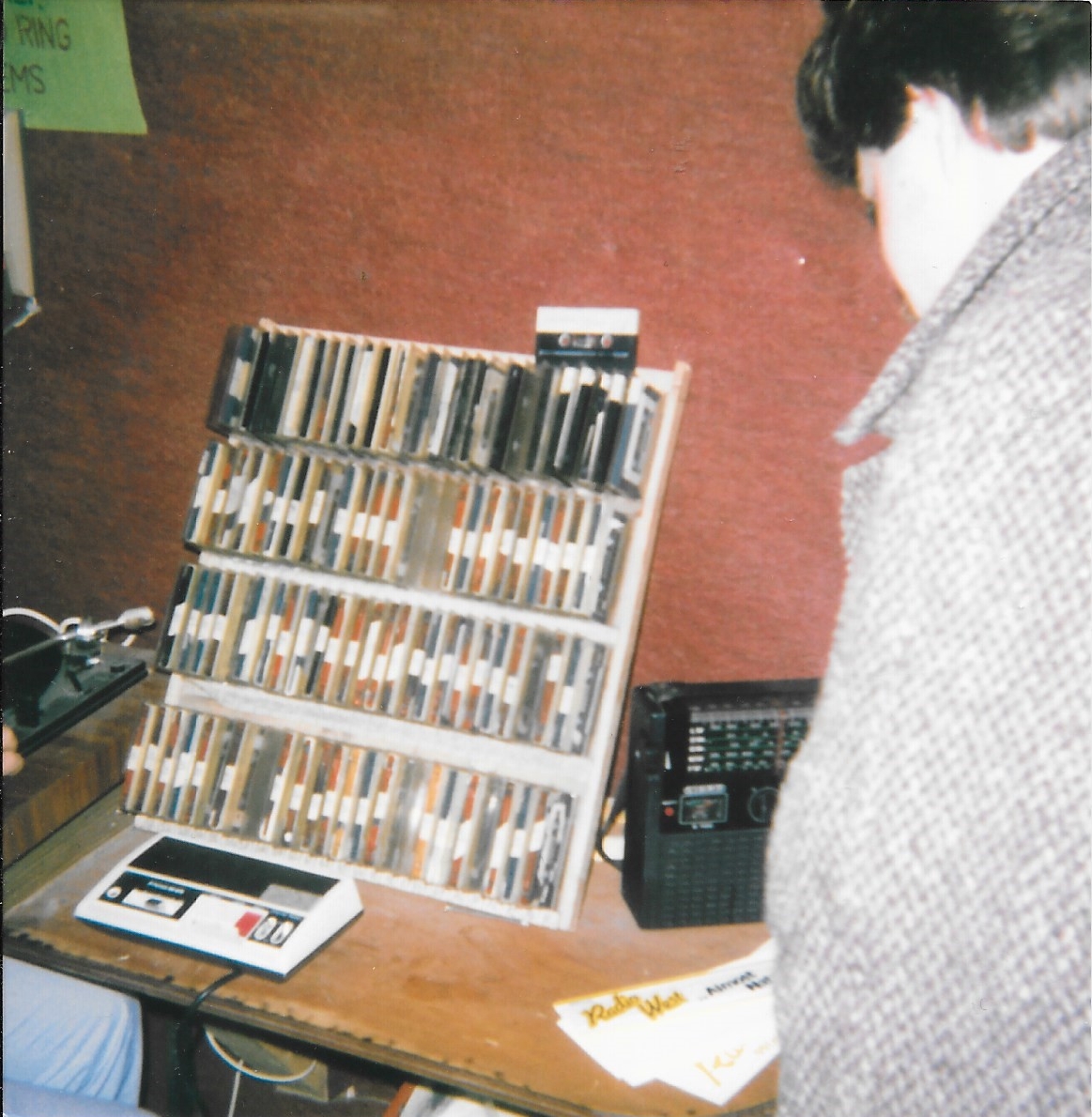
Arriving at Mullingar, Nora, Seán’s wife, answered the door only to say Seán had gone to Dublin but if I went on air for a while, he would listen and let me know, a live audition as it were. It was afternoon and Willie Hearte was on air, he was only too happy to stand down for a half hour while I sat in and got started. I can’t remember much else about it but you don’t get these chances very often so you have to do it. It must have gone okay as I was offered the breakfast show. More likely because it was an early start and not a popular shift rather than me being any good.
So a couple of weeks later I had said my goodbyes to CCR and moved to Radio West, a big AM transmitter ex Nova on 765kHz. One to two kW during the week and whatever you could squeeze out of it at the weekend before a chain of diodes, soldered together, usually melted and took us off air. It was loud enough to be heard in the UK anyway, certainly with the help of the famous Anoraks UK loop frame ariel.
Three buzzes on the house front door bell was the code to be let in at HQ in Patrick Street Mullingar. This was also Seán and Nora’s house. Washing machines and cooker repairs on the ground floor, private accommodation on the middle floor and radio station on the top floor. So off we went, play what music you want with a big transmitter, perfect.
To say I was involved in everything was a good description, we all were to a certain extent. Trips to see clients in Dublin trying to get advertising, installing the Athlone AM relay crawling around in the roof spaces of big, old buildings, FM relay in Tullamore, back on the roof of another building in the centre of town and trips to Tipperary and other distant locations to record traditional jigs and reels for the Sunday morning Céilidh programme. All of it great fun even if we did get back at 3 in the morning and then back on-air at 7 for breakfast!
Living locally and keen for experience on a bigger station, I was originally there for the breakfast show, 7-10, but after several pleas for more cover, I ended up covering Tuesday and Thursday evenings Country & Irish shows, more likely that no one else wanted to do them but it worked okay and the response to the shows was generally good.
Sunday morning’s anorak programme came about from being on the road with Seán on various trips, the conversations would normally develop into what other stations were doing, or an aircheck we would listen to in the van. Seán would listen to The Captain on Radio Dublin giving updates about the station and plenty of other things and the idea grew from there to do something similar. Usually if we were off out, going somewhere, it would be after my show and breakfast for most of the day so plenty of time to chat.
This is a recording of the first show - links direct to the DX Archive host, with thanks to them.
The first show (listen here) was on March 30th 1986, I can’t have been there many weeks and expect the idea had been in Seán’s mind for some time just looking for the right time. I was already receiving the Anoraks UK Weekly Report in the post so we had some news to start things off, Seán knew all about Barrie and Ruth’s great work and this was one of the first things mentioned to kick off the first show around 11:30, with only the last half hour of my breakfast having any radio related content. The next week we were on for the full hour 11-12 with plenty of mail and talking points! I worked on-air from 7am, (another early start) with Saturday being my only day off.

Seán liked to be also referred to as The Captain and would wander into the studio for a chat, originally at around 11:30 and then the following week, from 11, depending on the activities of the night before though. He would report on an FM bandscan received in the house in Mullingar and on our travels in the week and give news about Radio West’s various updates. After a music break the AM or Medium Wave band was discussed but this wasn’t set in stone depending on what news we had and what mood we were in. This was the format such as it was, interspersed with music until 12. The bandscan would give plenty of talking points to discuss of course and plenty of personal comments from ‘The Captain’ relating to who was broadcasting distortion or harmonics and who needed to improve their coverage of music or chat.
Reception of other stations around the country was of course assisted by ‘The Pipe’ that unique Irish system of re-broadcasting TV and radio through leaky coax, the early days of cable TV, the only one I’ve used which was affected by atmospherics but did bring many services not available through a conventional antenna. Now we take digital frequency displays and receiving programmes online for granted.
Through little to no station publicity the response to the Sunday anoraks show was amazing. Mail would come in almost every day and guests would come and see us. Bob Gallico was one, such a lovely guy and more than happy to spend time chatting on the radio about his love of wireless, with us who had similar common interests. No phone interview either, he was happy to drive to Mullingar. Before long and as keen as ever to find news items and general gossip as to how the stations were doing, we did some link ups live with other stations. Really they weren’t planned except for thinking of a list of who we could chat to and then connected a feed of the station to the mixing desk and fading it up. If it was planned we wouldn’t have done it because really it shouldn’t have worked and should have fed back and whistled but in the end with a bit of patience, the ones we did worked really well.
This was pretty much the way of how things went week by week. Plenty of mail received, listener bandscans from their local areas were great to receive and read about, phone calls and people dropping in to the studio to say hello and tell some stories. It was a great time to be involved in radio and hopefully we captured some of the atmosphere of what was going on around that time.
I only moved on to Sunshine when after pestering Robbie for work, he called up one day with an offer, otherwise I would have stayed longer at Radio West. I was too impatient to move on and build on my experience, but what a brilliant experience it was.
Our huge thanks to Philip for his account of how the Radio West Anorak Show turned from an idea into an institution. The show continued to go from strength to strength with Captain West ably assisted by Don Allen. It courted controversy, particularly given Seán Coyne’s outspoken style. It found itself at the heart of the big radio stories simply by being on week to week, broadcasting live, at a time that was accessible to most. It outlived the two similar programmes which ran on major stations, and soldiered on right up until the legislated pirate closures at the end of 1988.
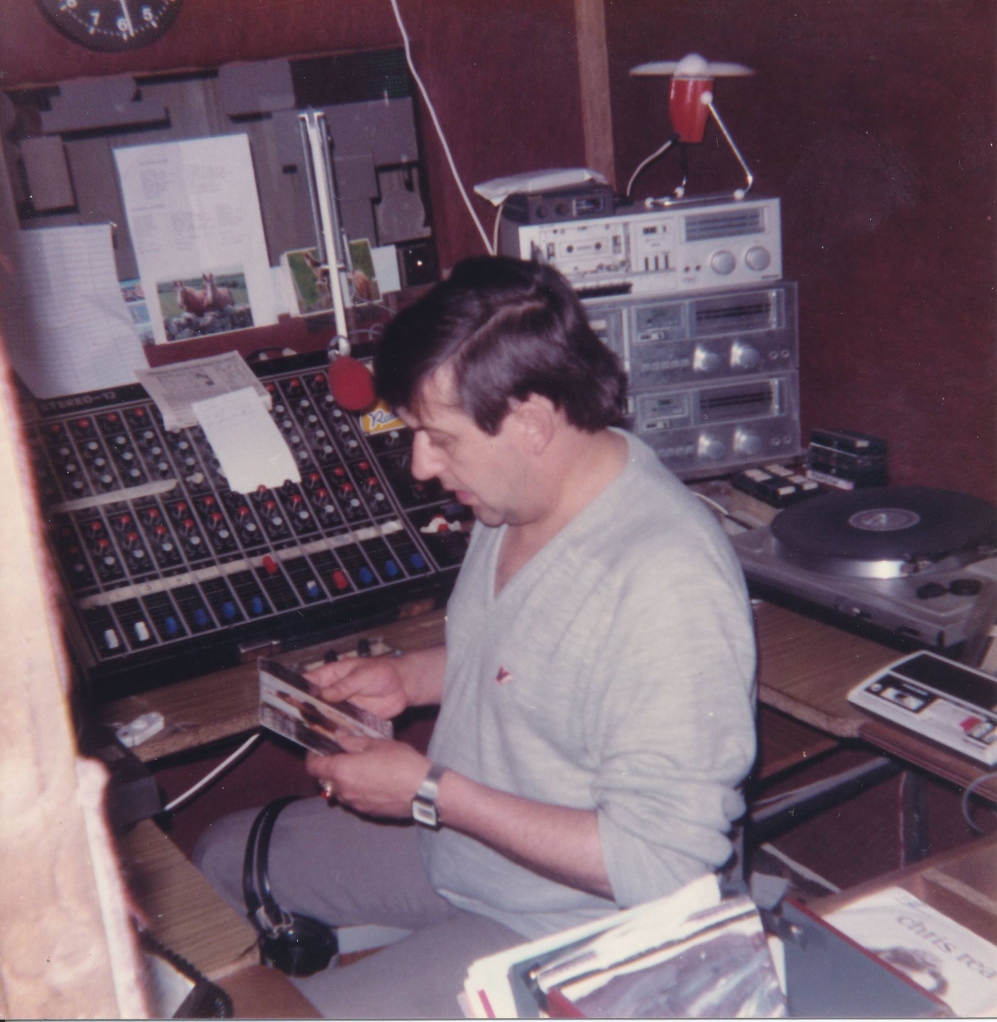
Photo of Phil at Radio West with thanks to Phil. Thanks to DX Archive for other materials.
Next: Something to Smile about
Back: Radio Rainbow
Home: The Anorak / FRC Section's introduction page