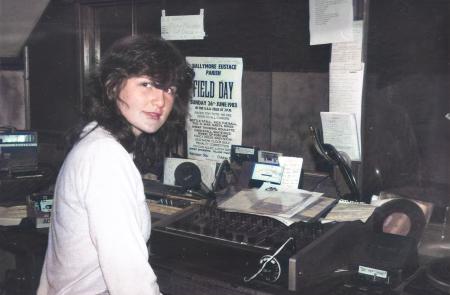
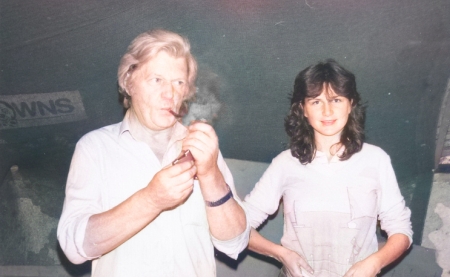
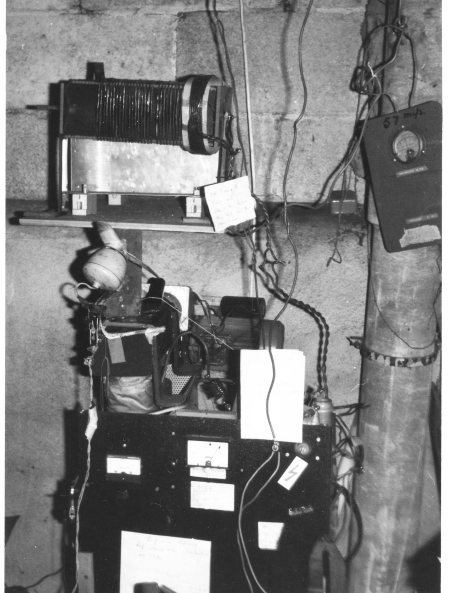
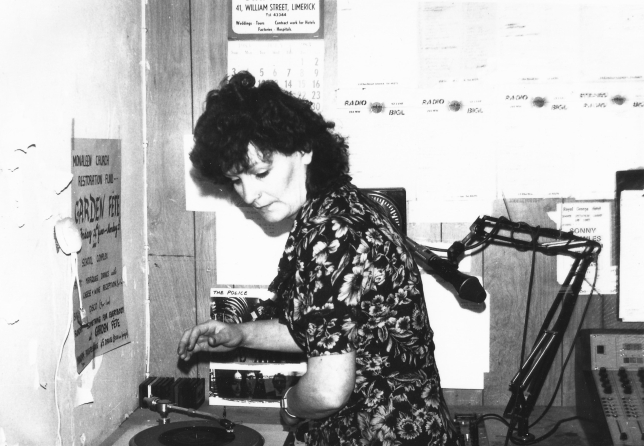
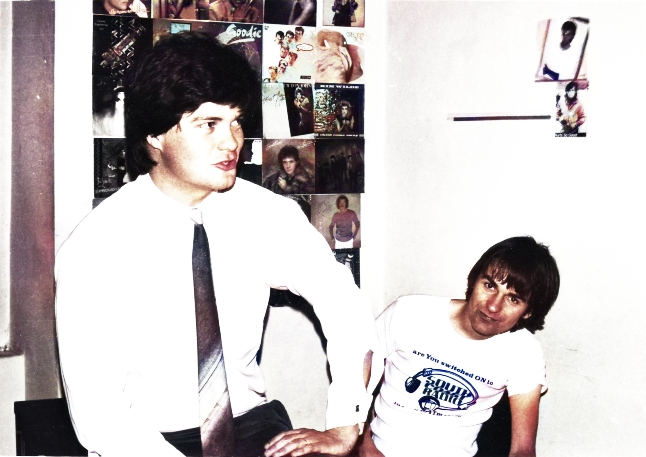
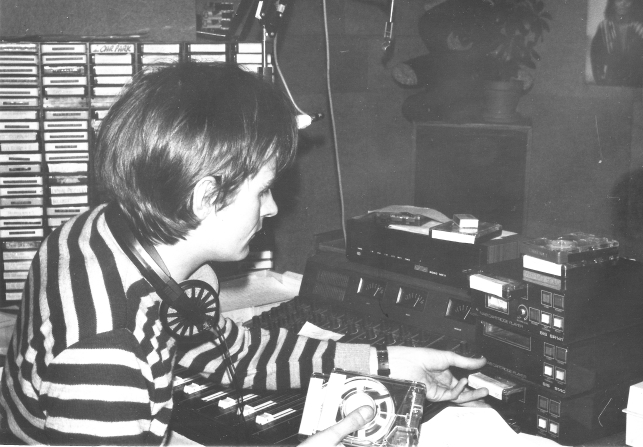
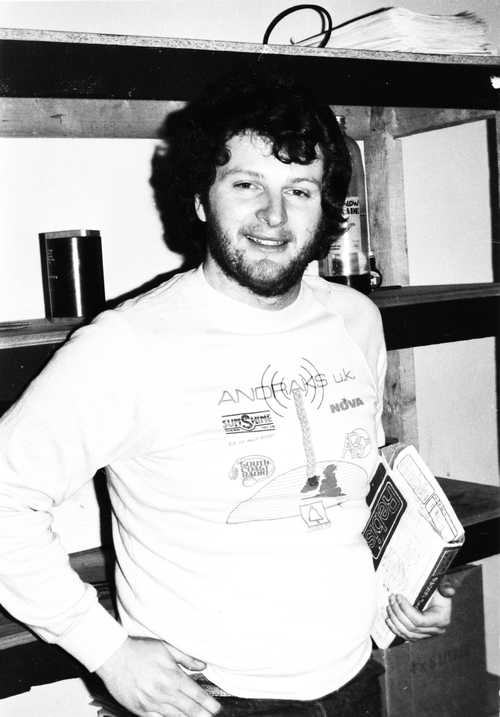
In the summer of 1983 two Swedish DXers decided to pay a visit to Ireland to explore the local radio scene up
close. They had just finished their military service and, having completed a tour of Italian and British stations, Ireland was the next
logical step.
At this time, the radio scene in Ireland was vibrant, this despite there being no legal framework for the existence of independent radio;
the biggest stations had just survived a government attempt to force them off the air and it seemed like every city - indeed every town
and village - across the country boasted at least one radio station.
The trip had been planned with military precision, the lads had spent the winter months writing to all Irish stations on the Anoraks UK
and Ireland lists, and also to the BBC and IBA local stations in the UK.
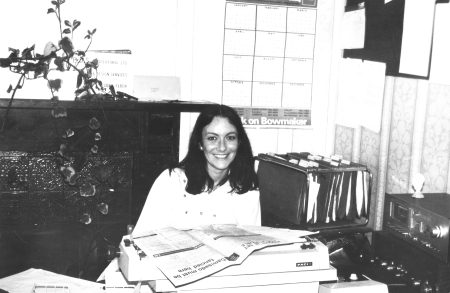
South Coast Radio
They received replies from quite a few of the stations but not the majority. Based on those responses, they planned their route but,
unfortunately due to logistics and lack of time, they were not able to visit some of the stations that had responded.
Receiving Irish stations in Sweden was difficult but for serious DXers, it was possible, !!!
Michael Andersson and Morgan Holmquist wrote
for a Swedish DX Magazine called DX Smockan and produced a series of articles about their experience in Ireland which we will reproduce here,
translated into English, for the first time.
Whilst in Ireland they visited stations in Dublin, Louth, Meath, Limerick, Cork and Carlow, making recordings and taking photographs
as they moved about.
Here, in chronological order (not necessarily in the original published order) is the story of their tour…all opinions expressed are
theirs.
After sleeping on the floor on the ferry from Holyhead we arrived in Dublin at around 6am. We took the bus to Connolly Station in the
city where, after using an Exchange to swap to Irish money, we had an expensive breakfast at the station. We called a few radio stations
from a phone booth and then arranged to meet our Irish friends too.
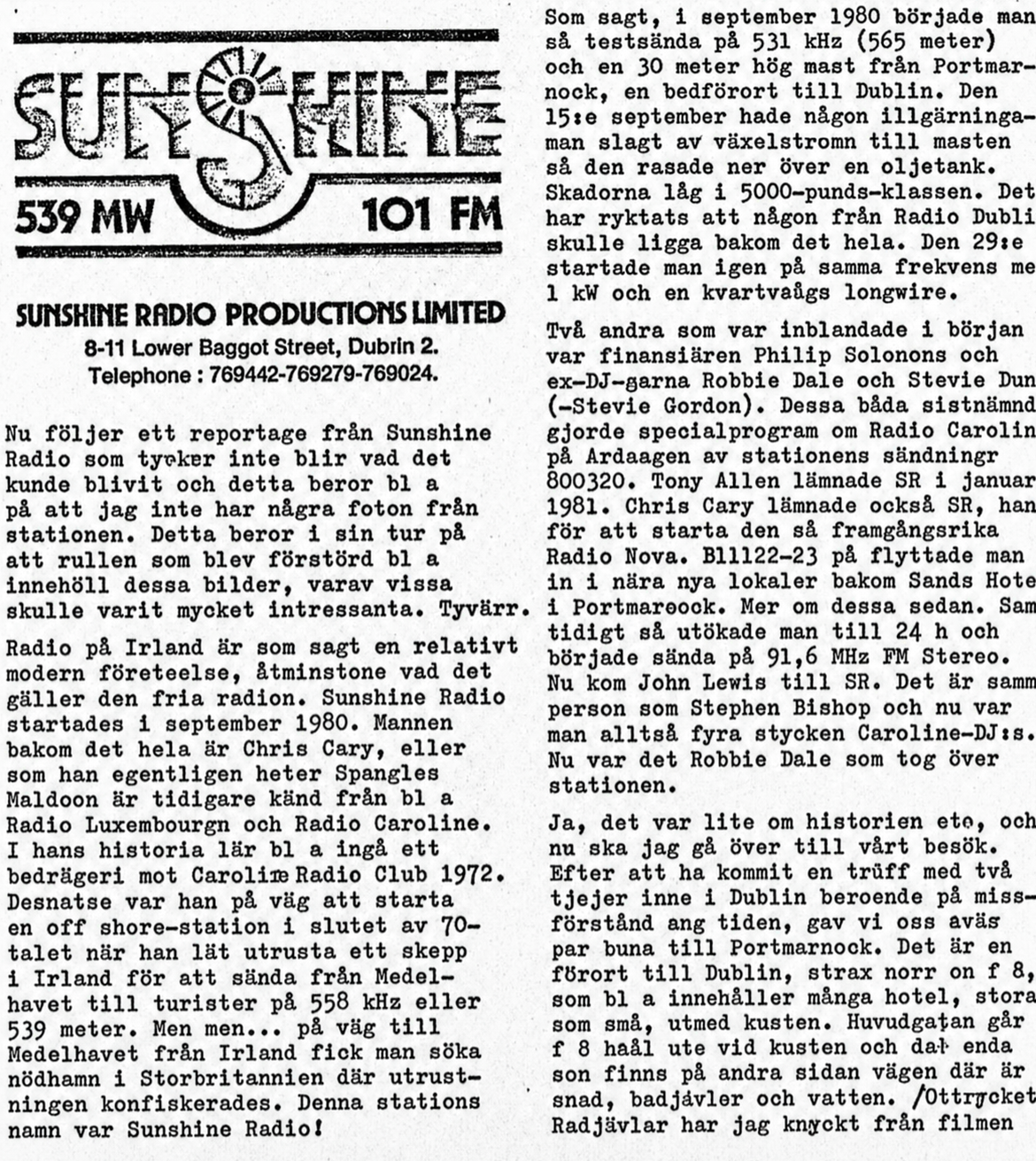
There follows a report about Sunshine Radio which, unfortunately, will not be as good as it could have
been because I do not have any photos from the station. This is due to the fact that the roll that contained these images was destroyed,
some of which would have been very interesting. Unfortunate.
Radio in Ireland is, as I said, a relatively modern phenomenon, at least in terms of free radio. Sunshine
Radio started in September 1980. The man behind it all was Chris Cary or, as he is sometimes called, Spangles Muldoon.
He was previously known from, among others, Radio Luxembourg and Radio Caroline. He had planned to start an
offshore station in the late ’70s when he had a ship equipped in Ireland to broadcast from the Mediterranean to tourists on 558kHz or 539 meters.
But, but … on the way to the Mediterranean from Ireland, they had to seek refuge in the UK where the equipment was confiscated. The name of this
station was Sunshine Radio.
As I said, in September 1980, test transmissions commenced on 531kHz (565 metres) on a 30-metre-high mast from
Portmarnock, a coastal suburb of Dublin. On September 15th, a perpetrator had sawn through the stay ropes to the mast and it collapsed over an
oil tank. The damages were in the region of £5,000. It has been rumoured that someone from Radio Dublin was behind it all. On the 28th they
started broadcasting again on the same frequency with 1kW and a quarter-wave longwire.
Two others who were involved at the start were the financier Philip Solomons and ex-Caroline DJs Robbie Dale and
Stevie Dunne (a k a Stevie Gordon). The latter two made special programmes about Radio Caroline on the anniversary of the station’s closure on
March 20th, 1980. Tony Allan left Sunshine Radio in January 1981. Chris Cary also left Sunshine Radio to start the very successful Radio Nova.
On 22nd-23rd November 1981, they moved into their new premises behind the Sands Hotel in Portmarnock. More on these
shortly. At the same time, it expanded to 24 hours a day and started broadcasting on 91.6MHz FM stereo.
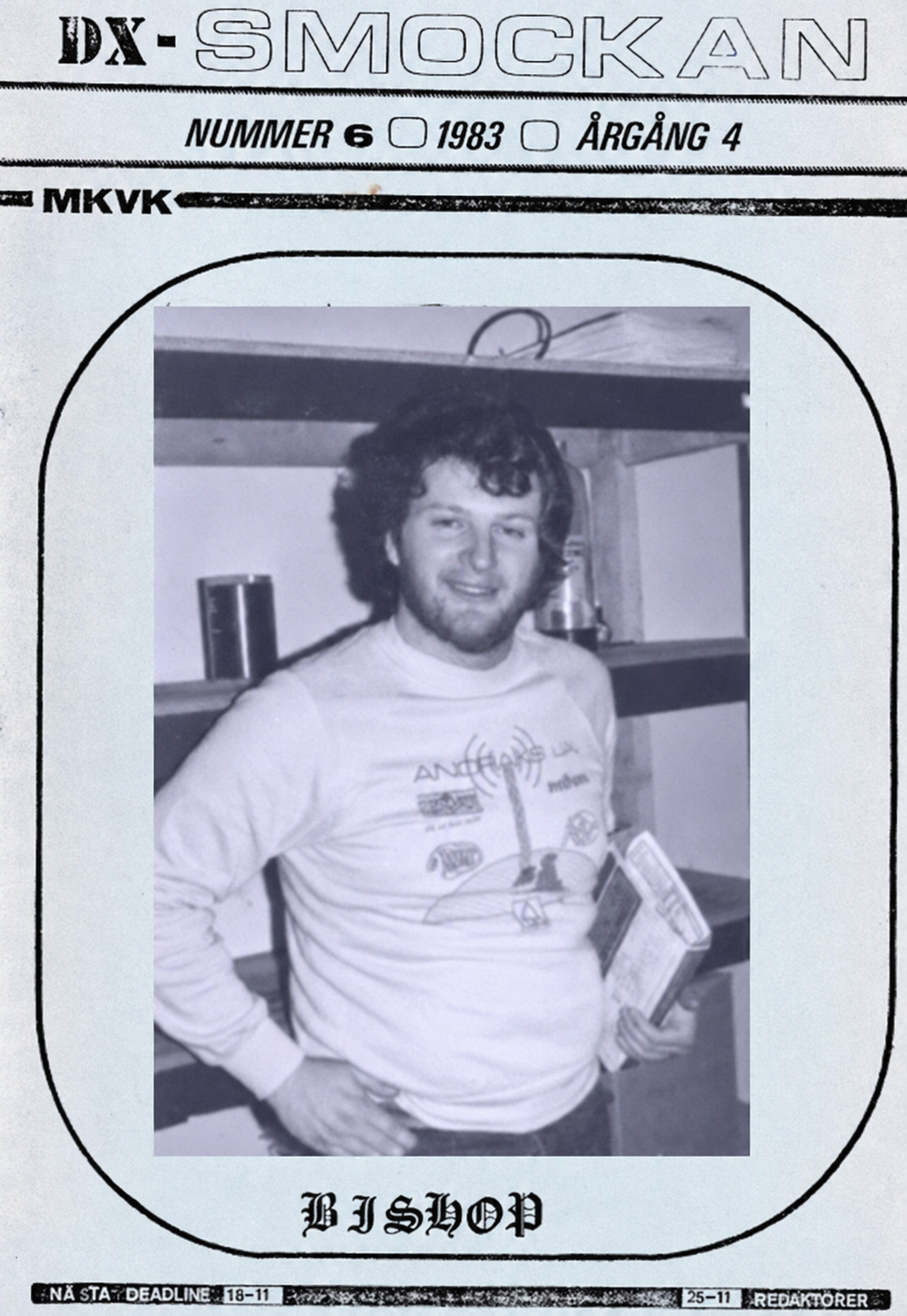
At this point, John Lewis joined Sunshine Radio. John is also known as Stephen Bishop so now there were four
former Caroline DJs at the station with Robbie Dale now the outright owner.
That was some of their history, now I will write about our visit. After missing a meeting with two girls in
Dublin due to a misunderstanding over time, we left by bus to Portmarnock, which is a suburb just north of Dublin city, that includes many hotels,
large and small, along the coast. The main street goes all the way out to the shore and the only thing on one side of the road is sand, bathers
and water. In other words, it is very beautiful there when the weather is nice.
We told the bus driver that we were going to get off at The Sands Hotel and he looked at us a little suspiciously
because we did not meet his expectations of what the guests at this fashionable hotel should look like. But, I’ll be honest: in worn jeans and
with a giant backpack and tousled hair, I could see where he was coming from. We got off the bus and went behind the hotel. There were empty
boxes stacked and some wild dogs, who probably had not been fed for a few weeks so they attempted to sate their hunger by using us as food.
Luckily, we escaped, otherwise you would not have received any reports from our odyssey.
The station’s mast is in the backyard. Sunshine Radio is housed in a so-called portacabin, which is something that
is basically a giant caravan without wheels about 12 x 5 metres. This portacabin contained a room that was a combined break room, a room for news
compilation and a record library which contains about 10,000 records.
Here, among other things, hung a poster of Radio Caroline! This was on the far left. From the right, there is the
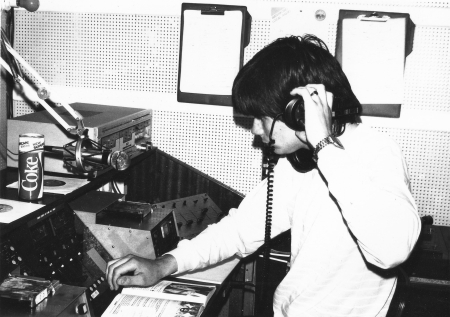
on-air studio, a studio that is almost similarly equipped that is used for taped features and some jingles and commercials and is a spare studio
if the on-air studio should fail and, finally, a news studio that is basically just a soundproof wardrobe, but that did the job.
We were welcomed and shown around by Jim Carter Edwards and then we sat in the production studio and talked. Because
Jim constantly had to run out and answer questions and help the other staff, it was a little choppy, but it worked out fine.
Sunshine Radio broadcasts on 531kHz AM and this is advertised as 539 metres but actually corresponds to 565 metres.
On FM they started broadcasting on 91.6 MHz but, because they were not happy with this transmitter, they got a new one last summer and now
broadcast on 100.58 MHz, which is advertised as 101MHz FM stereo.
We visited the station on June 20th, 1983 and at this point they had only been back on air for eight days following
the raid. While we were there, the MW transmitter was off the air due to technical problems. According to Jim, this did not do too much damage
because most people in Dublin listen to FM.
The recent raids have been the only interruption in transmission since the launch, except when the mast was
destroyed.
The original article
"What about the programmes? They operate at a high tempo with scheduled shows and short jingles. Although there are
no programmes in Irish, we heard some jingles in this, to us, exotic language. Some advertisements and jingles are self-produced but most are
so-called “agency ads” from Tapetex in Manchester, East Anglia Productions, Stevie Gordon, Bay City, Tony Allis.
The schedule looked like this when we were there:
00.00: Paul Vincent with Overnight Sunshine;
06.15 David Lyons on Breakfast;
09.00 Robbie Dale with the mid-morning programme;
11.00 Andy Rue;
16.00 Tony Gareth;
20.00 David Dennehy up until midnight.
The lineup was different on the weekends.
They have news every hour which they gather from a teleprinter, news
agencies, people who call in and newspapers. Newsreaders are Cathy Cregan and two other women.
According to a pre-raid survey, 17% of Dublin’s listeners tune in. Nova is the biggest competitor and Jim thought
it was difficult to say who was really the biggest. Sunshine Radio is aimed primarily at the middle class and educated people according to Jim.
He also thinks that the competition is beneficial.
Sunshine Radio is ingrained in the community. Banks and state-owned companies advertise on the station and politicians
do not mind being interviewed by them.
37 people are employed by Sunshine Radio and almost all of them are Irish. Everyone is paid. Many of these work in
the office based in the city centre. According to Jim, everyone at the station believes that there will be laws introduced in the future and that
Dublin will get 3-4 stations.
Listener reports are answered – some have been received from Scandinavia – but, unlike Radio Nova, the station are
not targetting an international audience.
As we left we thanked each other and at the bus stop we met Andy Rue again who was very nice.
Thanks to Jim Carter Edwards and Andy Rue!
After the visit to Sunshine we really needed a shower. We walked into a B & B offering them a pound each if we could use their
facilities. We could.
In the evening we visited our friends and had a beer and a meal. They lived on the northside of Dublin with their parents, being around our age.
We also took a walk to St Annes Park. We were installed in their guest room, and had a very good night’s sleep.
Our alarms went off at 8am. After breakfast, we got a ride with the father of one of our friends to Connolly Station where we
planned to get a train to Drogheda and Boyneside Radio. Due to a flat tyre we almost missed the train, but barely made it.
The other station to be covered in this issue is Boyneside Radio. Unfortunately, the pictures from this station were on the roll that
was destroyed.
We’ll start by writing some of the history behind the station. It all started with Local Radio Drogheda broadcasting from Donaghys Mill in
Drogheda on November 21st, 1978 at 12:00. They continued to broadcast for a few hours a day at 9w and quickly became quite popular. Unfortunately,
though, the signal’s range was only three miles.
In early 1979, they began using an Electra shortwave transmitter converted to medium wave at 1333kHz outputting 60 watts. With the new transmitter
in action the signal could be heard outside Drogheda which led to a name change to Boyneside Radio. The Boyne is a river that flows through
Drogheda.
Transmission times at this point were 07:30 – 24:00.
In June 1979 they started using the transmitter which is in use now. It was built by none other than the afternoon DJ and technician Eddie
“Heady Eddie” Caffrey. The crystal was 1323kHz.
In the early 1980s, experiments with FM began on 96MHz which has contributed to the station’s growth. They moved into new studios in a house
right next to Donaghys Mill but moved the MW transmitter to a place outside the city, feeding it with an FM link. This was to be the beginning
of a regional network.
A setback came in July 1981 when the staff split up and some of the old employees started a new station, Community Radio Drogheda. It lasted for
ten months.
They are now all gathered under one roof again and they are the most listened-to station in north Leinster.
There have been two raids so far: 1978 and 1979.
There are studios in Newry (Northern Ireland), Navan, North County Dublin and Drogheda.
MW frequencies (power is around 1.5kW on each):
Drogheda 1305kHz (229.8 metres)
Newry 1233kHz (244.0 metres)
Navan (240 metres)
Dublin 1404kHz (213.6 metres)
FM frequencies:
Drogheda centre (studio) 98.9MHz
Tullyesker (North feeder) 98.1MHz
Drogheda (The feeder to the MW transmitter) 99.7MHz
Outside Broadcast frequency 102.0MHz
The building contains an On-Air studio, a production studio, a news studio, a news compilation room and some other areas.
They are considering sound insulation, but the studio has no audible echo.
The programmes, then…the music is divided into playlists, that is, they only play songs that are on one of the playlists. There are four playlists: A, B, C and Oldies. Playlist A has the most popular tracks of the moment, etc. Oldies are “oldies but goodies”.
All jingles and commercials are on cassettes. They do not have cartridge machines and neither do they consider it necessary.
Boyneside Radio now broadcasts 24 hours a day. The programmes include the Breakfast Show, Mid-Morning Music and Interviews, Lunchtime Special, Main News, Afternoon Delight, Golden Hour and the Drivetime Programme.
News is broadcast “every hour on the hour” between 07:00 – 19:00. The newsroom has interviewed a lot of celebrities. News is gathered from a number of different sources, including the teletext channels from UTV and Ceefax.
Between November 1981 and May 1982, they also ran a TV station on channel 7 in TV band III. It broadcast weekdays 13:00 – 20:00; Saturdays 12:00 – 15:00 and Sundays 09:00 – 14:00. They only ran their own programmes. At this time, they were losing listeners on Boyneside Radio and therefore closed the TV station to concentrate on radio. Television was considered to be very difficult. It required a lot of money and a lot of people.
There are, however, plans to start up again, if only as a weekend station with a 4-5 hour programme block, for example on Sunday mornings.
Outside Broadcasts are something they like doing. In their first year they ran six but now they make more than twenty a year. Among other things, it has broadcast live from the Rolling Stones concert.
Summary: a nice station that cared about the programmes and were not just thinking about advertising money. We can only hope that this station will also be licensed.
The only negative was that the news girl Áine advised us to hitchhike to Navan where we planned to visit Radio Carousel. We had to wait for the lift for an extremely long time!
Throughout Ireland (and almost everywhere else as well) girls get a lift after only a few minutes of waiting whilst boys have to stand and wait for a very, very long time…
Thanks to Eddie “Heady Eddie” Caffrey, Áine, Mike Cluskey, Tara and the cat.
This recording of Meath-based Royal County Radio was made by the lads. Fab Olly is the presenter and it starts at just
after 1pm.
After trying to get a lift from Drogheda to Navan for over an hour, a man with a van stopped and kindly let us jump in. It was so
full of stuff in the back that Morgan and I basically had to share a seat. Well, not really, he had to sit halfway down between the front
seats. Not only this, but we also had to squeeze our luggage in between the windshield and ourselves. But, fortunately, the man was
delivering clothes to the very shopping centre that we were going to in Navan. Once there, we tried to get blood back in our limbs. Then
we had dinner, much needed, and took a breather for five minutes.
First, some information about Radio Carousel. They are approximately five-years-old and consist of a network of four stations. The main station
is in Dundalk, with others in Drogheda, Northern Ireland. and Navan. The Drogheda station is, as far as I know, inactive now due to failing
listener numbers, which in turn is due to the fact that Community Radio Drogheda and Boyneside Radio merged a few years ago and took most of the
listeners in the area. However, the transmitter remains in the town and relays the programmes from Dundalk. They currently cover 29% of the country
with their transmitters.
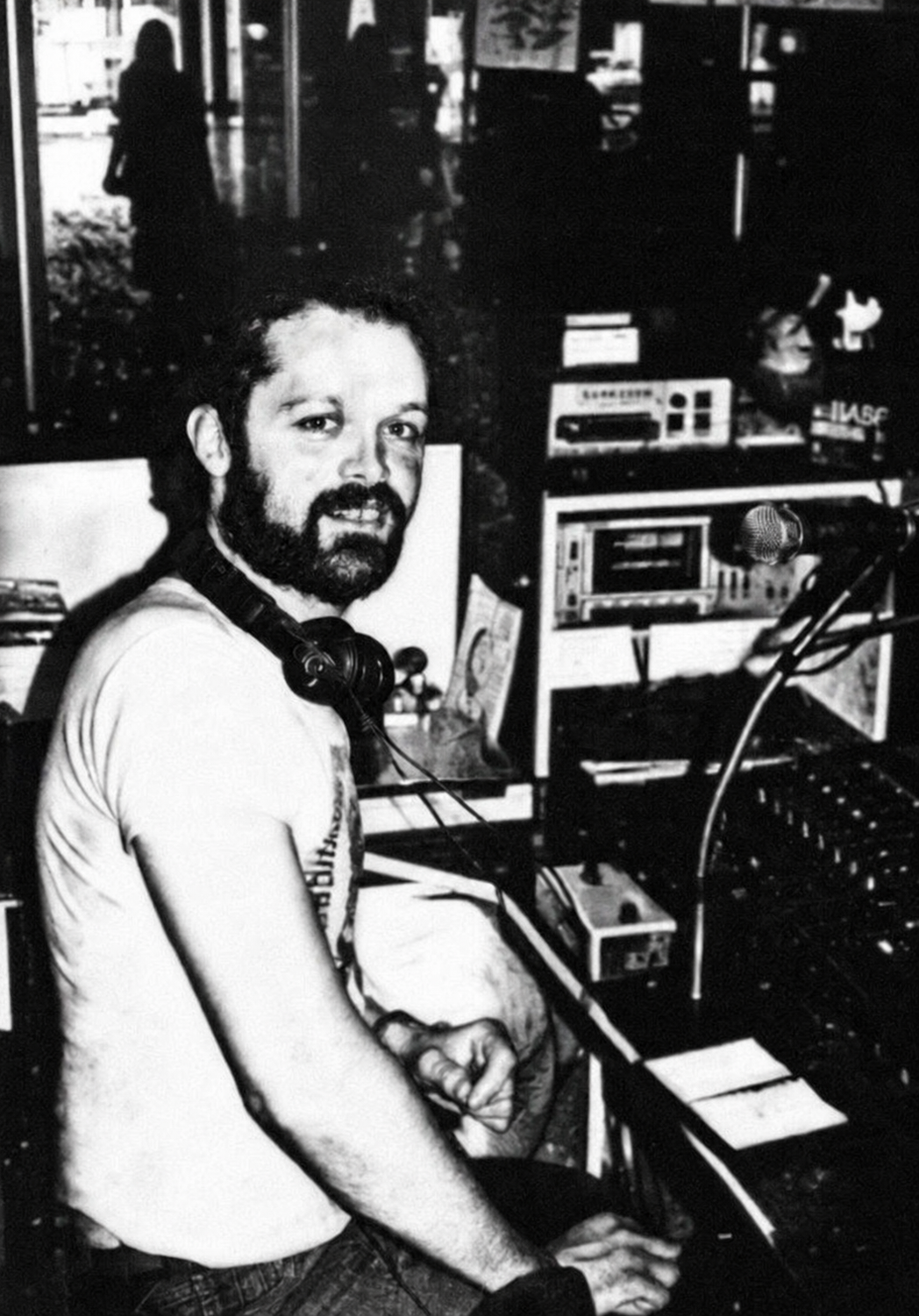
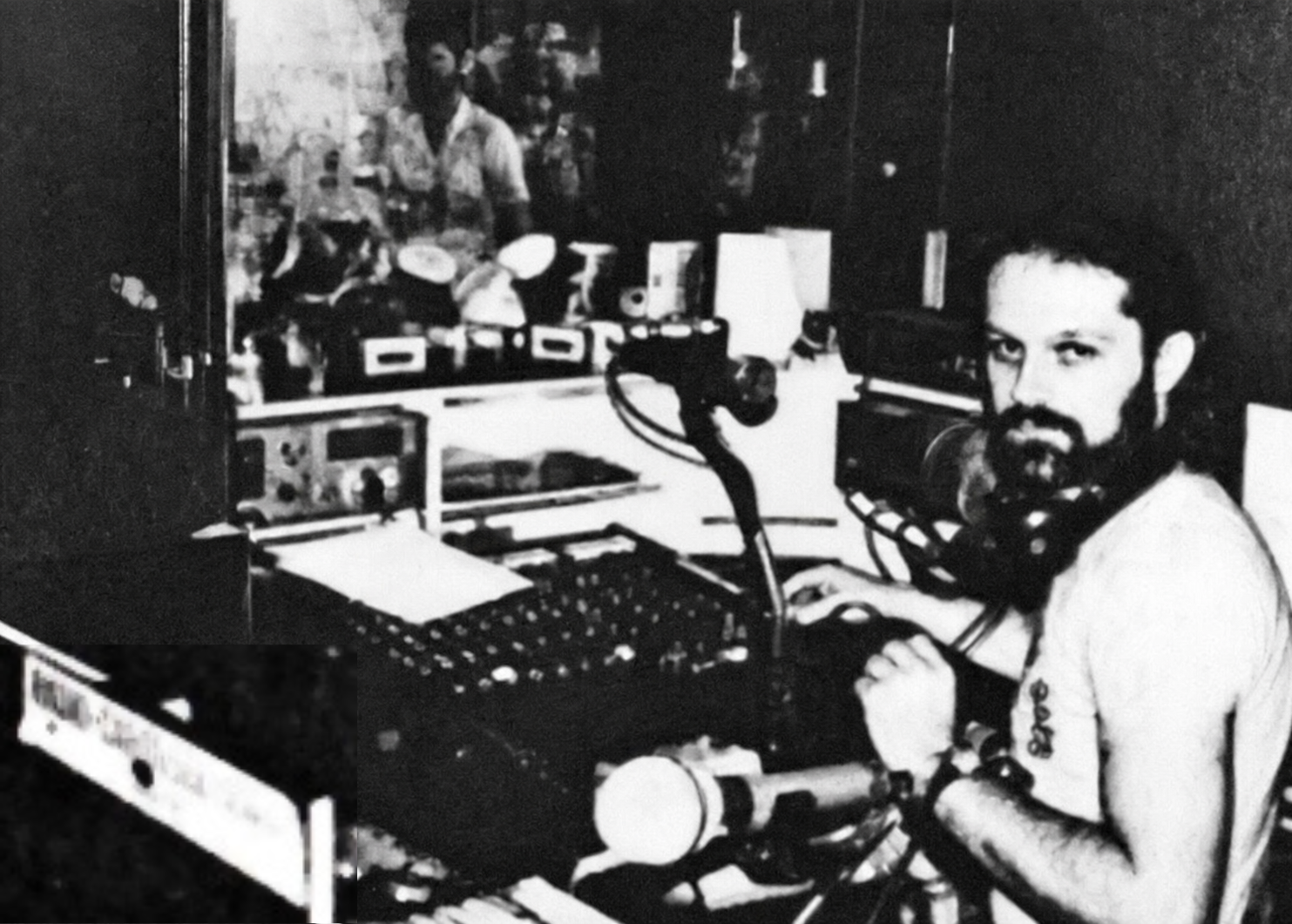
Radio Carousel Navan is a strange station in the sense that they have their premises in the middle of a shopping centre, in a glass enclosure,
so that people can look into the small studio as they walk past.
The person who had responded to our letter requesting a visit was Kieran Murray, who is very interested in listener reports. We managed to get a
look in his folder containing all the reports that had been sent to Navan and Kieran thought that the Swedish reports were among the very best.
He verifies all reports that are correct and he believes that the best programme details are names, local advertisements and other things that
can be traced to Radio Carousel Navan. They do not log the music that they play so they have to trust the DJ’s memory if you use songs as programme
details. In any case: if you hear them, and are able to give good details, then do not hesitate to send a report to them.
When we arrived at the studio we were met at the “reception” by a nice woman named Tina Anderson and she showed us into the studio, where Kieran
greeted us and asked us to sit down. He was on the air during our entire visit so we only had the opportunity to talk while a song was playing.
It made the conversation a bit stuttery.
On October 21st, 1981, Radio Carousel Navan started broadcasting from this studio and the response was enormous. People popped in whilst doing
their daily shopping and made song requests, said hello to people, reported stray dogs, talked about stolen cars and whether they had any old
items to sell. Something that was also very popular – and still is – is to request a lift somewhere later in the day. Usually, someone then
contacts the station and tells them that the person in question can go with them. This is probably popular because public transport in Ireland
is not what it should be. The whole thing was intended as an experiment but it became so successful that it is now permanent.
Radio Carousel Navan has four full-time employees and six part-time employees. The station in Dundalk has 25 employees.
In Navan town they have a production studio where many jingles and commercials are made. Some are done in the live studio and some in Dundalk.
Most of the employees are from Navan, which is an advantage for a local station. The manager’s name is Mr Hardy by the way.
Naturally, the studio has no sound insulation; glass panes are not the best material to soundproof with. Kieran does not think this plays such
a big role because it is good if listeners hear that they are broadcasting from a public place. In addition, if you broadcast on medium wave
the sound quality is not so important, because everything still sounds almost the same, no matter how much money you spend on compressors,
eco-units and the like. It is more important that the programme content is good, Kieran believes.
The glass facade had its disadvantages at first; Kieran sometimes became distracted when people pressed their noses against the glass and grimaced,
but, apparently, you get used to these things.
According to Kieran, Radio Carousel Navan is the largest station in Co Meath, which there is no reason to doubt. It broadcasts on 210 metres MW
but not on FM.
Getting advertisers is still easy. Some advertising is known as “exchange advertising”. For example, you get ten singles from a record store
each week in exchange for advertising them.
The record library consists of about 600 singles and 300 LPs. The signal range is about 40 – 50 miles with the transmitter being at 400 – 500
Watts.
The programmes then. In the mornings they target younger people with a lot of music for those who like Top 40 songs. Later in the morning, and at
lunchtime it is easy listening, intended for the housewives in the area. Then there is the family programme and a lot of Country & Western. In
the late afternoon, it’s pop for the young people who have arrived home from school. Then the adult programmes take over the air again.
18:15 – 19:00 it is Current Affairs with Kevin Johnson.
By the way, between 15:00 and 16:00 there is an hour with Oldies. Then it’s pop again and they end the day with easy listening. A fairly
well-adapted format I think.
“Classifieds” are aired at 10:30 and 17:30 and cost £1 each, or £5 for the entire week.
The top 40 list is Radio Carousel Navan’s own. It is compiled once a week. Kieran himself plays one song from the list, the next unlisted, then a Top 40 song again, and so on …
So what does Kieran Murray think about the future?
He says that they will continue as long as possible. There will probably be licences available soon and that there will likely be one station per county and two in Dublin and two in Cork. In addition, an equivalent to the British IBA will probably be set up. Kieran believes they probably have a good chance of getting a licence.
Then Kieran placed a microphone under our noses and asked us what we were doing in Ireland; what we thought of it; about our dxing hobby and the magazine we produce.
It turned out that Kieran himself is interested in international radio and that he had previously listened a lot to Radio Sweden.
He also helped Barrie Johnston compile the list of Irish stations published by Anoraks UK. Kieran thinks that Anoraks UK is probably the best way to keep up with the situation in Ireland. I do not know if I agree with that. The last list came out in April, as far as I know. A lot has happened since then. I would probably personally recommend Anoraks Ireland’s list instead.
After thanking Kieran for being so welcoming, we grabbed our stuff and left.
Getting a lift back to Dublin took about 1.5 hours
Note: These images of Kieran Murray in the studio in the Navan Shopping Centre are
photocopies from the original magazine article to give a feel for the content. Unfortunately the originals were lost.
Recorded by the lads as they left Navan, this is part of Tina Anderson’s programme from 3.20pm
This recording of Radio Nova was made by Michael and Morgan when they made it back to Dublin. Taken from 88FM,
starting at 16:53, Greg Gaughran is on the air for his drivetime show; Sybil Fennell reads the 5pm News.
Our lift brought us to Heuston Station in Dublin. From there we got a train to Kildare where we found Rita’s B & B and had a
relaxing evening looking forward to the next stage of our journey.
We had breakfast at nine. Leaving our luggage at the B & B, we started out on our next adventure.
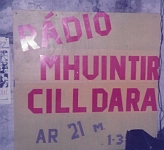
This time we are going to cover Kildare Community Radio, which in Irish is called: Radio Mhuintir Cill Dara.
The sign in the photo is their logo and it was sitting on the stairs on the way up to the studio.
After hitchhiking across Co Kildare from Kildare town to Naas with first, a nun and then, a professional soldier, we stood in the centre
of the community and looked around confused. We couldn’t see any suspicious-looking antennas but after asking a police officer where St Martin’s
House was, we realised it was only a block away.
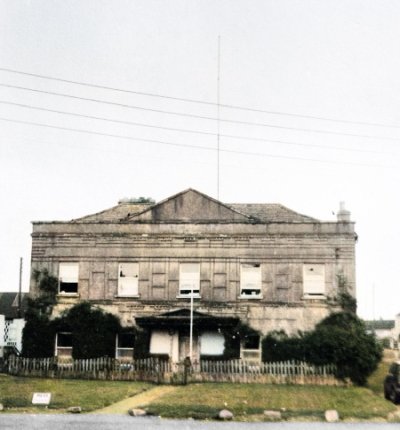
ST MARTIN'S HOUSE
When we knocked on St Martin’s House, which is a residential house and not a public place as it sounds, a woman opened the door and, after
we told her who we were and what our business was, she led us across the yard and into a house on the other side of the yard. As we passed
through the yard I had to crouch down to avoid all the hanging laundry; I also managed to accidentally step on an Irish Wolfhound who was
sleeping there. I didn’t notice this at the time but I was told about it afterwards.
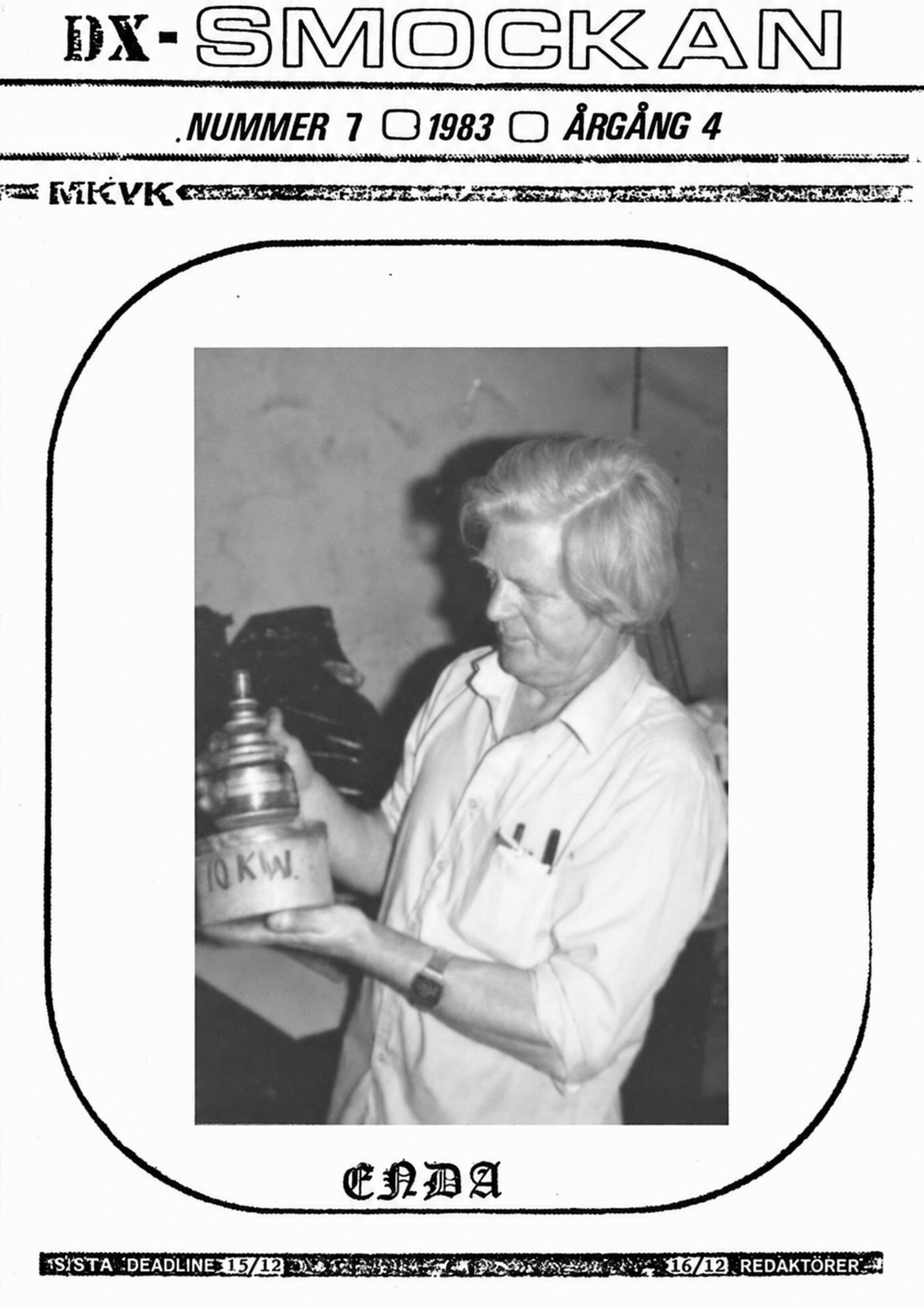
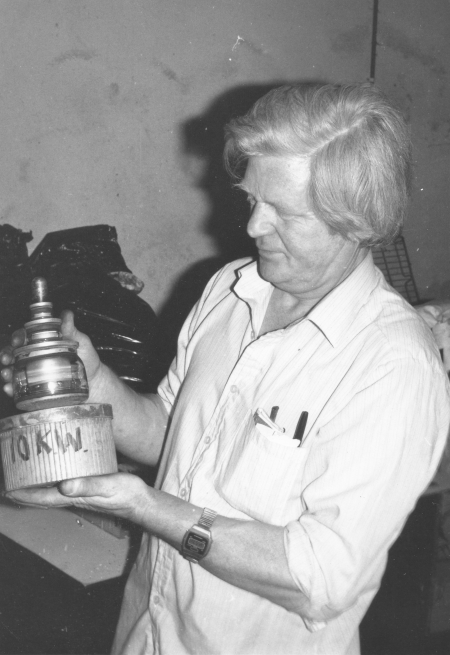
If all goes to plan, the cover photo for this issue will be of the station manager Enda Bracken with a 10kW mediumwave transmitter tube.
Unbelievably, transmitter tubes in different strengths could be found all around the house.
Up in the attic there was a small studio for the DJ, and a slightly larger studio with a few chairs and a table for interviews and the like.
Everything was very spartan because this is an authentic community station.
On-site were Enda, his nice daughter Rioghnagh and a local DJ who was just finishing his programme to let Rioghnagh go on. The guy played a
song to welcome us: Led Zeppelin’s Stairway to Heaven. Very good taste I must say.
Writing from our notes about this station is not easy. In relation to Kildare Community Radio, I have more incoherent and careless notes than
I have for any other station. This is because Enda was very talkative and we sat and chatted for hours.
COVER STAR
Enda is about 40 years old and has a workshop in St Martin’s House where he repairs everything between heaven and earth. The workshop was probably
the messiest I’ve seen in my entire life. But it did not matter; he knew exactly where everything was. He refused to tidy it because then
he would never find anything again!
Enda is the owner, manager, technician and a DJ at the station. His daughter Rioghnagh usually goes to college but, when she is at home, she
does some hours behind the mixer. Rioghnagh is an Irish name and not as unusual as you might think.
There are about 20 DJs and they usually do 3-hour shows. They come from across the whole of the county and are unpaid, making the station
completely non-profit.
One of the DJs is the nephew of Ronan O’Rahilly. The guy who was doing his programme when we arrived was named Adrian and he liked DXing a bit
himself.
Kildare Community Radio has received a lot of letters and reports from other countries. Some have been accurate reports and some just letters.
Letters have come from Scotland, Italy and Ghana, amongst others! They try to answer all letters, even if it is difficult to meet various requests.
About five years ago, a market survey was conducted in Co Kildare. It turned out that what the people wanted, amongst other things, was a local
radio station.
Enda thought this was interesting and started Kildare Community Radio around four and a half years ago. Since then it has broadcast
without interruption or being raided, although they did have a power outage once which led to them not being able to transmit. A spare unit was
missing.
They are on air between 10am and 8pm daily. On some occasions, they have broadcast until midnight, but this has not been very successful. They
broadcast everything and run lots of information and local ads. It is not difficult to get advertisers, but the number of advertisers is limited
to make room for other things.
RIOGHNAGH ON AIR
As for the music, it can be said that it is basically Middle of the Road. They play a lot of Irish music and it is up to the DJ himself which songs
he wants to play. The DJs bring their own records to their shows, but there are about 233 records in the record library.
The programmes tell an incredible amount about what is going on in Kildare, and they are repeated several times so that no one misses an event.
Over the years, three other stations have tried to compete with KCR, but they have seen them off. KCR’s emphasis from the beginning has been to
keep it non-profit in order to be able to run the station with a strong local emphasis. They also try, as Enda says, to “keep away from religion
and politics”. This is so as not to discourage certain groups of listeners.
During local disasters, the station functions much like Radio Malmöhus in Sweden did during the snowstorm a few years ago.
Most local politicians have been interviewed on KCR. Many have since refused to admit that they engaged with an illegal station. But when it comes
to fishing for votes, the “pirates” are apparently good enough. For some interviews, the ‘victims’ are not told that they are already on air –
the interviews have proven to be much better then.
ENDA & RIOGHNAGH
Charity events receive free advertising on KCR. The equivalent of newspaper advertisements are free. Lots of apartments, bicycles, TVs, etc. have
changed hands in this way. Of course, there is also no charge to request records and to send greetings.
News is collected locally thanks to people calling them and through collaboration with the local newspaper, amongst other things. A long local
news bulletin is broadcast a few times a day and it is read by Enda. News from RTÉ is relayed at 12:00, 13:30, 15:30, 17:00 and 18:00.
The transmitter is homemade, designed, of course, by Enda. He has lots of spare parts so he can rebuild it as necessary, he says.
If one of his transmitters fails he has built them so that they quickly return to full power. To demonstrate this he abruptly inserted a
screwdriver into the transmitter and the radio monitor fell silent. KCR was off the air. However, after a fraction of a second the transmitter
came back on again and after just a few seconds it was back to full power again.
They transmit 1.8kW on mediumwave but do not broadcast on FM ‘because no one listens to FM’, according to Enda. The mast is 60 – 70 feet and they
cover 40 – 50 miles during the day.
KCR TRANSMITTER
Enda has plans for 5kW. There are lots of 1.5kW, 6kW and some 10kW transmitter tubes all over the place. Any tubes that Enda is not really happy
with, his wife uses as flower vases!
According to Enda, the fact that a Russian broadcaster was on the same frequency has meant that many, many people have been able to hear them.
They have, so to speak, taken a free ride on the Russian’s carrier. He goes on to say that the Japanese knew this and used the same trick during
World War II. The US propaganda broadcaster went out with strong power using a speaking man so Japan used the same frequency and let a woman with
a clear voice speak. This was often heard along with the US station thanks to the phenomenon described above. Enda compared it to a fly on a dog’s
tail. Wherever the dog goes, the fly goes too!
The mixer is simple so that everyone can quickly learn it. Both turntables are on the same side of the DJ, the right one. This has proven to be
more natural and has meant less damage to the turntables. In the past, the left one always ended up broken. Maybe something to think about for
other stations.
KCR plan to continue even if they do not get a licence. They refuse to change names or staff. They reach all six major locations in the county;
manage to cover the rest of the county and a little more besides. Kildare county is home to 60,000 people.
Enda is an Irish nationalist and was in Northern Ireland in 1969 – 1970 where he worked with underground stations with political messages.
After this very rewarding visit, we planned to hitchhike back to Kildare from Naas, but we had no luck. However, after three hours, a bus arrived!
Thanks to Enda, Rioghnagh and Adrian.
We took the bus back to Rita’s B & B where we picked up our luggage and took a train to Limerick. We found a youth hostel and stayed there for the night.
Day 4 Limerick
After a long walk from the hostel to Ellen Street, we stood outside Big L’s premises. Locked. Luckily, a woman who was due to do her programme
arrived and let us in.
It looked messy. They were rebuilding. Down in the basement was the studio. There, a gentleman was just finishing his morning show.
Big L broadcasts on 92 and 98MHz FM Stereo and on 194 metres MW. They reach about 70 miles with the antennas on the roof and those outside the city.
The station was born on June 24th, 1978, at 09:00. The premises are still the same. From the outside looking in, it could be mistaken for a
regular reception area with a secretary behind a desk; a place where you might buy station souvenirs, but behind this area is where you’ll
actually find the studio.
Just one week after the launch, they were subject to their first, and so far only, raid. The next day they were up and running again.
Seven people are full-time employees at the station and ten to twelve are part-time. Everyone is paid at Big L.
MARGARET ON AIR
The programme that went out later was Margaret’s phone-in swap shop where you could call if you wanted to buy, sell or exchange something. At this time of day, it was mostly housewives who called. Other programmes are: Lunchtime Request, Nancy’s Show, Personnel Top 10 and Hospital Requests. The station can be heard by about 300,000 listeners.
The local competitor to Big L is Raidió Luimní, which broadcasts 07:30 – 24:00. Big L broadcasts around the clock.
According to Big L, Raidió Luimní is rural. They are not seen as a serious threat.
News is read partly from a prepared script and partly from seven newspapers. They have news every hour on the hour from 07:00 – 21:00. They gather news from other stations and from people who call in. Newsreaders on Big L are Patricia Long, Mike Finn, Ann Ready and Collette.
It is still easy to get ads and this means that they do not have to spend so much time looking for advertisers. The advertisements are on regular cassettes, not on cartridges.
They have received a lot of listener reports from Sweden and from other countries as well. They get about 1 – 2 a month. Of course, they reply to them all, says secretary Linda Downes smiling.
They believe that new laws will come soon and that the new stations will be on the air by the summer of 1984.
Thanks to Margaret and Linda!
After leaving Big L, Michael and Morgan boarded a train bound for Cork.
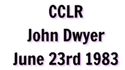
Here’s the first of three recordings made by Michael and Morgan whilst in Cork. It was taken off 1107kHz, John Dwyer is on the air and we
join him at 8pm.
South Coast Radio responded to my letter with a very kind invitation and when we approached Cork on our journey in the promised land of radio,
I called South Coast Radio and the person who picked up the phone was none other than Keith York. He let us know that we were welcome whenever
we pleased but in the same breath, he emphasised that unfortunately, I would not be able to speak to Nick Richards, the man who’d replied to my
letter. Both of these nice guys have previously worked at offshore stations.
Once in Cork, which is located on the south coast and is Ireland’s second city, it was important to find South Coast Radio. The address was 40,
St Lukes Cross and, after talking to an eagerly gesturing taxi driver, we had got fairly clear directions where we should go. The road there
was long and steep (well, with full packing on the back, all slopes are steep) but after a while, we came to the crossroads at which the
station was located.
South Coast Radio’s premises are on the second floor of the building and below it houses a very nice pub which is basically used as a staff
dining room and break room by the station.
After climbing the stairs and entering some office space, we were there. In South Coast Radio.
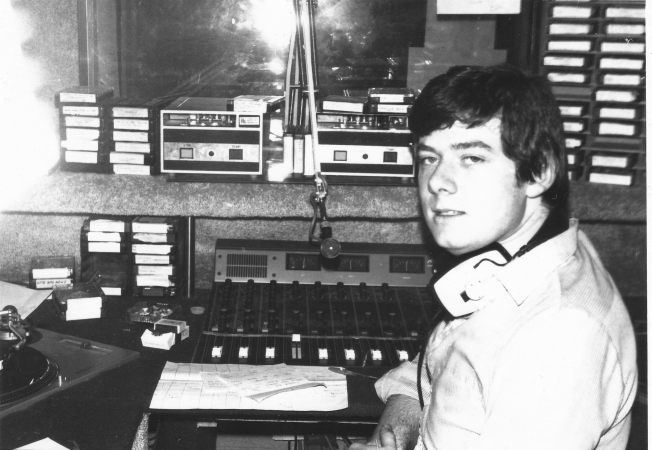
The people we got to talk to were the owner, Peter Maher, and the DJs Stephen Bishop and Keith York.
PETER MAHER & KEITH YORK
South Coast Radio was launched on March 8th, 1982 by Peter Maher because he thought the existing local stations were bad, or as he put it:
“Micky Mouse Stations”.
Peter ‘knew’ that he would seriously rival the other stations with South Coast Radio. Of those who existed when he started, only Cork City Local
Radio remains in Cork – ERI started after South Coast Radio. Peter is, of course, happy with this development.
South Coast Radio has about 25 employees who all receive full pay, which is only the case at the larger stations in Ireland.
South Coast Radio’s target group is primarily people between the ages of 18 and 35, which is noticeable in the choice of music. They have no
special programmes but run according to a schedule where each DJ has a few hours in a row.
South Coast Radio’s range is 50 miles primarily, but you can hear a decent signal up to 80 miles from Cork.
KEITH YORK ON AIR
The transmitter and antenna are located at a height outside the city and that transmitter is nothing less than an R C A BTA10K of 10kW. Its
mast is 160 feet. They also have a 1kW transmitter elsewhere in reserve. The FM transmitter is in-house and the antenna is on the roof. South
Coast Radio has plans for a 5kW AM transmitter that will transmit from a very high point (compared to the surroundings) from a place just
outside Cork.
There are 250,000 people living in County Cork and it is estimated that the listening percentage is 45 – 50%, maybe even more. There is however,
as SCR says, no reliable survey to refer to.
The newsroom broadcasts live news every hour on the hour except 01:00 – 07:00, when the midnight news is rebroadcast. This can sound quite funny
if the newsreader has made a mistake or, for example, sneezes, because then he sneezes in the exact same place in the news bulletins all night.
The newsroom collects news via the public; newspapers; its own reporters; other radio stations and other channels. They have access to
four telephones and a Telex device on which the news also comes in. By now, they probably also have Ceefax (British Teletext) as it was
underway during our visit to the station.
This summer they had a so-called “give away” competition in which they gave away a total of £1,000. In connection with this, some new jingles
were also introduced.
STEPHEN BISHOP
In addition to the live studio, they have a small production studio in which they make some commercials and some jingles. By the way, they save
all advertisements and jingles on master tapes to enable a return to these in the future. Keith and Peter played selected parts from one of these
tapes and what we heard was really classic. Among other things, we heard a spot about a countess in a castle, and it was fantastic fun.
In this small, but practically furnished, studio there were, among other things, two large Revox tape recorders, mixers, turntables and some
NAB cartridge machines. They were not happy with the latter, but thought of getting Solar-flax machines instead. But if I had NAB machines,
I would definitely be happy.
He also said that they did not like doing outside broadcasts because he did not think it added anything to drive out into the community and
broadcast from there. However, while we were in Ireland, they did make one about a special ship anchored in the river that flows through Cork.
South Coast Radio calls itself the ‘Music Leader’ and Peter thinks that the other big station in Cork, ERI, steals ideas from both Radio Nova
and from his own station.
When the visit began to end, Stephen Bishop and Keith York asked if we would like to go with them to view the transmitter and mast. Well,
what does one answer to such a question? They called for a taxi and then we thanked each other at the station for the time being.
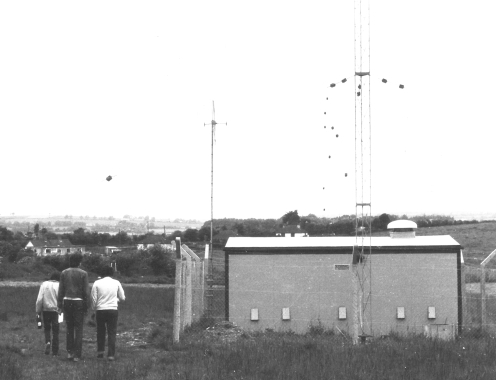
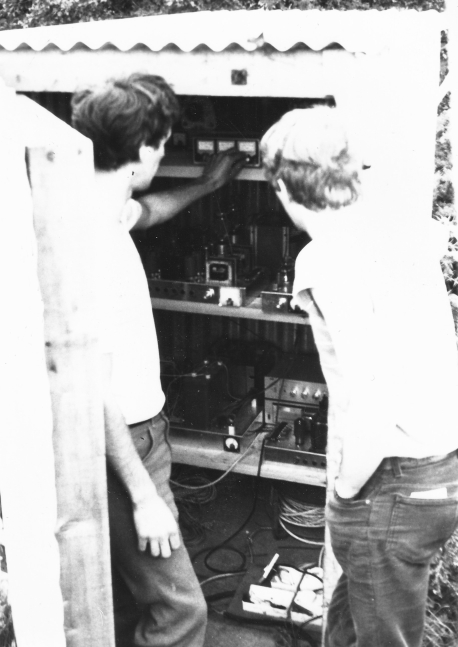
On smaller roads we reached a ‘mountain’ (for us Scandanavians it was a mountain, or maybe rather a ridge) on which the transmitter building
was located. The transmitter building was a low shed surrounded by barbed wire. From there, the supply cable went to the mast. Since they
are located at quite a high location, have a high mast and a 10 kW transmitter, you can hear them here in Sweden. I myself reported them when
I got home and the answer came back after some weeks.
TX SITE
They showed us the transmitter and when you talked to them they turned out to be just as nice as all the other Irish. Stephen Bishop told us
about Radio Caroline and Ross Revenge and said we would see pictures when we arrived back at the station. Then we got back into the taxi
and whilst we were driving they asked if we’d like to visit ERI, their biggest competitor for listeners.
You can read about that visit in a later issue of the magazine. Unfortunately, Stephen was not in South Coast Radio when we got back there after
visiting ERI. He would have shown us pictures of the Ross Revenge, which we could have photographed. In any case, we found out about Radio
Caroline’s comeback in good time and were able to closely monitor the frequency for the rest of the summer.
We want to say thank you to the staff at South Coast Radio, especially Stephen Bishop, Keith York and Peter Maher.
This FM recording was made off 104MHz from 9pm on the evening of the visit…
The next station in the series of station visits from Ireland is ERI. This station was visited shortly after we had been to South Coast
Radio’s broadcasting facility so it was fortunate that they did not look out and see that we jumped out of a taxi in which Stephen Bishop and
Keith York were sitting. If they had we probably would not have been let in!!!
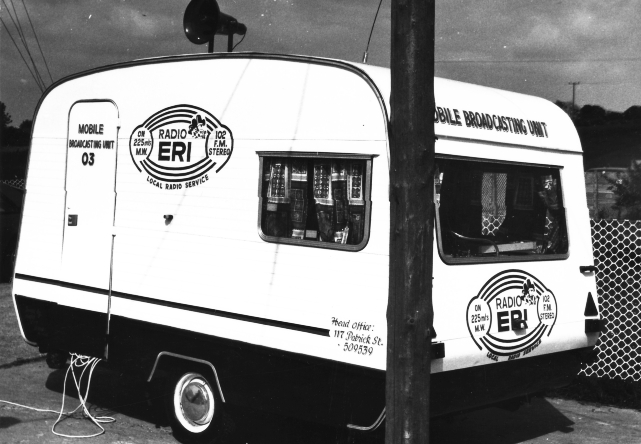
ERI is located a bit outside Cork on the green heights where South Coast Radio has its mast. They are housed in two portacabins that are
not as large as Sunshine Radio’s. One contains a live studio, a production studio and the record library, or at least parts thereof. The other
contains a room that is an office and a place for news compilation, etc. Two nice women were working inside, Imelda Coffey and Emer Lucy,
secretary and newsreader respectively. They kindly, but firmly, referred us to the other cabin where John Blake was doing a live programme in
the live studio. Eric Vaughan was also there; he was in the production studio where he was doing a commercial. In addition, they were listening
to a recording with a local artiste, who was also a rasta prophet and reggae singer. What was originally an ordinary reggae song was
transformed into a tribute song to ERI. It sounded awful.
JOHN BLAKE ON AIR
ERI started in June 1982 when Joe O´’Conner ran a little station on a 5-watt transmitter. At that time it was called Cork Eastside Radio
and broadcast from a village called Ballycotton. It transmitted 2-3 times a week.
In November 1982, it relaunched as Radio ERI. The station often does outside broadcasts and is considered to have good relations with their
listeners.
ERI’s headquarters are in the city and the place we visited is about three miles outside the city but they did not feel that this disadvantaged
them. Admittedly, according to Eric, South Coast Radio is in the middle of the city but it is difficult to get in and you are treated unkindly.
Their biggest competitor is, of course, South Coast Radio, but according to the surveys that ERI trusts, they are the largest. The third station
worth mentioning is Cork City Local Radio.
According to Eric, South Coast Radio has had financial problems due to the fact that they were off air for a couple of weeks in connection with
the councils. That might be true because they must have lost a lot of advertising money. There is also the risk that advertisers might switch
to another station.
>
MOBILE BROADCASTING UNIT
There are about 500,000 listeners in the area, and according to Eric, 350,000 listen to ERI regularly. It would also be largest in the age
groups 15 – 18 and 25 – 35 years.
In connection with the recent raids, ERI did not even mention these in its news because they wanted to continue as normal. Eric believes that
it was Nova’s and Sunshine’s own fault that they were targeted because they wanted to be too big and, as a result, they interfered with air
traffic.
Eric had previously worked at Boyneside Radio and Radio Carousel. On Boyneside Radio, he had also received some visitors from a DX magazine
in Sweden and he thought that these were “a bit weird” because they photographed a supply line in the ceiling from the mixer to the transmitter.
I wonder which newspaper they came from. There are rumours that they came from DX-Gnistan!
44 people are employed at the station and this includes salespeople and the like. Everyone is paid.
They have 3,000 singles and 1,000 LPs in their record library.
We also spoke to the newsreader Emer Lucy and she had the following to say: “We broadcast news ‘every hour on the hour’ and we do this 24 hours
a day. Not many people have live news 24 hours a day, but we have it here. The emphasis is on local news. We get news in different ways: via
the radio, newspapers, people calling, we are in contact with the police and the fire brigade, etc. At 13.30 we broadcast an extended feature
bulletin.”
EMER LUCY
Irish people are carefully used in the programmes, partly because there are several different dialects and they do not understand each other
very well at all.
All commercials are 30 seconds long and are saved forever on master tapes so that they can be picked out in the future. Eric is one of those who voices advertisements at the station but some are done by agencies. Before the advertisements are broadcast for the first time, a copy is sent to the advertiser for approval.
A lot has been invested in charity projects. One of these helped a man whose house had burned down.
Eric believes that new laws will come soon, but on the other hand, he has believed so since 1972!
In the not-too-distant future, they plan to build permanent studios nearby and move away from their portacabins.
Eric does not consider Radio ERI a pirate but, rather, a commercial local independent radio station. He is vocal against the really small stations because they give radio a bad name. However, on the other hand, he feels that all stations that provide some jobs and wages are good. The authorities have to think very carefully before stopping free radio because they already have a very difficult unemployment problem to deal with.
RTÉ also hires a lot of people but it takes too many people to do programmes there and this is not good, Eric believes. The more cooks, the worse the soup, as we say in Sweden.
As the visit came to an end we thanked the staff and headed to leave. It turned out that Emer and Imelda were finishing up and leaving in their car and they invited us to go with them. They dropped us off just outside South Coast Radio where we had left our stuff.
In the car they told us that they had some well-known people working at the station. She listed a few and I tried my best to take notes in a
shaky car.
These famous DJs are on ERI:
Paul Graham from Radio Caroline; Steve Marshall from Voice of Peace and Don Allen from Radio Luxembourg and Radio Caroline.
As a whole it can be said that the staff were nice but that there was a little too much “write that we are bigger than South Coast Radio” in
the air.
Thanks to Eric Vaughan, John Blake, Emer Lucy and Imelda Coffey
This recording taken off 106FM was made from 9.40pm on the evening of the visit…
Following last night’s visits to South Coast Radio and ERI we had a calm evening at the youth hostel. We left Cork and arrived back in Dublin at 6pm. Unfortunately our friend’s parents had guests over the weekend so we couldn’t stay there. Intead we booked into the Boulevard at 8 Clontarf Road and mixed a drink in the hotel room.
We slept in. We hung out with our friends in the city centre for the afternoon and did nothing much in the evening.
Recorded by Michael and Morgan late night on the 25th, this is Alan Hunter on Ballymun Community Radio, which was broadcasting to the north
Dublin suburb on 104.0MHz.
We checked out from the hotel and moved to a cheaper B&B on Castle Avenue in Clontarf, which was run by a family and was a very nice place for backpackers.
We had a drink or two at the B&B, made a few recordings and then left to meet our friends at a disco called The Grove.
3pm: Based in Portmarnock, not far from Sunshine Radio, this is Barry Falvey on-air for this recording, which was taken off 96FM.
4pm: This recording is of Northside Community Radio, which was based in Artane and was focusing on the Bonnybrook community celebrations.
5pm: This is Bray Local Broadcasting recorded off medium wave.
6pm: This is Mick Nugent on air for the 1983 broadcast run of this annual short-stay broadcaster. David Baker is also heard interviewing
some of the locals on this recording taken off 199metres medium wave.
7pm: This recording of the north Co Dublin pirate station was made from 1575kHz.
Our alarm was set for 7am. It was a rough morning following our night out. We got a bus to Connolly Station, followed by a train to Heuston Station. From there we boarded a train headed for Killarney, where we stayed at a B&B on 70 Countess Road. We had a relaxing evening following a rough day as I also had severe pollen allergy problems.
We woke early and headed into town to catch a train. We changed in Mallow and Limerick. and eventually arrived in Waterford.
This time around the focus is on Waterford Local Radio. Waterford was one of the nicest cities we visited in Ireland. We got there at noon
and after visiting the tourist info, booking tickets for the ferry back and settling in at a nice Bed & Breakfast, we went out to explore the town. While I was getting my hair cut, my travel mate Morgan walked around and discovered WLR’s premises and since we agreed to visit them in the afternoon,
we went directly from the hairdresser to a station visit that turned out to be one of the nicest.
I was given a magazine by the people at WLR which was all about WLR’s history and staff, so I thought I would take the story up to August 1980 to begin with.
In 1972, Rick Whelan and Egedio Giani broadcast with a small transmitter for fun but reached only a few hundred metres.
In 1976, Rick Whelan returned to Waterford and had always considered starting a station there. When he returned to the town, he sought out
Egedio Giani again and they agreed to start Waterford Local Radio.
For over a year, Giani worked on the transmitter to get decent strength and range. Meanwhile, Rick Whelan sought out people to tell them about
the project and to gather support.
By May 1978, the transmitter was ready to be used.
WLR is the only station in Ireland, at least according to themselves, which launched simultaneously on MW and FM.
You are probably not familiar with Giani, but he is a very good and well-respected engineer who has built transmitters for several stations.
On Sunday, June 23rd, 1978, the first official broadcast took place from Rick Whelan’s garage in Butlerstown. They had a very good response and by
the end of June they had people presenting shows from 10:00 – 13:00.
In July 1978 advertising money started to come in and they modified the transmitter so that the range was 20 miles.
WLR’s popularity kept increasing and they invested in more equipment.
Five O was the record store that delivered records to the station in lieu of advertising.
In August 1978, they outgrew the garage and moved to a slightly better location. They installed a phone which rang incessantly with good wishes,
news and tales of lost dogs!
The part-time staff now consisted of Rick Whelan, Pat Haberlin, Ray O’Brien, Geoff Harris, Jackie O’Keeffe and Tom Mullane.
At a meeting in September 1978 a decision was made to invest in News so Helen O’Brien was recruited as a newsreader.
They carry their first interviews, including with government officials, so they now let go of the idea of being a station that only plays music.
Des Whelan arrives at the station to do rock shows.
In October 1978, they were getting 250 phone calls a day and realised that it was time to hire a full-time manager. Des Whelan took the role. The broadcast times were now 03:00 – 19:30.
In November 1978, the schedule was stable and they started with their first community programmes: Saturday Morning Community Round-up, The Saturday Afternoon Local Sports Show, Hospital Requests and an interview programme.
On November 8th, which was a Thursday, WLR was raided by the P & T and the transmitter was confiscated. This took place at 7:10pm. By 7:50pm they were back on the air with their spare transmitter.
In December 1978, a huge collection of toys for needy children was organized in Waterford, and Christmas for WLR was very pleasant. Many Waterford residents who resided in the UK called the station to greet their relatives and friends back home.
In January 1979, the broadcast time was extended to 07:30 – 01:30.
In February 1979, a magazine programme was introduced that ran from 11:00 – 12:00 – this contained local news as well as interviews with famous personalities and groups in the community. It proved to be a success. Jono Torrie was appointed Head of the Advertising Department.
In March 1979, the transmitter was again confiscated by the P & T.
It was much more informal this time: “We all had a cup of tea and a chat”.
The next day they were back on air after installing a new and stronger transmitter for MW. That same month. a two-hour show was introduced that
ran once a week for youth clubs. A playlist committee was also put together. This compiles the playlist of which songs are to be played over
the week.
In April 1979 they acquired a new transmitter but they decided not to connect it because they were not happy with the antenna. Martin Harte
arrived at the station.
In June 1979, the first anniversary was celebrated with a live broadcast from the Ardree Hotel on a Sunday evening. Aileen Pheasey did a
10-hour show! The money raised went to charity.
In September 1979, they moved to a new location on Wellington Street. They were now broadcasting on FM from Wellington Street and this signal
was relayed out of Butlerstown with the MW transmitter.
In November 1979, Geoff Harris returned from RTÉ2 and did his own show 16.00-18.00. A survey shows that 76% of people in the area listen to WLR.
In December 1979, they arranged the same collection of toys and clothes as the previous Christmas and they raised so much that they did not
finish the dividend until February!
In January 1980, the programme “What’s on this weekend” was introduced to the Friday schedule. A survey shows that out of 30 shops visited,
27 were playing WLR on their receiver.
In March 1980, they joined the South Eastern Licensed Entertainment Association. A programme in which local music groups are highlighted is
introduced on Fridays at lunchtime.
In April 1980, they held a big charity event before Easter and had great coverage of Waterford FC’s cup adventure.
In May 1980, the schedule for the summer was introduced. They now had Community News in every news broadcast. Dermot Graham began with a
magazine programme about local events. Eoin Ronayne and John Fletcher arrived at the station.
In June 1980, WLR’s own employment service is started and jobs are advertised to the unemployed. The News was extended and was now broadcast every
hour 08.00 – 20.00, seven days a week.
In July 1980, they started working on their new FM transmitter of 200W and with a range of 30 miles. The old one was 40W and covered only 8 miles.
In August 1980, Tommy O’Keeffe arrived at the station. A charity event was also held.
So to the present…on the Wednesday before our visit, they had celebrated their five year anniversary and, as far as we understand, they did
a great job.
They moved to their current location on Georges Street from Wellington Street 18 months ago. 10 people are full-time employees and a total
of 25 people work at the station.
NEWSREADER ELEANOR O'BRIEN
When we were there, they broadcast 06.30 – 02.00 seven days a week, but two weeks later they had planned to add more hours and start
broadcasting at 03.00. The staff we spoke to want to broadcast 24 hours a day, but the management is not so keen on that yet.
To the programmes then. A lot about the type of programmes is evident from the excerpts from the history brochure, but not everything is
mentioned.
Between 11:00 and 12:00 each day a chat show is broadcast which includes:
Mondays: Personality Portrait,
Tuesdays: Youth Affairs,
Wednesdays: Traditional music from Ireland,
Thursdays: Art programmes
Fridays: Rock programmes (which do not contain much hard rock).
On Fridays, Friday Magazine is also broadcast, which is a programme with local news and music.
On Saturday mornings, “Good News” is broadcast, which is a religious programme with a priest at the helm.
In the evening between 17:00 and 20:00, there is a country music programme.
On Sundays, the popular Hospital Request is broadcast.
Tea Time Special is a strange programme with a lot of Frank Sinatra, ’60s music and old Irish music. It is very much characterised by the
presenter, who is an older gentleman.
At 16:30 on weekdays, there is a children’s programme which is largely presented by children but it can get extremely messy with youngsters
running in and out all the time.
On the day before we visited there had been a children’s choir, which was good, but, a DJ told us we were lucky that we had not been there at
that time because it got very loud and messy…
News is broadcast “every hour on the hour” from 08:00 – 20:00 and sometimes they run News Headlines in between.
A News Round-Up runs at 22:45. Long Community News is broadcast at 11:00, 13:30 and 15:30.
TOMMY AND CLODAGH
We sat down for a long time and talked to Clodagh and Tommy. Clodagh Walsh does Hospital Request, Arts Programme and some children’s programmes.
She has been at WLR since 1978 and is very interested in radio as a medium and in Waterford. Tommy O’Keeffe has been at the station since
1980 and does, amongst other things, the morning programme. He has an excellent radio voice.
Newsreader Eleanor O’Brien was extremely accommodating and helped us in every way. We also saw Paul Power in action as he did his afternoon
programme.
There are two other reasonably large stations in the area: ABC Radio, which is based in Tramore, and Suirside Radio. ABC does not do community stuff, but only plays music, which means that its audience is quite limited in terms of age. Suirside Radio is losing listeners all the time and the owners do not seem to care about it at all. They have replaced the entire staff in six months due to everyone leaving, or going to other stations. Both Paul Power and Frankie King, whom we spoke to, had relatively recently quit Suirside Radio and did not regret it for a second. There were others at WLR who had worked at Suirside Radio previously.
PAUL POWER ON AFTERNOONS
The last major listener survey in 1980 showed that WLR had about 70% of the listeners and they believe it might be even more now.
In social circles, the station is accepted and is not considered a pirate. Amongst other things, a radio committee has been set up in the city with representatives from different parts of society who have the task of cooperating with authorities and other things.
At the time of the raids in May, there was a bit of a nervous atmosphere at the station, but lots of letters of support came in and they also arranged a petition where they got lots of names.
In WLR they believe that the wait for new laws will not be too long and that they will get a licence.
They are planning to soundproof the studios because it has been a bit bad so far. Sound from outside can sometimes be heard and the floor is not what it should be either. It creaks and, if you walk across it heavily, there is a risk that the record player will jump. The station does not have a special target group, but it broadcasts for people between 4 and 100 years of age!
Reception reports have been received, including from southern France, Italy and Canada. The technician loves reception reports because they are
good feedback about his transmitter, which he handles as if it were a child.
It is a great advantage that both mixers and transmitters are built by him because he knows them inside out and he facilitates service and repair.
We argued that it could be a problem if he were ever to quit and a new technician came and started to work on something he had no idea about.
Clodagh and Tommy laughed. There was no chance that he would ever leave the station, it was his life’s work.
AT THE TRANSMITTER SITE
After a while, Tommy O’Keeffe and Frankie King asked if we would like to go out to see the transmitter and the mast as they were going there
anyway. This was because the electricity company had called the station that morning and said that they, unfortunately, had to turn off the
power to the transmitter during the day because they had a problem with wires. Do you think the Swedish electrical company would call a pirate
station and warn them about that and regret that they had to shut down?
Well, wisely enough, they drove to a scrap yard and rented a diesel unit, which they transported up to the transmitter site and just before
the electricity company switched off, they switched the transmitter on with the unit instead.
All four of us then stepped away and packed ourselves into the dirty old van. We wondered, as we crouched in the back, how they would get
the diesel power unit in the back as well when it was time to leave. Would it be at our expense!? Would we have to walk back? Our concern
was unfounded.
Once there, we stretched our legs and took a closer look at the MW transmitter. The way that it works is that they receive the FM signal from
the antennas on the roof of their premises using a Yagi and a JVC Receiver. With this, they modulate the MW transmitter. You could thus adjust
the volume, bass, treble and loudness on the tuner. This was also demonstrated by turning the knobs “a little” (towards max!). And pushing in
the loudness button. There were probably many listeners who spilt their coffee at that moment!
Then they connected to the mains again and together we packed up the diesel generator in the car. Morgan then got oil on his pants! They
were not afraid that anyone would steal the transmitter and the other stuff, because there was usually a wild bull in the field!
AT THE TRANSMITTER SITE
On the journey back to the station, Tommy was kind enough to share space with the unit in the back and we sat in the front seat, which was
crowded but much better than sitting with the unit and trying to keep it in place. On the way back we unloaded it and then drove back to
the station where we thanked each other.
The MW transmitter is 1.2kW but they only broadcast with 700W. The frequency is 1197kHz (which is advertised as 252 meters). The FM transmitters
were at 88.8 and 99.6MHz. This was advertised as 88.6 and 100FM. They are both in stereo but, while we were there, the lower frequency went
out in mono. The MW transmitter had a range of 15 miles.
Summary: A very nice visit to one of the stations that we considered was one of the best.
Thank you very much for your kindness during our visit:- Eleanor O´’Brien, Tommy O´’Keeffe, Clodagh Walsh, Frankie King, Paul Power and Des Whelan.
After spending the night in the B&B we left to catch a train to Carlow.
The last station we visited in Ireland was Radio Carlow which was based in Carlow in the county of…Carlow!
Finding the station was not very difficult. It is located on the main street, which by the way is called Dublin Street. The only part of the
station that was visible from the outside was the mast on the roof and a letterhead pasted up on the stairwell. We were accompanied up the
stairs by a DJ who arrived at the same time as us and was about to go on air. In fact, it was the man who had replied to the letter and had
kindly invited us!
Coincidences, coincidences … The people we had spoken to by letter were the only two who were there during our visit, namely
the above-mentioned Adrian Dooley and the DJ who had the programme before him, Tommy Burke.
The station consisted of a huge oversized office space in which there was a desk in one corner. The other room was the studio. It was
not soundproofed at all and had a fantastic creaking parquet floor. The equipment was sensibly rigged and it was fairly stable stuff. The
transmitter was in a tin cabinet right next to the DJ, so he could intervene whenever needed. That is if he was technically trained of course.
THE REPORT IN DX-SMOCKAN
The station started in February 1981. They have recently acquired new transmitters but they do not run these at full power because they believe
that the chances of getting a licence are increased if you stay within the county’s boundaries. Adrian himself thinks that they should get one
when the time comes.
Up until last spring their premises were located outside the city but now that they are in the centre they feel that they have better contact
with the people.
There are 18 men working with Radio Carlow. Of these, five are on the air daily. The others make programmes from time to time, are weekend DJs or help with something else. There are only a few who are paid, but among these is Adrian himself and that is because he is busy getting advertisers, which is not difficult. They only have local commercials.
The programmes consist of a Breakfast Show; a housewive’s programme; a Lunchtime Show; Easy Listening; a Music Show and then specialist programmes in the evenings.
On Saturdays, they run children’s programmes and on Sundays, the Top 30, a Country Show and a programme in Irish.
The record library now has 1,400LPs, but when we were there, another 2,000 were said to be on the way.
They run extended news bulletins at 13:30, 15:00 and 18:00. These consist of local, national and international news. The news is gathered from various media.
At the time of the raids, a lot of names were collected on a petition for them to stay on air.
The power of the transmitters is 1kW on FM and 1 kW & 800W on MW. The future plans include sound insulation, a new mixer and certain other technical improvements.
After the visit we went to a fast food restaurant (“Wimpy” they called themselves but it was not the right ‘Wimpy’) and tried to eat the terrible “burgers” we were served. I can not describe them in words. When in Carlow, please avoid “Wimpy”!
Thanks to Adrian and Tommy!
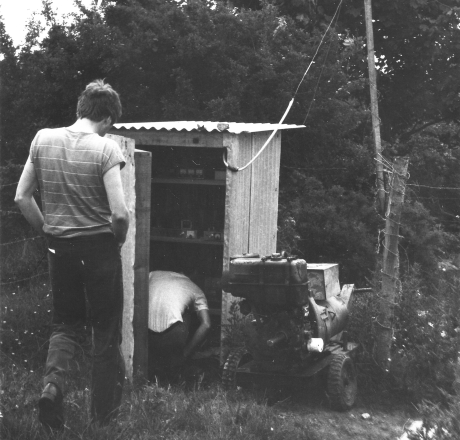
Unfortunately, a roll of images was destroyed during development, and therefore we cannot offer images from this station.
Radio Carlow,
Community Broadcasting Station,
The Old Post Office,
Dublin Street,
Carlow,
Ireland
Telephone (0503) 43353
We waited at the station for the train to Dublin for 2.5 hours. After arriving in Dublin we went for a bite to eat and met up with our friends in the city centre and played snooker at their house. We had a nice last meal with the family in the evening
Our alarms went off at 6an next morning. After breakfast we took the bus to the station where we caught the special bus to the ferry.
A very nice and memorable week in a wonderful country was now over!
Epilogue by Michael Andersson (January 2022)
I wish I had done more recordings, but to carry around dozens of tapes in your rucksack isn’t that nice.
Also, I wish I had taken more pictures, but with analogue cameras you were always careful because of the cost as a student…
I’d be really happy if the memories have been of some interest for some of you. It really was a special time.
A huge thank you to Radiowaves for enjoyable cooperation!
Massive thanks to Michael for passing this material on to us and for a wonderful insight into some of the stations that
were a part of our landscape 40 years ago.
Radiowaves 2022